


I came home to Ledge Acres with nothing to show for my time in New York except an IATSE union card and the knowledge that the city wasn’t going to save me. No guitar, no band, no relationship, no plan. Just the same bedroom in the same farmhouse, the same father’s shadow over everything, the same question I’d been unable to answer since Exeter: what was I supposed to do with my life?
The first answer was the most absurd. An elderly woman in Bedford needed a driver, and somehow I landed the job. The arrangement came with an unexpected perk — she let me take her Lincoln Continental home each night, because there was no other way for me to get to work. For a brief period I was piloting a luxury car I didn’t own through the back roads of Westchester, a twenty-year-old with no degree and no prospects driving a vehicle that cost more than most people’s houses.
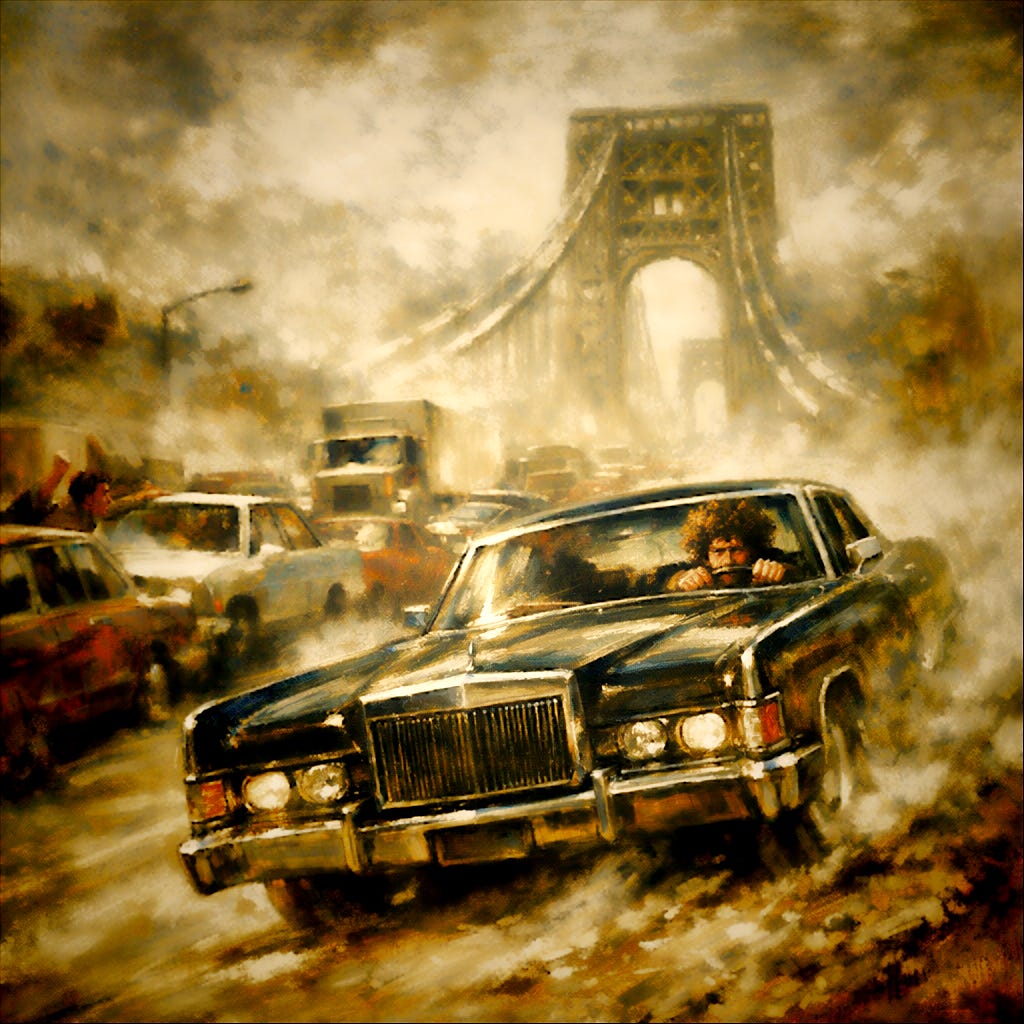
The end came fast. I needed to retrieve the last of my belongings from Penn, and the Lincoln offered the only solution. The drive to Philadelphia was smooth. The return was a nightmare — construction on the George Washington Bridge had created a massive bottleneck, miles of dead traffic, and I was due to pick her up the next morning. Without thinking through the consequences, I pulled onto the shoulder and drove past the entire backup like a maniac, cars honking, my hands white on the wheel. I made it back, but I was late the next morning. The job lasted maybe two more days.
That was the pattern. Not malice, not laziness — just a fundamental inability to fit inside structures that other people navigated without thinking. The Bedford job was a metaphor I was too young to recognize: borrowing someone else’s vehicle to go retrieve the remnants of a life that hadn’t worked out, then destroying the arrangement through recklessness on the way back.
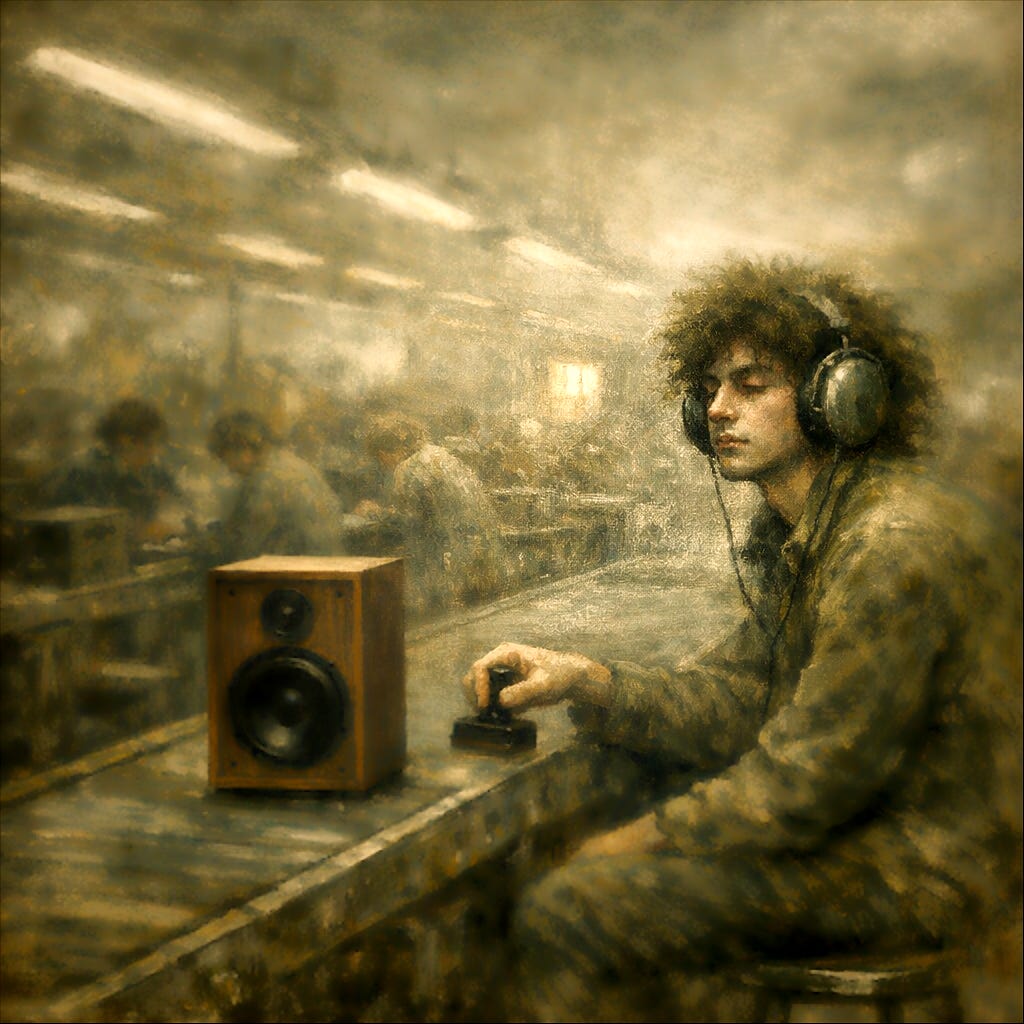
After Bedford, I got a job at MicroAcoustics, a speaker company in Elmsford. My mother had to drive me there every morning because I didn’t have a car — the Lincoln having been returned to its rightful owner along with my employment. They put me at the end of a production line as a final quality inspector. Each newly assembled bookshelf speaker would come to me, I’d put on a headset, run tones through it, check that everything was reproducing correctly, then stamp it and send it down the line.
It was deadening work. The kind of job that exists to remind you that you have no marketable skills and no leverage. I didn’t last long there either. It was too much for my mother, the daily drive, and it was just another dead-end with no connection to anything I cared about.
What saved me — temporarily, in the way things kept temporarily saving me — was Paul Czaja.
Paul had been my teacher at Whitby, back when I was a boy and the world still made a kind of sense. He was the one who’d taught me to sit with a photograph and let whatever needed to come, come. No judgment, no grades, no competition — just an image and the silence to receive it. He’d hand us photographs, carefully chosen, and say: “Pick one that speaks to you. Look at it. Really look. Then write whatever comes.”
That exercise had opened something in me that nothing since — not Exeter, not Penn, not New York — had managed to close entirely. The habit of looking, of letting images generate words, of trusting the space between seeing and saying. Paul had given me that, and now, years later, he offered me something else: a job.
He’d become headmaster at Whitby. He needed a teaching assistant for the creative writing program. The irony wasn’t lost on me — returning to the school I’d been pulled from too early, stepping into the role of the teacher who’d shaped me. But irony was a luxury I couldn’t afford. I needed work, and Paul was offering it.
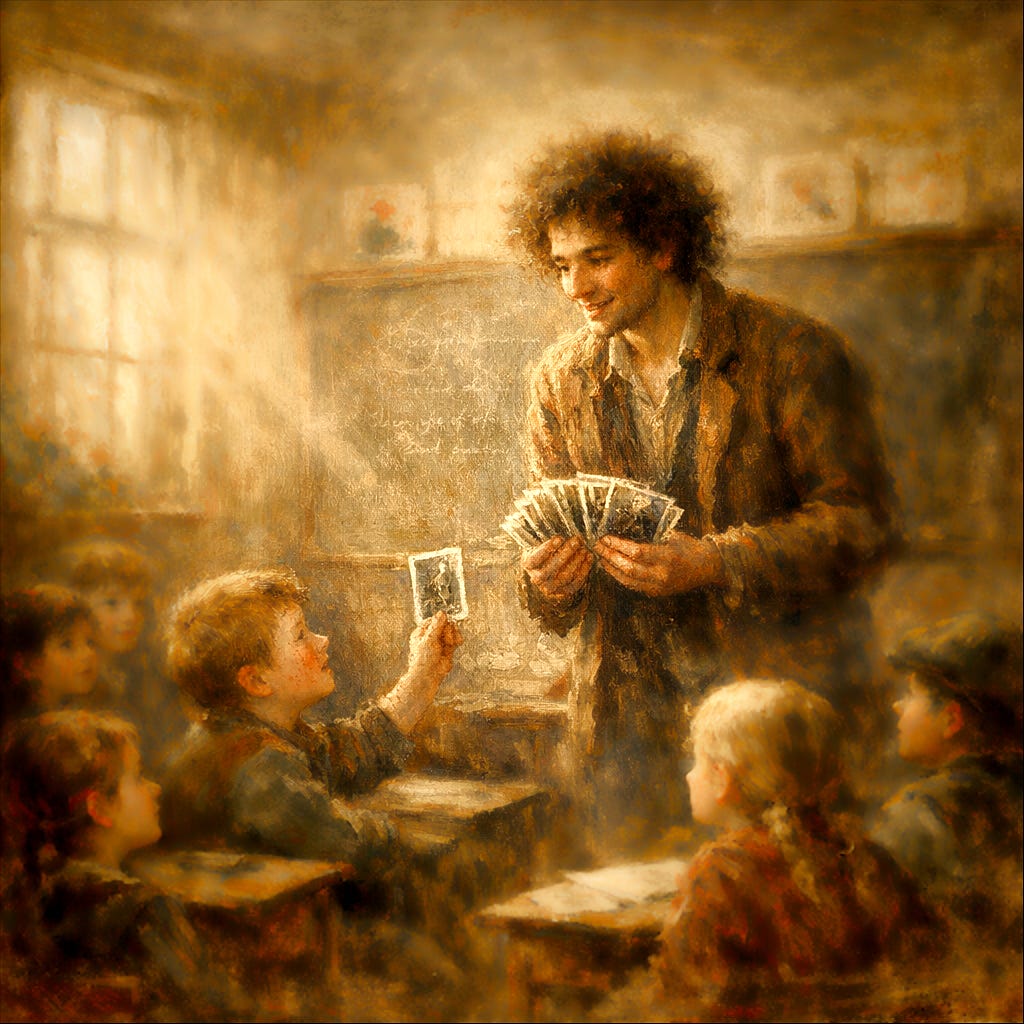
The first day, facing a classroom of ten-year-olds, I felt like a fraud. But then I pulled out the photographs — Paul’s old collection, the same carefully curated images — and said the words he’d said to me: “Pick one that speaks to you.”
A freckled boy held up a photograph of an empty rowboat on a misty lake. “I don’t know what to write.”
“What do you see?”
“A boat.”
“What else?”
He studied the image. “Maybe... someone just left? Or maybe they’re about to come back?”
“Write about that. Write about the person who isn’t there.”
Teaching became an anchor. Not a calling — I wasn’t built for institutions, even gentle ones like Whitby — but a structure that asked something real of me every day. The children didn’t care about my family name or my dropped-out education or my failure to hold a job in New York. They cared about whether I could help them find words for what they saw, and it turned out I could.
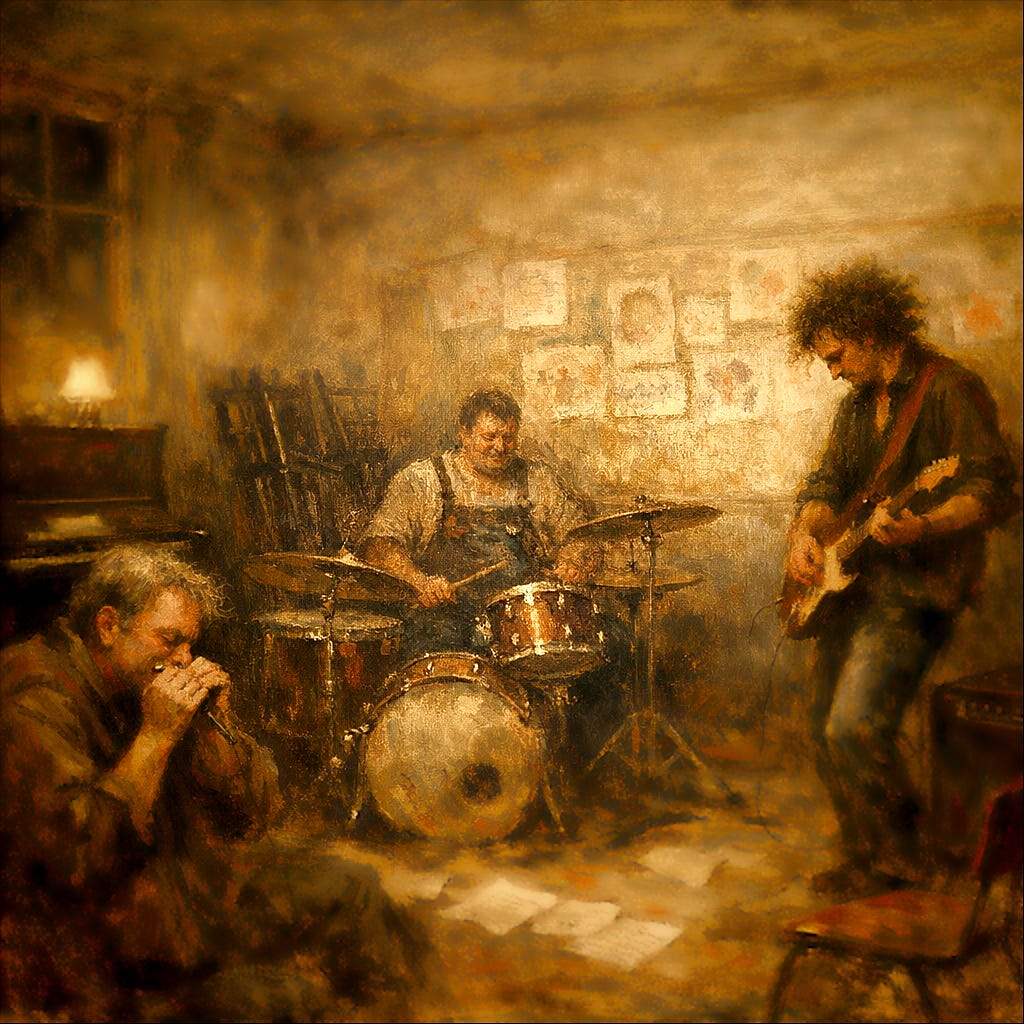
Through the Whitby teachers I found music again. Roger N. played harmonica like he was channeling Chicago blues. Bruce, a maintenance guy who’d been hired to paint and plaster, turned out to have session experience in California. We started jamming after hours in the music room — called ourselves Bedrock, played blues rock with the urgency of people who knew how easily music could slip away. It wasn’t the Rock Bottom Blues Band. It was better, because it was simpler. No scene, no parties, no revolving door of strangers. Just a few people making noise together because it felt good.
But the ground was shifting under all of it.
Papers appeared on the dining room table. Legal documents with words like “dissolution” and “property division.” My parents moved through the house like ghosts occupying the same space but different dimensions. The silences at dinner were no longer the ordinary silences of a family that had run out of things to say. These were the silences of people preparing to become strangers.
I don’t know exactly when I saw it. Somewhere in the limbo between finishing at Whitby and whatever came next. I may still have been teaching. The memory is precise in its content but vague in its timing, the way traumatic things often are — the event seared in, the calendar around it blurred.
---
Walking past the laundry room. The door half open.
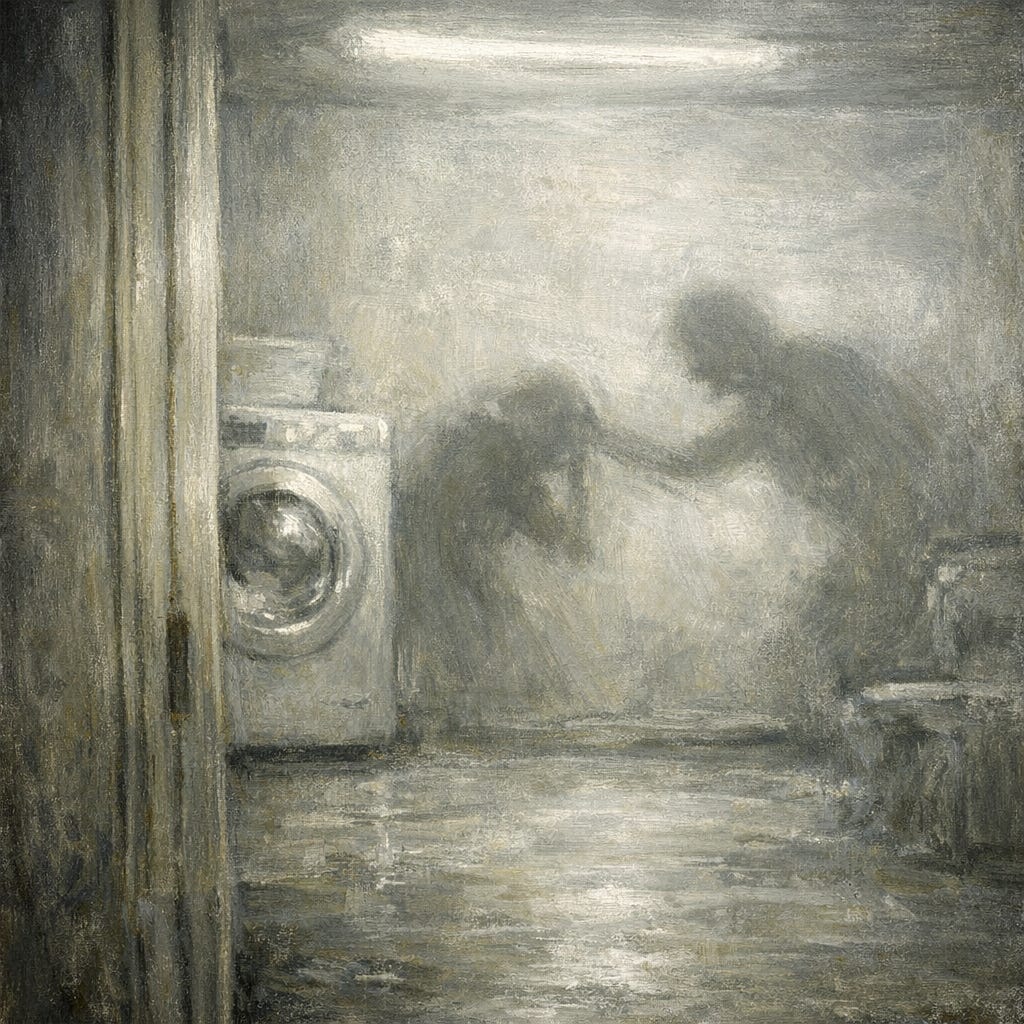
My father has my mother by one arm. His other hand comes across her face. A backhand. Not a punch — a backhand, the way you’d strike someone you considered beneath you. The sound of it — skin on skin, sharp and flat — is what I remember most. That, and her expression. Not surprise. Something worse than surprise. Recognition.
I keep walking. I don’t intervene. I don’t shout. I don’t do anything at all.
---
What do you do with a moment like that? I’ve had fifty years to think about it and I still don’t have an answer. I was twenty-one and I was afraid of my father — afraid in the body, in the place where childhood teaches you what’s safe and what isn’t. The man who’d slapped me for not learning to read a clock, who’d run from his card table to strike me so hard I fell against the banister and cut my head, who’d made me pitch until my elbow screamed and forced me to West Point and flushed my acid and refused my dreams — that man had trained me, through years of precise physical and psychological intimidation, to do exactly what I did. Keep walking.
My mother filed for divorce. The house went on the market. Ledge Acres — twenty-five acres, the 1865 farmhouse, the weeping willow, the stone wall, the swimming pool, the apple orchard, thirteen years of whatever we’d been as a family — all of it reduced to a real estate listing.
Everything detonated at once. Three of us had dropped out of college. My middle sister came home from spring break pregnant announcing that she was not going to college. The divorce was swift. My father moved to the city, then remarried outside the faith, sought an annulment that erased twenty years and six children in the eyes of the Church. My mother, overwhelmed, chain-smoking her Kents, tried to hold together what remained. My middle brother was at boarding school. My two youngest siblings were still young enough to need stability and old enough to know it wasn’t coming.
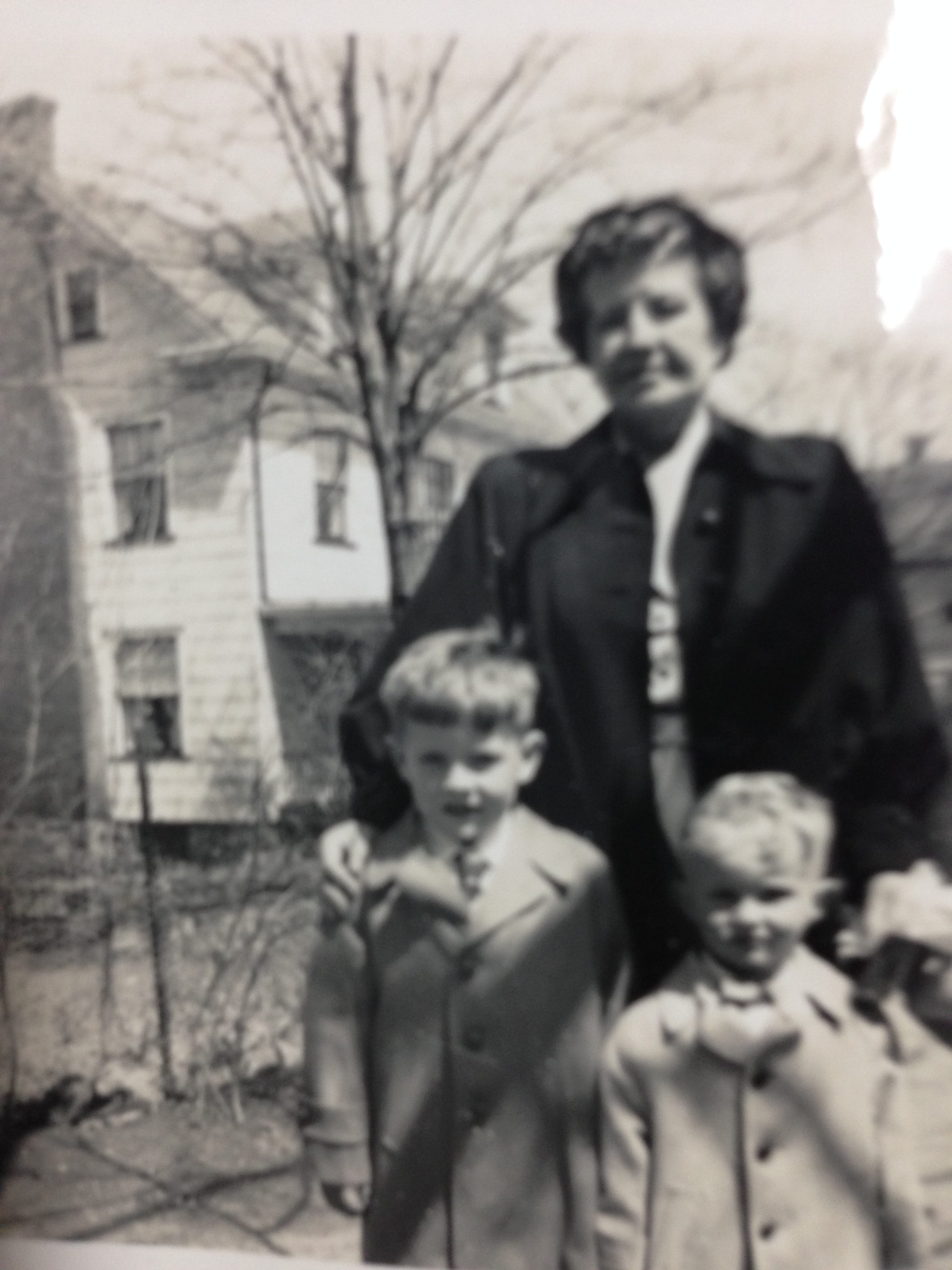
And Nana. Tiny, fierce Nana, who’d crossed the Atlantic with nothing, who’d raised three children alone after her husband died on Boxing Day, who’d moved in with us at Ledge Acres and given us warmth when the house had none to spare. She was in her seventies now, on medication after the seizures, going to the senior center a couple of times a week. She was never quite the same after the grand mal I’d witnessed in the living room — her body seizing, frothing, my mother shoving a wooden spoon between her teeth while I stood there at twelve or thirteen, learning for the first time that the people you love most can be taken from you without warning.
Nana would make the move to Pound Ridge with my mother after the sale. Six months later, she’d be dead — found by my brother beside her bed the morning after a St. Patrick’s Day party at the neighbors’ where there had been a lot of drinking. Seizure medication and whiskey. She was seventy-four. I was in California by then, and I flew home for the open casket, and it was the worst thing I’d ever seen.
But I didn’t know any of that yet. In the summer of 1973, Nana was still alive, still making her little jokes, still singing her songs about men with pancakes tied to their bums. The last time I would ever see her was approaching, and I didn’t know that either.
I had already decided to go. Steve Ferry’s letters from Santa Rosa kept arriving — the chicken coop, the redwoods, the Russian River. California, the mythical west. Kerouac’s road, still open, still calling. The VisitUSA adventure with Abby had proved that the road was real, that strangers would help you, that you could move through the country and survive.
But the decision wasn’t really about California. It was about what was happening to the house, to the family, to the ground under my feet. You can’t watch your father hit your mother and keep living under his roof. You can’t watch a family dissolve and pretend the walls are still standing. The house was being sold. The marriage was over. My siblings were scattering. There was nothing left to stay for — or more honestly, staying had become unbearable and leaving had become the only act available to me.
I’d read Kerouac. I’d flown across the country on stolen passes. I’d met people who lived outside the structures my father worshipped. And I was twenty-one, broke, frightened, and possessed of the one conviction that had survived everything else: I would not become him.
On a July morning, I packed what I could carry. Backpack loaded — tent, sleeping bag, mess kit, a few days’ food. Sony cassette deck with tapes. Colombian weed and rolling papers. Water bottle. And Mona, the 1934 Harmony Cremona archtop I’d found in a music shop in White Plains. Small enough to carry, with a voice that filled a room.
The house was empty. My father in the city. My middle brother at camp. my two youngest siblings at school. My mother had taken Nana to the senior center.
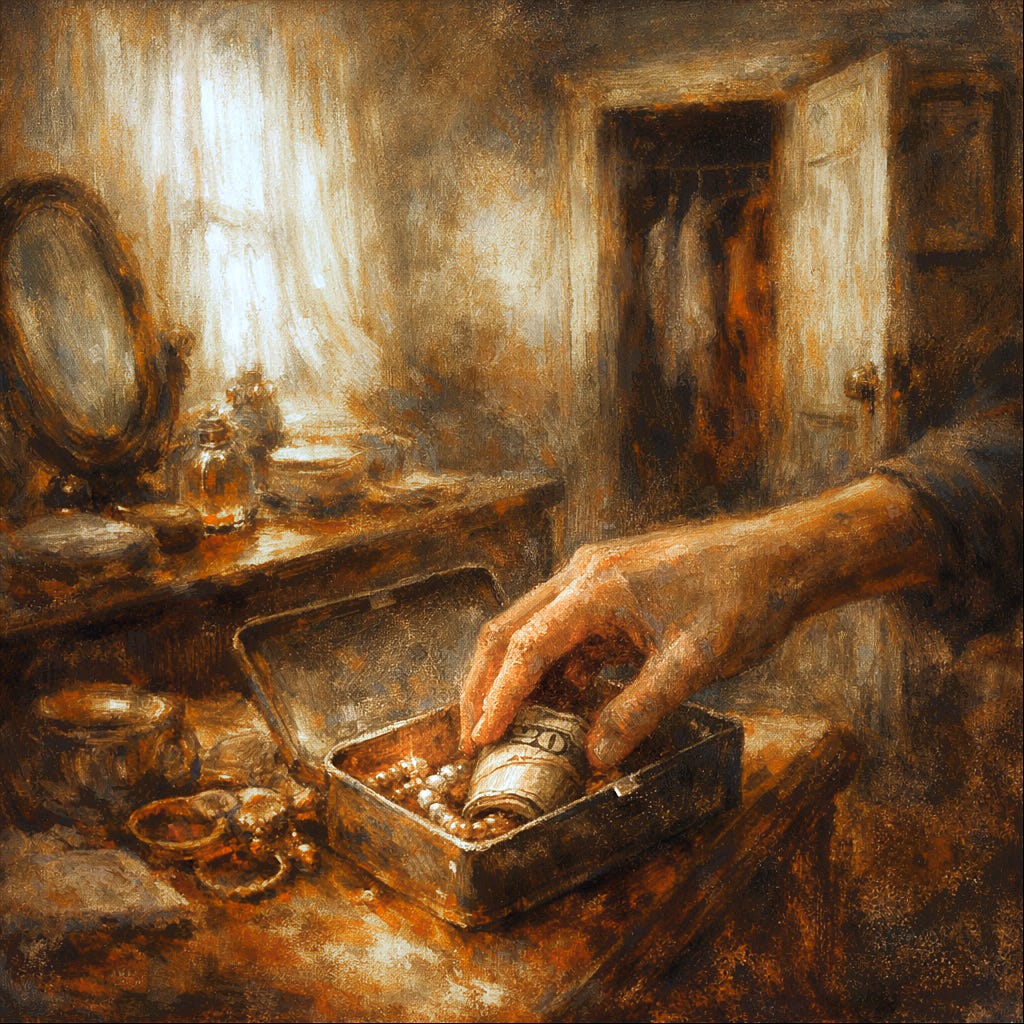
I ended up in my parents’ room. Something drew me to a small closet near my mother’s dresser. Inside a tin — jewelry and a roll of twenties. Four bills. Eighty dollars. A surge of adrenaline. She wouldn’t mind if I borrowed this. Should I leave a note? No time. Like finding an escape hatch in a submarine going down.
That eighty dollars would become a family myth. My youngest brother held it against me for over fifty years, pulling it out during a confrontation decades later, calling it theft. Maybe he was right. Maybe money was tight after the divorce and those four twenties mattered more than I let myself believe. I told myself I was borrowing. The people I left behind experienced it differently.
Between this and the New School incident — where Grandmère told my father she’d given me the money I’d actually earned and been reimbursed for — my reputation in the family was set. Andre, the one who can’t be trusted with money. Andre, the one who takes what isn’t his and calls it something else. Two incidents, neither one accurately understood, and together they colored how my family saw me for the rest of my life. I’ve thought about this often. How a person’s story gets written by other people, in rooms where you’re not present, based on evidence you never get to challenge.
I shouldered the pack, grabbed Mona, walked out the door, past the lilac bushes lining the gravel driveway. At the first bend I turned back. Ledge Acres sat in the morning light — the weeping willow my mother loved, the stone wall with its massive staircase, the tired white farmhouse, the stately oak. Bittersweet doesn’t begin to describe it. Two-thirds of my life in that place.
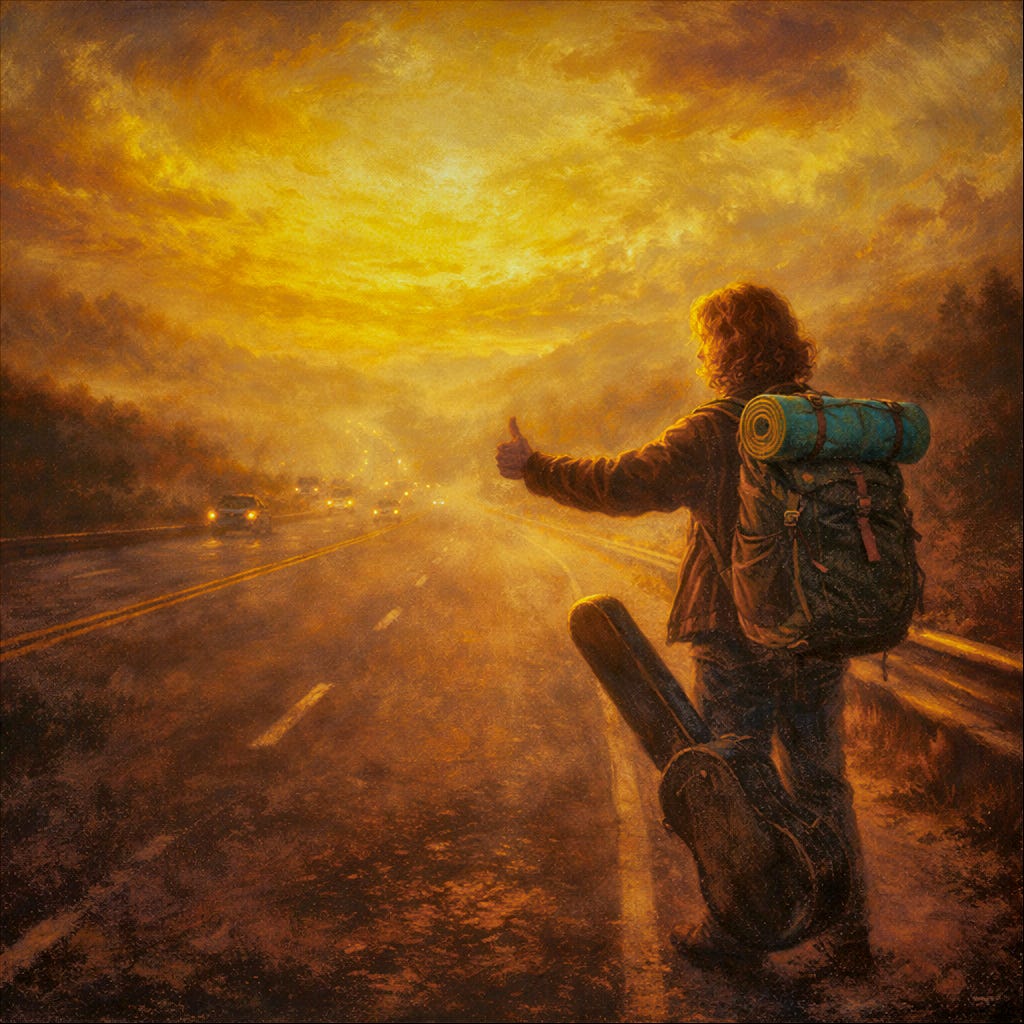
The walk to the interstate took fifteen minutes. I crossed the four lanes, set down my gear, faced the oncoming traffic, and stuck out my thumb.
I had no idea what I was getting myself into. But I knew what I was leaving behind, and that was enough.
The pre-stories of what led to my 1973 hitchhiking odyssey
Purple Barrels - Fish Out Of Water
The Band That Never Played Out - Finding An Escape Hatch
Full Table of Contents: Surfing the Interstates: Complete Chapter Guide