Before Thea
After Thumb Out: Chapter Twelve: My father brings his three sons together
Between 1974 and 1978, while I was chasing my film dream across California, our family’s world detonated in ways I only fully understood years later.
Nana died on St. Patrick’s Day, 1974 — a massive cerebral hemorrhage, found by Jacques on the floor next to her bed after a party at the neighbors’. She was seventy-four, the same age I am now. She’d enjoyed her spacious mother-daughter apartment at my mother’s new Pound Ridge house for less than six months.
That was the first blow.
The same year — 1974 — Aunt Liz died. We were told it was a car accident. I only found out years later what actually happened. Liz had been visiting her sister Claire in Providence, Rhode Island. The three women — Liz, Claire, and their mother Jacqueline — were sitting at Claire’s kitchen table. Liz abruptly went upstairs to a bedroom, and shot herself in the head. She was a mother. Her children, Katie and Tom, were young. My father lied to all of us about it. We stood at her grave ignorant of the truth.
In 1976, my mother received a letter from the Archdiocese of New York informing her that her marriage to my father had been annulled. Twenty two years. Six children. One miscarriage. And the Church, at my father’s request, had declared that none of it counted — because he “hadn’t known what he was doing” when he married her. My mother was devastated. For a woman who’d given her whole life to that marriage, who’d moved wherever he pointed, who’d raised his children and kept his household and endured his abusiveness and his silences and his horses, to be told by the institution she believed in that it had never been real — that broke something in her that I don’t think ever fully healed. Three years later, he married Meryl Brumstein, a brash, petite Jewish woman I never liked. The irony of a performatively devout Catholic man annulling his marriage and then marrying a Jewish woman was lost on no one except, apparently, him. I still wonder how much he had to pay.
Then in 1978, his mother Jacqueline died in New York, leaving each of her 5 children an inheritance of approximately two million dollars. I learned from Katie and Tom — Liz’s children, my cousins — that my father had unsuccessfully attempted to exclude them from the will. He tried to liquidate their dead mother’s share. His sister had been in the ground for four years, having blown her brains out in his other sister’s house, and he went after her children’s money.
With his share of the inheritance, my father bought a luxurious condominium high above the ocean in West Palm Beach. He hired a trainer and started buying racehorses. This was the same man who had told me that he couldn’t afford to honor his promise to help me attend USC film school — the dream I’d spent ten years working toward, the B average he’d demanded that I’d delivered. He said money was tight. He was training racehorses. And now there I was, his father’s namesake, left, wondering why I had received never received anything — no money, no family ring, no watch, no heirloom object, not even a letter. Like my mother, I felt —erased, invisible.
Somewhere around 1979 or early 1980, Charlie and I accompanied my father and Meryl to Belmont Park to watch one of his horses run. My father placed a heavy bet at long odds. The horse won — his first winner as an owner. He collected a lot of money. Charlie, who was nineteen, was genuinely excited. I found the whole thing grotesque. Here was a man spending his inheritance on thoroughbreds while his children did manual labor for a living. But I smiled and went along with it, because that’s what you did with my father. You just had to suck it up.
Charlie was an interesting kid at nineteen. He’d come through Hyde School — Joe Gauld’s therapeutic boarding school in Bath, Maine, the place my family sent its damaged children, three of six in all — and he’d emerged with a wrestler’s compact physicality and a deeply submerged reservoir of anger. He carried it like a loaded weapon, mostly holstered, as he carefully maintained an even, amiable happy go lucky exterior.
There was a night — I’m not sure exactly when, but it was in this same period — when Charlie and his friend David dropped acid, taking the train into the city and hopped on the bus from Grand Central down to Madison Square Garden to see the Grateful Dead. They were coming onto the acid, the world starting to bend, and who should get on at some midtown stop but my father and Meryl. Charlie managed a hello. He told me later it didn’t bomb his trip, which I found remarkable. Most people, tripping on LSD and suddenly confronted by the father who’d sent them to a boarding school for troubled teens, would have needed a straitjacket. Charlie just rode it out. That was Charlie. he told me later that he never worried about getting too high because he was “familiar with the landscape”
My father’s sister Claire lived in Providence with her husband Sam. They were both professors — quiet, educated people in a very comfortable, academic life. Claire was the middle child of the five siblings, more like her mother Jacqueline than the others. Very religious, very gracious, but she shared my father’s love of scatological humor. They both thought farts were the funniest thing on earth. This was apparently very French.
Sometime in 1979 or 1980, my father and Claire went into business together. They bought a triple-decker apartment building in a neighborhood called Smith Hill — a lower-class, decaying section of Providence that was, by any measure, a hellhole. They named their business the Smith Hill Improvement Team. The acronym, which delighted both of them, spelled out in their business checks was — S.H.I.T.
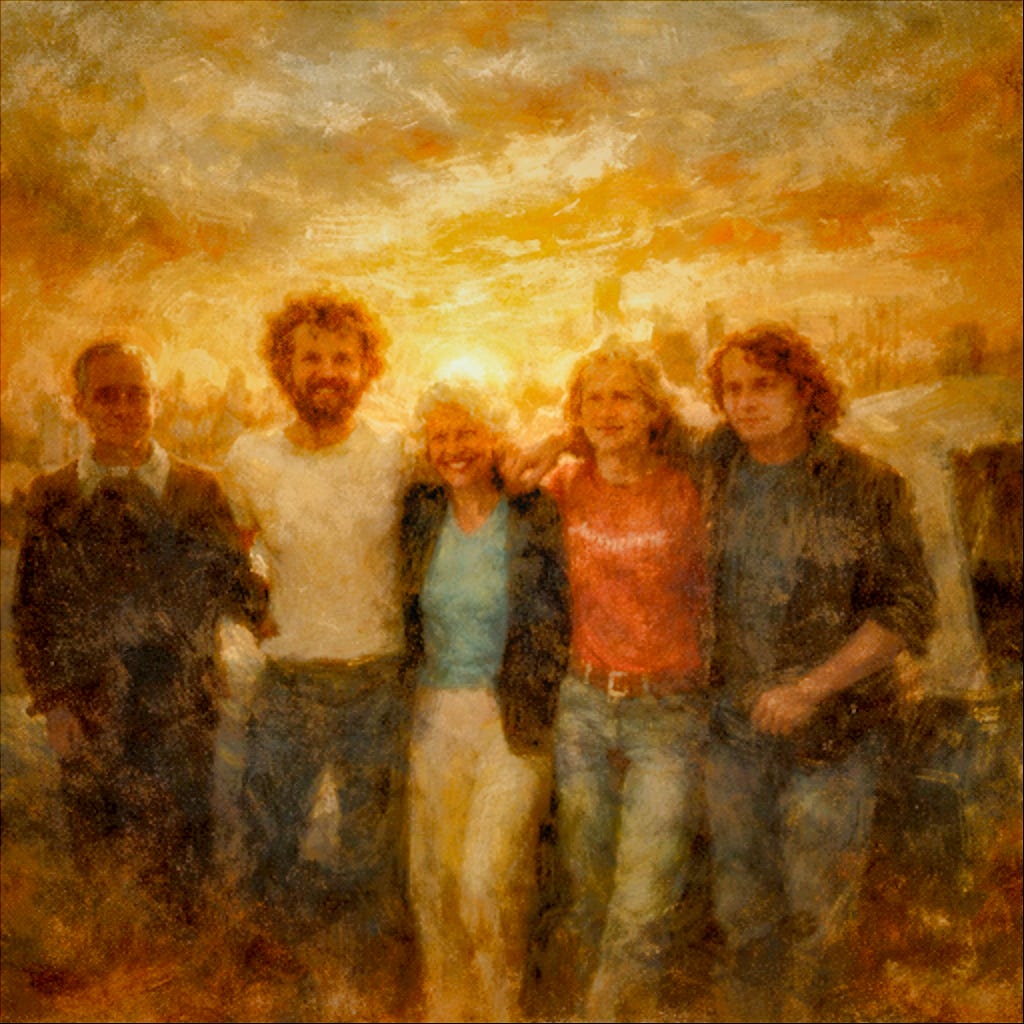
The plan was straightforward: buy the building cheap, renovate it, rent it out. My father convinced his three sons — me, Jacques, and Charlie — to come to Providence for the summer and do the work. I was twenty-eight. Jacques was twenty-three. Charlie was nineteen. We would live in the triple-decker we were rehabbing, sleeping on the floor in sleeping bags, and spend our days tearing the building apart.
We all said yes, and we all said yes for the same reason. We wanted to see our father. I was 28 and had been back from Los Angeles for over a year, painting houses in Westchester, and I had never had an adult relationship with him. Jacques, now 23, had been out in California finding his own way. Charlie, 19, was just out of Hyde. None of us had any illusions about who our father was — we’d all been raised by the belt and the hairbrush, we’d all been his failed projects — but there was still some stupid, unkillable hope that this might be different. He was 51. We were all men now. Maybe working alongside him, shoulder to shoulder, swinging sledgehammers and tearing out plaster, something would shift. Maybe he’d take us fishing again. Maybe we’d sit around a table at the end of the day with beers and he’d talk to us like equals, like he really cared.
I dreamed of these moments.
They never happened.
We called the city Provadump. Smith Hill earned the name daily. The triple-decker was a gutted wreck in a neighborhood where, on the Fourth of July, the local tradition was to torch abandoned buildings. Our days were demolition — tearing down plaster and lath, ripping out old plumbing, hauling debris. It was brutal, filthy, satisfying work in the way that destruction always is. My father and his sister actually had a checking account with “Smith Hill Improvement Team” printed on the checks. Our weekly pay came from the S.H.I.T. account.
Jacques came into the job acting like the alpha male, and in fairness, he had credentials I didn’t. Each summer he would drive back from college in California and he’d work with Billy and “Buzzeo,” two supposedly “mob-connected” Italian carpenters who’d taught him the trade. Jacques had endless stories about them. His favorite was Billy asking him to hand over the “pootie” — his pronunciation of putty. “Hey, Jacques, get me the pootie.” Jacques would tell it and crack himself up. Buzzeo, according to Jacques, knew people who had “offed” people. Whether this was true or just the mythology of young men trying to impress each other, it served its purpose. Jacques was a carpenter. He’d worked with connected guys. I was just a house painter. He loved to mock my hippie soul by cooing at me, “Oh, wow, man.”
He took over the dealings with the electricians, the plumbers, the building inspectors. He’d learned about a tradition called “gas money” — apparently all you had to do was slip these guys some cash and you’d get your inspection approved on the spot. Jacques handled all of that with an authority that left me feeling both grateful and diminished. He was twenty-three, five years younger than me, and he was running the show.
We developed a routine that kept the days moving. Every morning we’d buy a case of Budweiser in cans, dump four or five bags of ice over it in a cooler, and set it on the job site. We worked all day with cold beers within arm’s reach, frequently somewhat inebriated. It was demolition, not surgery. Nobody was going to get fired. The boss never came.
Charlie, at nineteen, was the youngest and the quietest, and he held his anger far from the surface. One afternoon I said something to him on the job site — I don’t remember what, but I said it in a boss tone of voice, the eldest brother pulling rank. Charlie was using a blowtorch to peel paint. He turned toward me with a look of rage so pure and concentrated that I took a step back. He came at me with that lit torch in his hand. He didn’t burn me, didn’t touch me, but the look on his face — I will never forget it.
My father visited once. We went to some hardware store together, and as we were standing at the checkout counter, he walked past us, let out a tremendous fart, and kept walking, laughing to himself as he went. The cashier stared. I stared. That was my father’s visit. A drive-by fart at a hardware store. Then he was gone again.
Claire and Sam were around but we didn’t see them much. They had their academic lives. Their younger son Josh was a plumber
— a shy, reclusive kid we didn’t really connect with. The social fabric of Providence was not what we’d come for. We’d come for our father, and our father wasn’t there, so what we got instead was each other.
And each other was complicated.
Jacques and I had always been close as kids. We had shared a bedroom at Ledge Acres. I was the eldest, the one who’d teased him as a kid — tricked him into touching an electric fence, pinned him down and drooled on him. The things older brothers do that seem funny at twelve and criminal at forty. Jacques never forgot any of it. He’d grown into a competitive, physical, direct young man. We both knew exactly where each other’s wounds were because we’d watched each other collect them. We were political opposites, temperamental opposites, and yet we could talk on the phone for two hours straight, which we did for decades until I finally said the one thing, without even realizing it, that ended it.
Charlie was different. Charlie observed. He absorbed. He carried everything internally and then, once in a blue moon, it came out sideways — the blowtorch, the anger, the look. But he was also funny, game for anything, and genuinely thrilled to be with his brothers for a whole summer.
The Fourth of July was the crown jewel of the Providence summer.
Aunt Claire had warned us that arson was a tradition in Smith Hill on the Fourth. Hooligans torched these old triple-deckers for fun. Since we were sleeping in the building we were renovating, someone needed to stay overnight as a fire watch — if a Molotov cocktail or a bottle rocket came through the window, that person would call the fire department.
We drew straws. Jacques lost.
Charlie and I drove down to Newport, about forty minutes south, to celebrate our freedom. We proceeded to get very drunk on Meyers and Cokes, annoy quite a few people at several bars, strike out completely with the ladies, and drive home in the kind of condition that twenty-eight and nineteen make you think is fine but forty-eight and thirty-nine would recognize as criminal. We collapsed onto our sleeping bags on the floor.
I woke up at dawn. It was incredibly hot and humid. I was so hungover that my teeth hurt. There was no water left in the building — we’d been drinking bottled water and the supply had run out. Jacques was already awake. We were both lying on our separate spots on the floor, naked under single sheets, and we got into an argument. I don’t remember what about — it could have been anything, knowing us — but it escalated fast. We started wrestling.
Two grown men, naked, me viciously hungover, grappling on the floor of an unrenovated triple-decker in the worst neighborhood in Providence at six in the morning on July fifth. Jacques and Charlie had both wrestled in high school and were genuinely skilled. I had no technique whatsoever. There was a lot of hostility but nobody got pinned. Charlie, who’d been watching from his sleeping bag, said it was the most comical thing he’d ever witnessed in his life.
After that, we needed breakfast in the worst way. We found a little hole-in-the-wall diner on some side street — thirty seats, maybe, mostly occupied by people who looked like they’d lived harder lives than we were pretending to live. I ordered a large glass of milk to line my stomach. It came. I picked it up and took a huge pull.
The milk was curdled.
I stood up so fast I knocked my chair behind me. The dry heaving started immediately. I ran for the bathroom, where I vomited and dry-heaved for what felt like five minutes. When I finally came out, wiping my mouth, the restaurant was empty. Every single person had left. Thirty people, gone. Their plates still on the tables, their coffees half-finished. The waitress stood behind the counter looking at me like I’d detonated a bomb.
This became a classic story in the family archive. For years, if you wanted to make Jacques or Charlie laugh until they couldn’t breathe, all you had to ask was “wanna glass of milk?”
By late August, the job wound down. I don’t remember exactly how it ended. After we all got back to New York the three of us were invited to my father’s apartment in Manhattan. Meryl was going to cook for us. A family gathering, civilized, in the city.
On the drive in, we started drinking. Budweiser in bottles. By the time we hit the FDR Drive, we were throwing the empties at the concrete abutments, trying to shatter them. The bottles exploded against the walls with satisfying violence. By the time we arrived at my father’s apartment, we were pretty well lubricated.
Meryl served her first ever roasted chicken. I was asked to carve, a family tradition. It was pink under the drumsticks, underdone, inedible. She had to take it back to the oven. A complete disaster. The three of us proceeded to carry on rudely, boisterous and somewhat drunk and probably unbearable, and at some point one of us — I can’t remember who — referred to my father as “Dux” within his earshot.
Dux was our private name for him. Derogatory, dismissive. He was never supposed to hear it. There’s an ongoing debate among the brothers about whether he knew what it meant. Jacques later claimed he saw a tear in our father’s eye. I didn’t see it. But Jacques, who watches people the way a hunter watches the tree line, swears it happened.
If it did — if our father, sitting in his apartment with his new wife who couldn’t cook a simple chicken, heard his three sons call him by the mocking nickname they’d invented behind his back — then that tear is the saddest thing in this whole story. A fifty-one-year-old man who put his heart in the deep freeze decades ago, who lost his sister to a pistol in his other sister’s house, who married a woman most of his children could not stand, who inherited two million dollars and used it to buy racehorses and a ghetto triple-decker instead of helping his kids — that man, hearing his boys call him Dux, and a single tear falling.
I don’t know if it happened. Jacques says it did. I’ll take his word for it.
A month later, my sister ZaZa was working at the Push Cart, a dress shop in Scotts Corners, when a young woman walked in who would change my life. But I didn’t know that yet. I was twenty-eight years old, I was a house painter, and I had just spent my summer working for the Smith Hill Improvement Team — earning checks from the shit account, demolishing buildings my father bought with his dead mother’s money, in a city where his sister had killed herself six years before — and the only thing I’d learned was what I already knew.
He wasn’t coming.
← Previous: An Entrepreneur Is Born
Thank you for reading “Thumb Out”
Volume 1 of “The Spaces Between Memoir Series”
coming soon
Subscribe to receive new chapters as they drop


