

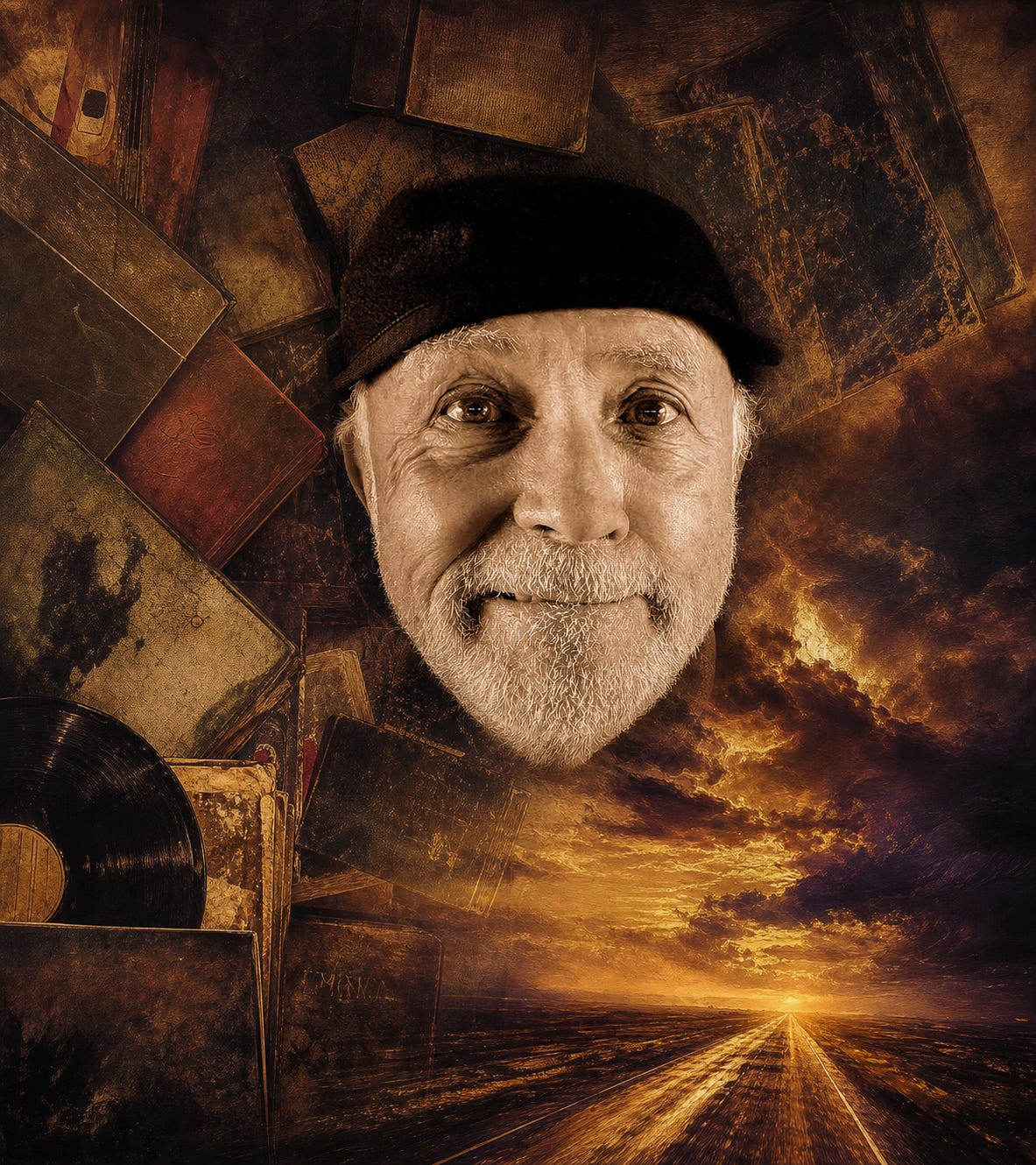
Not to edit it. Not to fix a paragraph or find a better word. I asked it to read everything — the essays, the memoir chapters, the drafts we’ve worked on together over the past 3 years — and tell me where my writing sits in the literary tradition. Which authors I’m actually close to. Which ones I only think I’m close to. Where I’ve gone further than my influences, and where they’ve still got me beat.
It's a strange thing to ask a machine. But I once let a desert tell me who I was. I've taken instruction from a highway, a storm, a stranger's dashboard at 3 a.m. Asking an AI to hold a mirror up to fifty years of writing doesn't feel that different.
Here’s what it found — and what I found, reading what it found.
The obvious comparison is Kerouac. It’s always Kerouac. On the Road, the open highway, the thumb out, the sense that the American continent is something you can read if you just stay on it long enough.
But Claude put its finger on something I’ve always sensed without being able to say it cleanly. Kerouac’s narrator doesn’t change. Sal Paradise is the same dreamy observer at the end as he was at the beginning. He witnesses. He catalogs. He rides the current. He goes home more or less the same person who left.
My André isn’t. Something happens to him out there. The road does something to him that he couldn’t have done to himself. That’s not a boast — it’s the whole point. The book isn’t about freedom. It’s about what happens to ego when you remove every prop that was holding it up.
I knew I’d read Kerouac. I didn’t know I’d written past him. That’s a useful thing to find out at seventy-four.
The comparison that surprised me more was Hemingway.
I wouldn’t have put myself there. Hemingway kept the interior life locked behind a door. The iceberg. What’s left out. I’ve never been interested in withholding. I’ve been interested in saying the thing directly, at the risk of saying too much.
But the sentence structure is there. Short declarative sentences. Subject. Verb. The world as a series of concrete facts that accumulate meaning without announcing it. I learned that somewhere. From him, probably, even when I thought I was just trying to be clear.
Where I break from him is exactly where memoir has to break from fiction. The interior has to be in the room. You can’t write a memoir with the iceberg theory. The whole point is that you go under the surface. That’s where the story is.
But here’s what the AI missed, or rather what I had to add myself.
The writers who shaped me most deeply weren’t the ones you find in American literature surveys. I came up on Dostoevsky and Kafka. Not as assignments — as obsessions. Dostoevsky taught me that the interior life isn’t decoration. It’s the drama. Everything that happens in the external world in his novels is just the pressure that forces the interior to reveal itself. Raskolnikov isn’t a murder story. It’s a confession that takes four hundred pages to happen.
Kafka taught me something different and maybe more useful for a memoirist: that the surreal and the mundane are not opposites. That the most ordinary situation can carry the full weight of what it means to be alive and baffled by it. I saw UFOs over Bixby Bridge in 1973. I fasted in the canyons of Big Bend. I stood 15 feet from Jerry Garcia during Dark Star. Those things happened. Kafka gave me permission to put them in the same book as the chicken coop and the disinheritance and the broken-down van.
Hesse was the third of that European trinity for me. Siddhartha. Narcissus and Goldmund. Steppenwolf. Hesse understood something that American literature has always struggled with — that a journey is never just a journey. That the road out is always the road in. That you leave home to find out who you were before you knew who you were. The skeleton underneath all three volumes of The Spaces Between is pure Hesse. Leave. Be unmade. Return changed, or don’t return at all.
Emerson is in there too, deeper than I usually admit. The self-reliance. The idea that your own experience, if you look at it honestly enough, is a sufficient text. That you don’t need authority. You need attention.
Dickens gave me character. Not the Dickensian grotesque, but the belief that the people who pass through your life deserve to be rendered fully. The trucker who picks you up at midnight and talks about his daughter for two hundred miles. The girl in the commune. The man in the cowboy hat who says one sentence and disappears. Each one a novel you only got to read the first chapter of.
Baudelaire taught me that beauty and darkness aren’t in competition. That you can make something luminous out of the worst of it.
But if I’m being honest about where the actual sentence music comes from — the rhythm, the compression, the way a line lands — it isn’t any of those men.
It’s the lyricists.
Bob Dylan taught me more about writing than anyone who ever sat behind a desk. The way an image can carry more meaning than a paragraph of explanation. That’s not a technique. It’s a key turning in a lock. I was twenty-two years old with a thumb out and no direction home, and Dylan had already written the sentence.
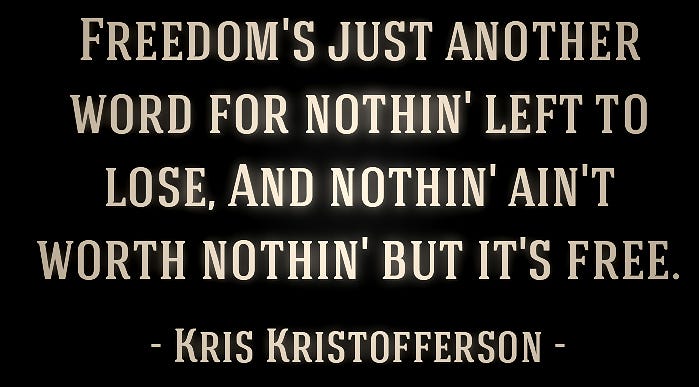
Kris Kristofferson wrote Me and Bobby McGee. Janis recorded it. The Dead played it like a river. And that one line — freedom’s just another word for nothing left to lose — is the sentence I’ve been trying to write in a hundred different ways for fifty years. I had nothing. Eighty “borrowed” dollars. An old guitar in a beat-up but bulletproof case. A thumb. That was the soil. And look what grew.
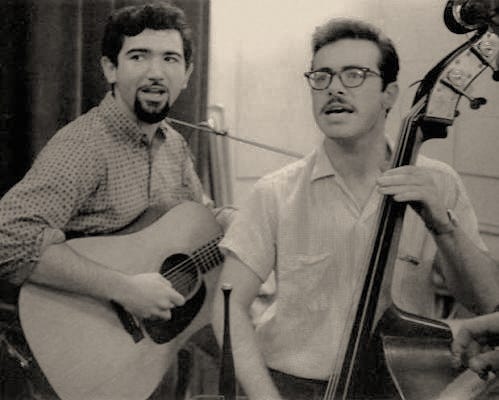
Robert Hunter wrote the words Jerry Garcia sang. Hunter understood something about the American road — the mythic version of it, the version that is also a spiritual condition — that no novelist has ever quite matched. When I put my thumb out on that on-ramp in 1973, I was inside a Hunter lyric. I knew it then. I know it more now.
Bruce Cockburn. Donovan. Poets who chose strings instead of pages. Cockburn especially — the moral seriousness underneath the melody, the refusal to look away from what’s hard, the way the natural world carries meaning without being asked to. That’s in my Vermont writing. That’s in everything I write about the Green Mountains.
What those lyricists gave me that the novelists couldn’t is this: the understanding that a single line, if it’s right, is enough. You don’t have to explain it. You don’t have to follow it with three sentences of context. You land it, you trust it, you move on.
There was a period when I thought about calling a band Dirtbag. A pun — the loser on the side of the road, but also the bag of soil, the fertilizer, the stuff things grow from. I never used it. But it’s probably the most accurate description of my literary influences I’ve ever come up with.
Dostoevsky. Kafka. Hesse. Emerson. Dickens. Baudelaire. Kerouac.
Dylan. Kristofferson. Hunter. Cockburn. Donovan.
That’s the dirt. I’m just what came up out of it.
I didn’t choose that soil. I grew in it. And at some point the roots went deep enough that I stopped being able to tell where they ended and I began.
That’s the ground the writing comes from. Everything else is just the bloom.
“Thumb Out” Book One of my memoir trilogy “The Spaces Between” is available now
e-book ~ kindle ~ paperback ~ hardcover ~ signed paperback
Lovely article!