

E-PUB · Audiobook · E-PUB + Audiobook · Kindle/Paperback/Hardcover/Audible
Full Table of Contents: Surfing the Interstates: Complete Chapter Guide
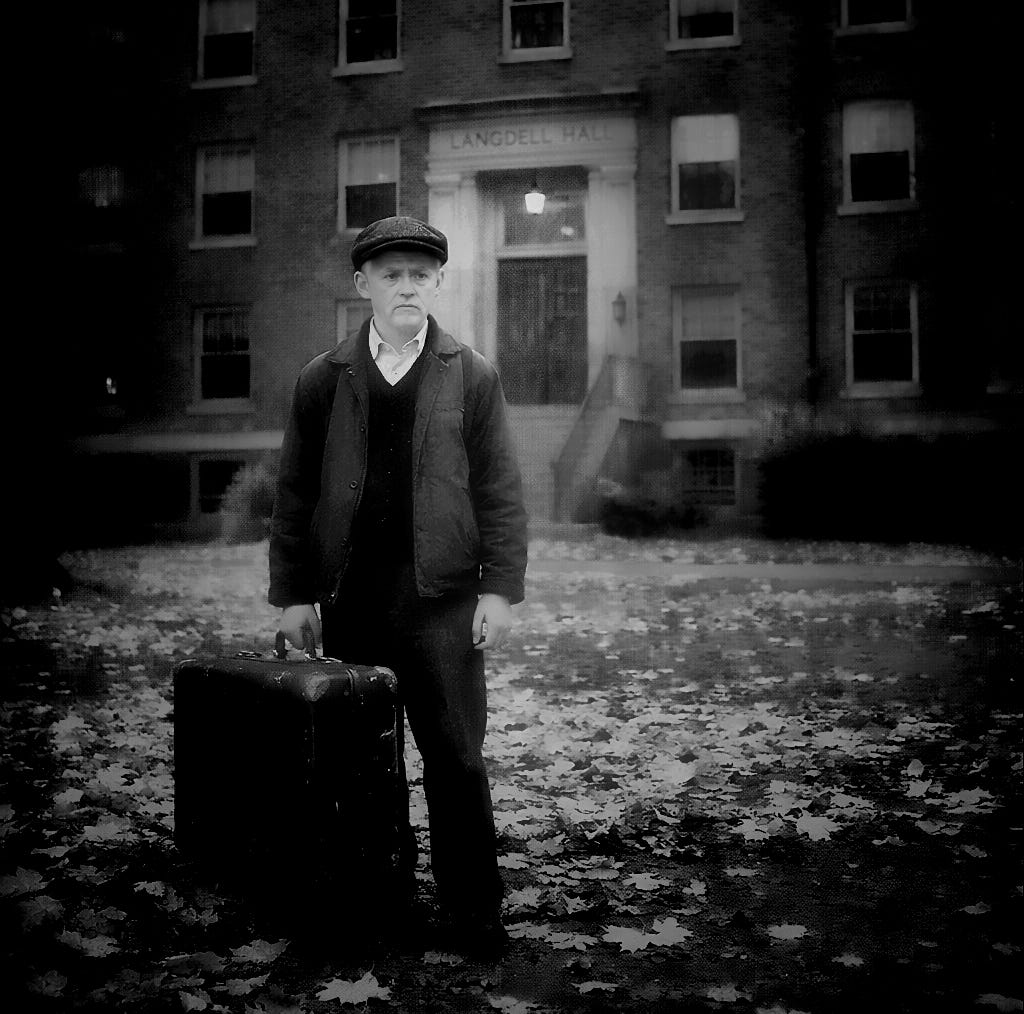
In the fall of 1965, my father put me on a train to Boston. At North Station I transferred to a bus that took me to Phillips Exeter Academy in New Hampshire. I was thirteen. A Prep — the youngest class in the school. I was assigned to Room 26 on the top floor of Langdell Hall. Three doors down, at the end of the hallway, lived the proctor — a senior named Jonathan Galassi. I never knew him at all, but he seemed gentle and kind. He was on his way to Harvard and then Cambridge and eventually to the presidency of Farrar, Straus and Giroux, one of the most distinguished literary publishing houses in the world.
I was on my way to becoming one of the broken boys.
Before Exeter, I’d been a student at the Whitby Montessori School in Greenwich, Connecticut, where creativity wasn’t just tolerated — it was the curriculum. I was actively encouraged to write, to make things, to see the world through whatever lens felt true. I thrived. But my father had other plans. He’d been shipped to New York Military Academy at ten, then Choate, then Harvard. The pipeline was the point. Creativity was not in the blueprint.
Even at Exeter, I kept making things. In 1966, at fourteen, I won third place in a national writing contest sponsored by Junior Scholastic magazine for a story called Why Gary? It was about a boy I’d known at Whitby who had a withered arm from polio. But it was really about me — about the damage I carried from a shattered right elbow that never grew right, a wound invisible to everyone but felt in every throw my father forced me to make, pitching like Juan Marichal while the cartilage ground against bone. Gary’s wound was visible. Mine was hidden. I wrote his story to tell my own. I was troubled when the magazine published it using his real name without my knowledge.
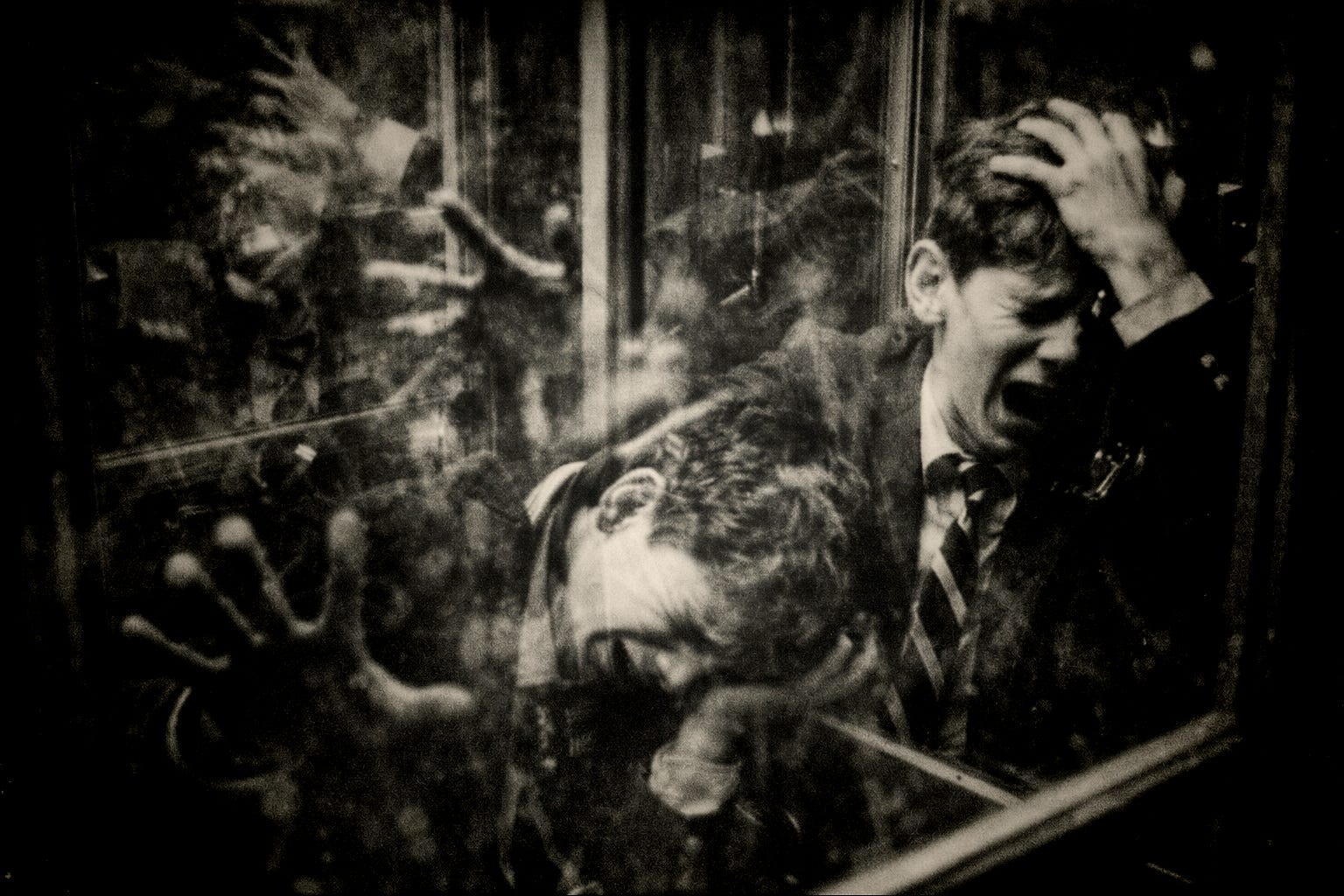
In 1968, I won first place in the Ralph Bradley Prize — a regional boarding school film competition — for a Super 8 movie called God-Help. The title was a phone number that spelled out a prayer. In the film, an Exeter boy in a blazer and tie enters a phone booth to call God for help. The camera swirls around the glass as he suffers and flails inside, the reflections multiplying and obscuring him until he crumbles to the ground, destroyed. God never picks up.
I was sixteen when I made that. I knew exactly what I was saying.
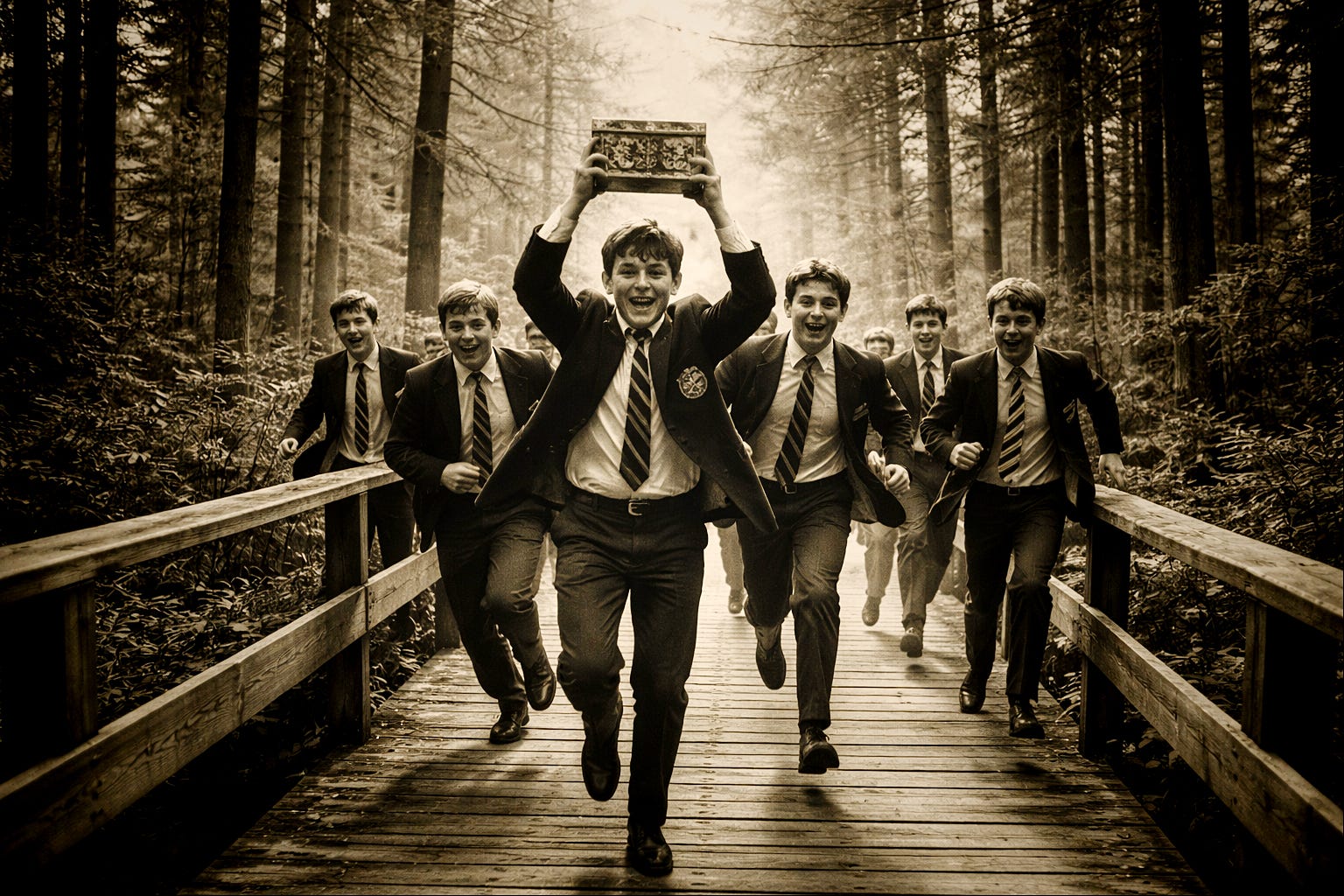
My senior year, the school gave me the entire spring semester to produce my thesis film — a 45-minute, 16mm black-and-white movie called BWATUL. The title came from Exeter slang: “bois-tool,” a mashup of the French word for woods and the hip word for walking. It was code for heading into the woods to smoke a joint. The film was built around the contrast between the structured, controlled atmosphere of the school and the freedom waiting on the other side of the big wooden footbridge that connected campus to the forest. One of the most iconic shots was a dozen boys in slow motion, running across that bridge into the trees. A charismatic student appears holding an oriental box above his head like a sacred offering, the other boys swirling around him, drawn to whatever’s inside. The film follows the protagonist as he wrestles between his love of Cream and getting high and the tight expectations of the institution, until finally he collapses and tears a poster off the wall in frustration.
I asked my friend Fred Awad to direct. Fred was Egyptian-French, with mischievous eyes and a laugh that made everyone around him excited to be alive. He said yes immediately.
That spring — the spring of 1969 — Fred and I and another friend, Brad Barrows, took LSD together and crossed that same wooden footbridge into the woods late in the afternoon.
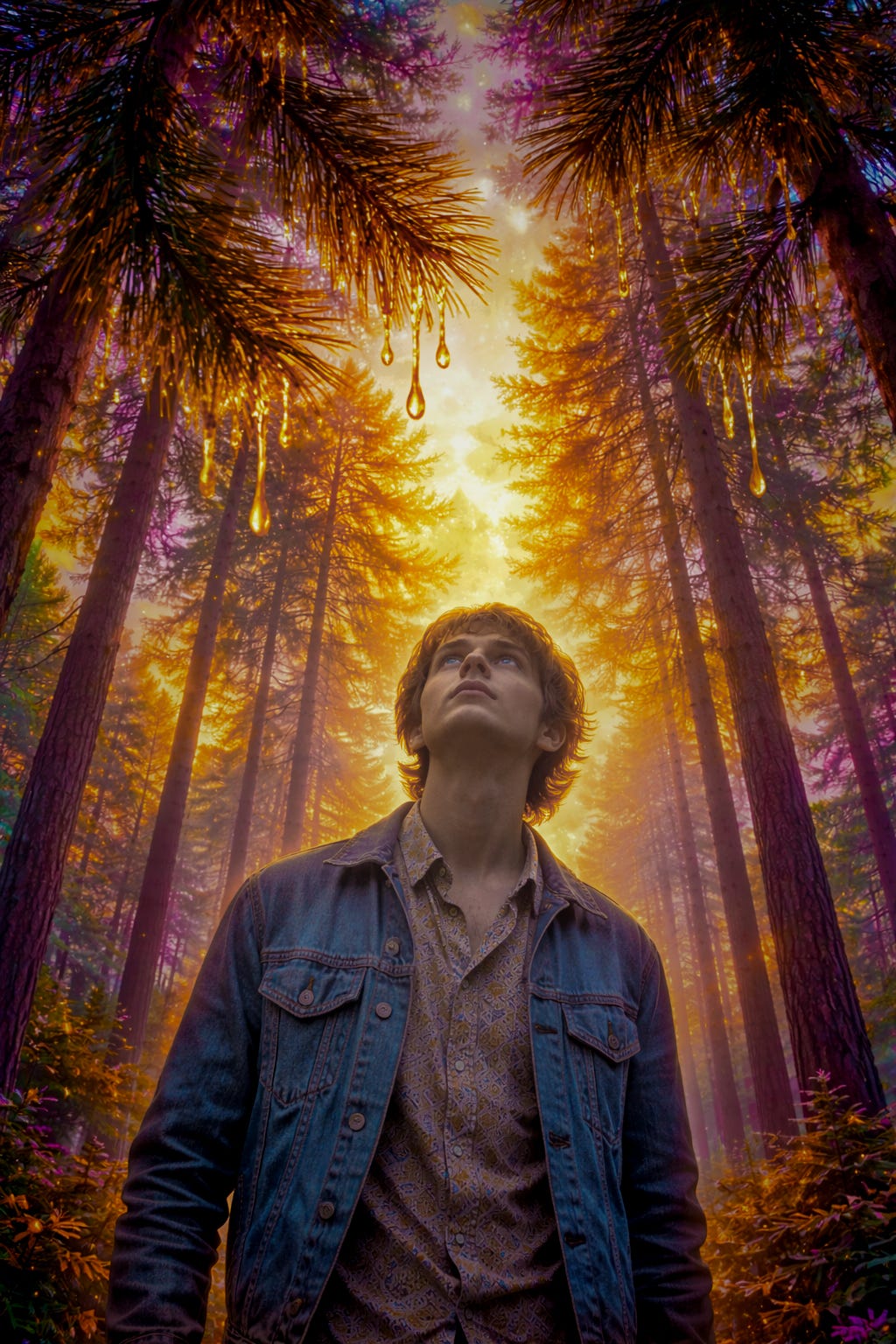
The sun was beginning to set. I was standing among the tall pines, looking up, when a cluster of pine needles caught the golden light and began to melt — dripping liquid gold against the sky. That’s when I knew I was tripping.
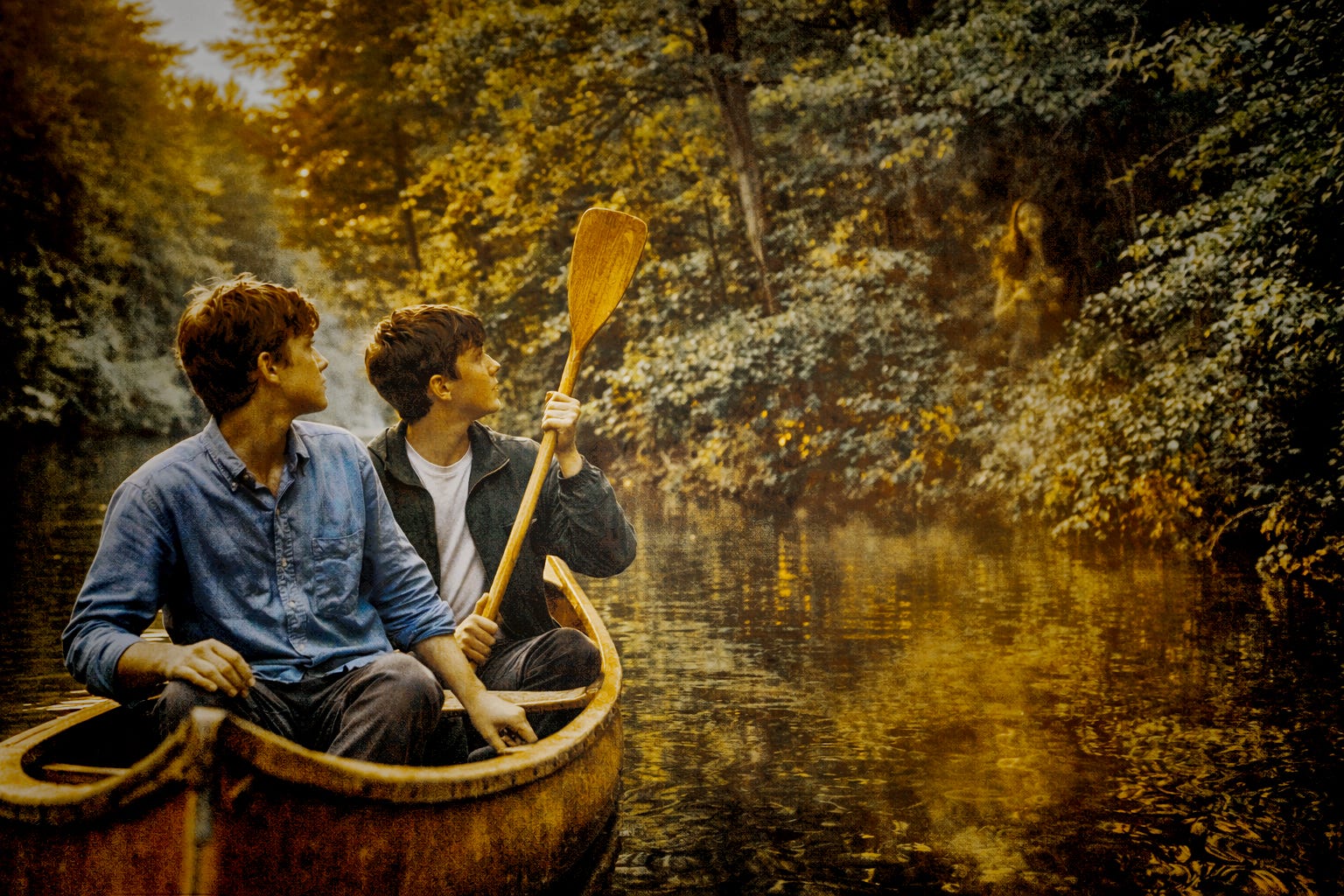
There were other times in those woods that stay with me. Fred and I used to canoe along the river quite a bit. One afternoon we were paddling past a bank when we heard a girl crying and moaning somewhere in the trees. We were both virgins. It took us a moment to understand what we were hearing. I remember marveling at the agony and the joy of it — the primal sound of something we hadn’t yet experienced, drifting across the water.
Later that night, after the acid trip, Brad returned to his small off-campus house and Fred came back to my room in Langdell, where he fell asleep and never made it back to his own dorm to check in. Both were investigated. Both were expelled. Both were third-year students. I was weeks from graduation and somehow slipped through.
Fred tried to commit suicide at the school he was sent to the year after his expulsion. A couple of years later, he reportedly fell from a horse and died. Brad went back to Colorado. He reportedly fell to his death while climbing in the Rockies.
They weren’t the only ones.
A boy I’ll call Henry K. — from one of the great American musical families — also lived in Langdell. He painted extraordinary watercolors and wrote poetry that stopped you cold. He struggled mightily at Exeter. The place was not built for boys like him.
Fred Z. was Chinese-American, from Hong Kong. He carried a Nikon F and was the one who got me into photography — showed me that a camera could be a way of seeing, not just recording. He had a nervous breakdown and dropped out.
Jerry Carroll had unwittingly become my political rival at Whitby — a great athlete, the class clown, immensely popular, a kid who used to pop boners in class and show them off under his gray slacks just to get a laugh. Jerry was so much fun. Running against him for first selectman was my father’s idea, not mine. My campaign slogan was my initials — ADSP: Ready to Rocket — because this was the era of Alan Shepard’s first spaceflight. My father wrote a line into my campaign speech that made fun of my big ears, saying I could become the first human to fly. I hated reading it, but he made me do it. Maybe the self-deprecation is what got me that one extra vote that put me over the top. I never dreamed in a million years I could beat Jerry Carroll.
He followed me to Exeter a couple of years later, but lived across campus and I never saw him. He reportedly died in a fall in the White Mountains of New Hampshire a few years later.
For every boy who went on to Wall Street or the oil business or the chairmanship of a great publishing house, there were just as many who washed up on the beach. Exeter could be a cold, competitive place for some of us, and some of the boys who arrived with something fragile and creative inside them left with it broken — or didn’t leave at all.
I graduated and went to the University of Pennsylvania. Not because I chose Penn, but because my father chose it for me. I wasn’t allowed to apply to USC, UCLA, or NYU — the three film schools where everything I’d been building toward would have found its proper home. Instead, he mandated philosophy and French literature at the best Ivy League school I could get into. My entire life since has been a struggle to realize the potential that was right there, fully formed, at eighteen — and systematically blocked by the man I believed was supposed to help me become what I was meant to be.
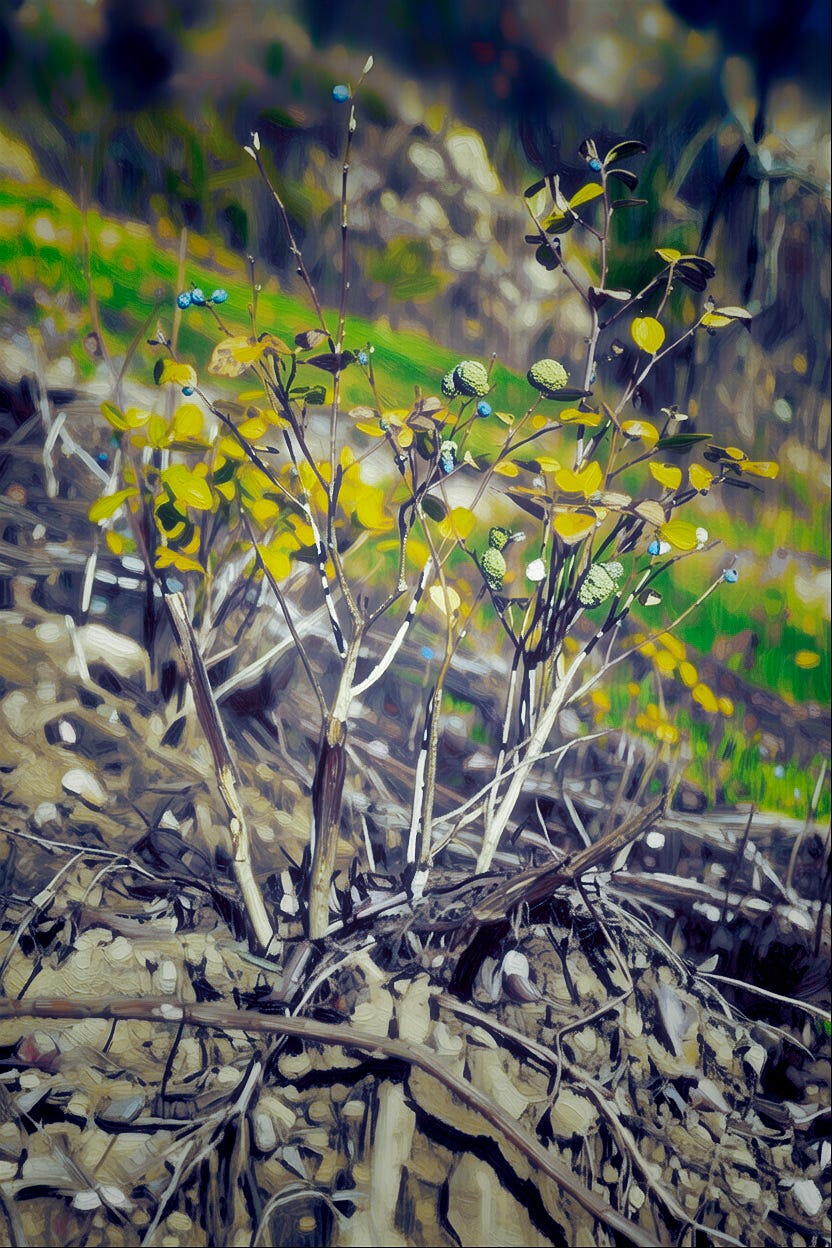
Years ago, when I moved to Johnson, Vermont, I planted some blueberry bushes in raised beds. A couple of years later, I had to remove the beds so a firewood truck could get around back, so I transplanted the bushes to the hillside. Then I had to move them again. They ultimately withered and died—transplanted one too many times.
I moved eight times before I was eight years old. My two youngest siblings never moved once until their early teens. I bore the full brunt of my father’s expectations and control—the first son, the experiment, the one he was going to get right. Shipped to Montessori, then Exeter, then France for a year with Schoolboys Abroad, then Penn. Each transplant ripped up whatever roots had started to take hold. The blueberry bushes didn’t die from neglect. They died from being relocated past the point of recovery.
I think about this when people tell me my story is “very personal.”
The correspondence between Jon Galassi and me goes back more than a decade. In May 2014, I wrote to him about a book I had kicking around inside me. I described the 1973 hitchhiking trip and called it “Mad Men told from the hippie side of the equation.” He wrote back at one in the morning from his iPhone: “I would try both approaches and see what feels most natural to you. Try them and put them away for a while and then go back and look at them cold.”
I was electrified by his reply. Good advice. Years passed.
On August 30, 2025, I wrote again. “Dear Jonathan, here we are over ten years later, and I have finally written that book.” I sent him the manuscript of Surfing the Interstates.
Two weeks later, his reply arrived. It was gracious — and that matters. Jon Galassi is not a villain in this story. He wrote:
“I think your book is moving and brings back a vivid moment in my own life too, but I think it is very personal and that it would be hard to find a broad reach of readers. It may be that it would be most successful published privately and shared with those closest to you.”
Moving. A vivid moment in his own life. Very personal. Hard to find a broad reach. Published privately. Shared with those closest to you.
He was kind. He meant well. And he was wrong — not about the commercial reality, maybe, but about the suggestion to share it with those closest to me. I mailed twelve author copies to family members, including all five siblings. The silence was total.
“Very personal” is publishing language. It means your interior life doesn’t have a market hook. You’re not a celebrity. You haven’t climbed Everest or survived a kidnapping. You’re a seventy-three-year-old man who hitchhiked across America with eighty dollars and a guitar, built a windsurfing school in the Caribbean with a woman who was dying of cystic fibrosis, and spent forty years trying to understand why he couldn’t stop running.
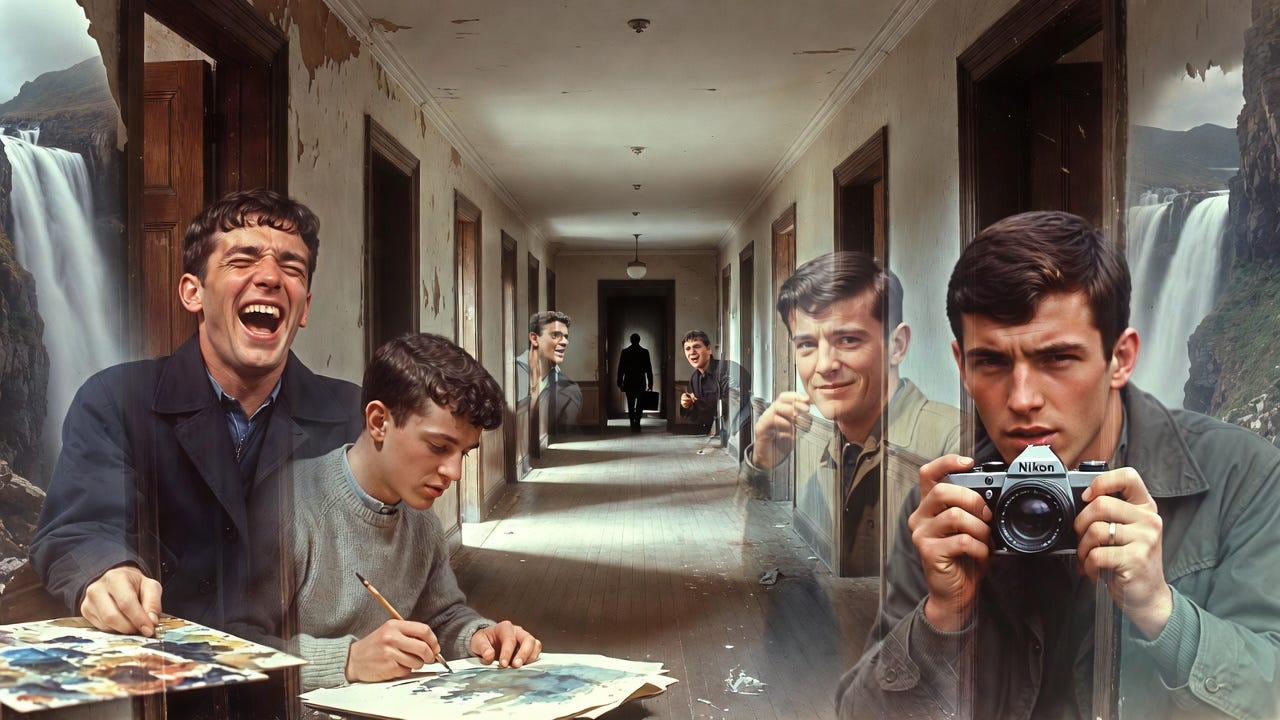
But I think about Fred Awad’s laugh. I think about Henry K.’s watercolors. I think about Fred Z. and his Nikon and the way he saw light. I think about Brad Barrows crossing that bridge into the woods with me on a spring night in 1969 and never really coming back. I think about Jerry Carroll — the funniest kid at Whitby, the boy who could make an entire classroom lose it — falling to his death in the White Mountains.
Their stories were personal too. Nobody is telling them. Not because they don’t matter, but because the boys came from the wrong background for anyone to care. Privilege is supposed to be armor. When it isn’t — when the boarding school breaks you, when the money can’t save you, when having a Steinway in the living room doesn’t keep you from falling apart—the world assumes you had it coming. Or worse, that it doesn’t count.
It counts. Every one of those boys counted.
So I put the book out myself.
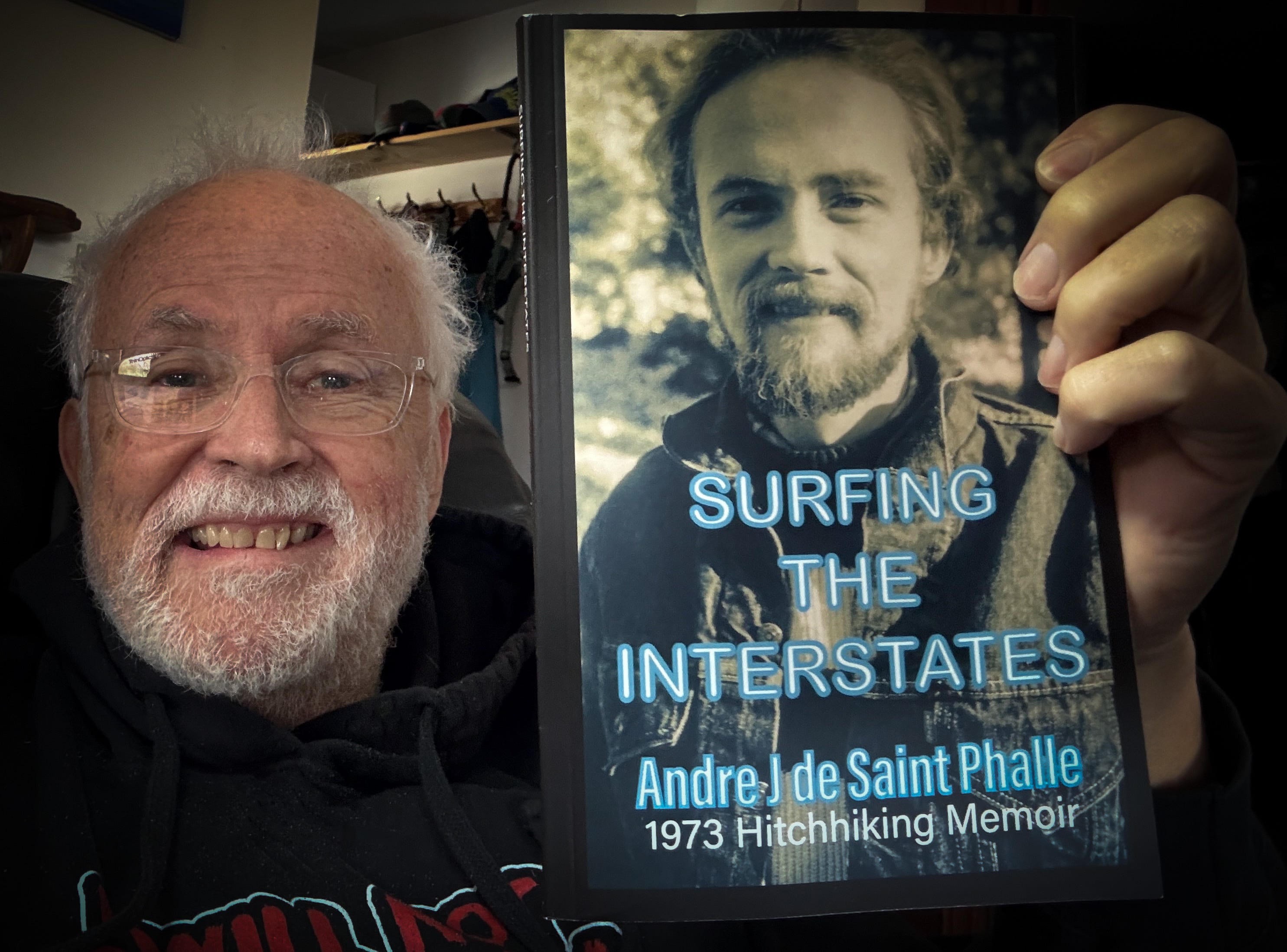
E-PUB · Audiobook · E-PUB + Audiobook · Kindle/Paperback/Hardcover/Audible
Full Table of Contents: Surfing the Interstates: Complete Chapter Guide
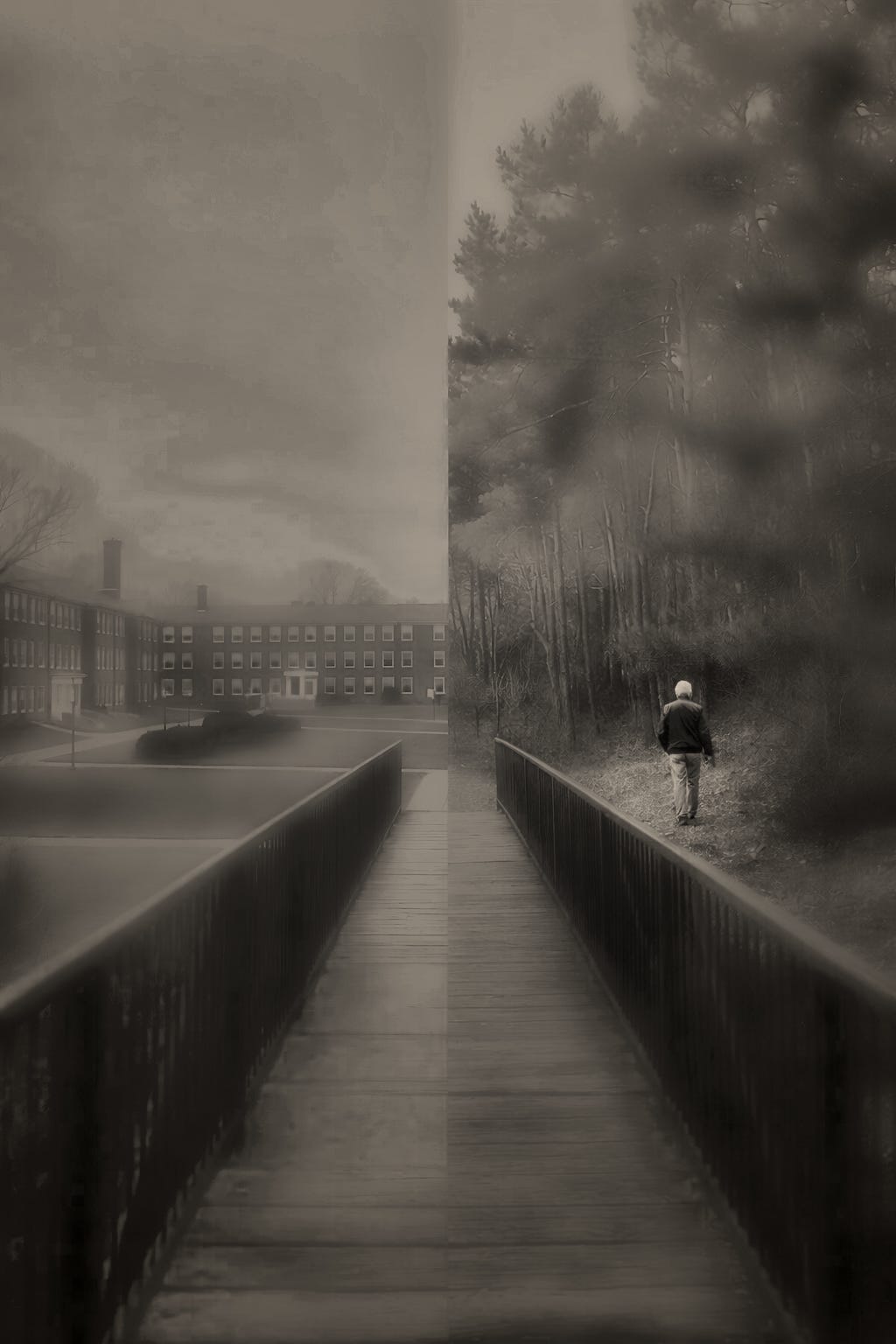
I keep coming back to that footbridge — the one in BWATUL, the one we crossed the night we took the acid, the one that connected the structured world to the wild one. My whole life has been an argument about which side of that bridge I belonged on. My father wanted me on the campus side. Exeter wanted me on the campus side. The publishing industry, it turns out, also wants me on the campus side — presentable, marketable, reducible to a category.
But the woods are where the truth lives. The woods are where the pine needles turned to liquid gold. Where Fred Awad laughed. Where a girl’s voice drifted across the water and two virgins tried to understand why sex sounded like pain and pleasure rolled into one.
I wrote Surfing the Interstates from the woods side of the bridge. Jon Galassi read it from the other.
Very personal. That’s the whole point.
E-PUB · Audiobook · E-PUB + Audiobook · Kindle/Paperback/Hardcover/Audible
Full Table of Contents: Surfing the Interstates: Complete Chapter Guide