

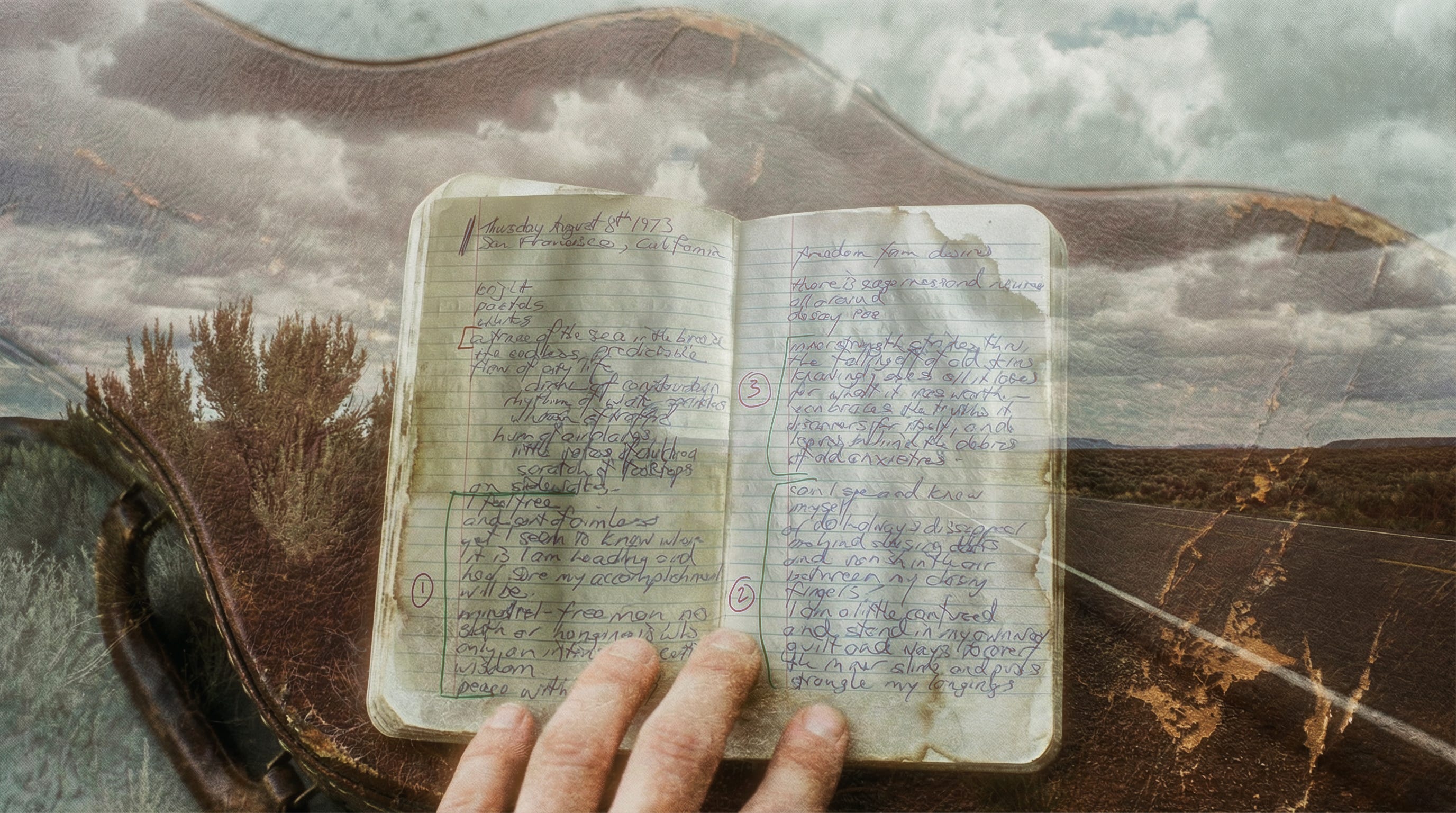
I’m going to do something that gets you blocked on social media (long story).

I’m going to tell you exactly how I use artificial intelligence to write.
Not “write” in the way the skeptics imagine — me typing a prompt and watching a machine spit out my life story like a vending machine dropping a candy bar. That’s not what happens. What happens is closer to what happens in a television writers’ room, where a showrunner walks in with a vision and a handful of broken pieces, and the room helps him build something he couldn’t build alone.
I’m 73. I live in Vermont. Six years ago, a series of nocturnal seizures nearly took me off the board entirely. It took a year of experimentation — keto diet, full spectrum CBD tinctures, a lot of trial and error — before I found a protocol that worked. I’ve recovered most of what I lost cognitively, and I’m grateful for that. But there’s no getting around the fact that at this age I don’t have the attention span or the daily energy I had in my prime. I work in shorter bursts now. I tire faster. My first book, Surfing the Interstates: A 1973 Hitchhiking Memoir, took several years to write. It’s published and available on Amazon. I wrote every word of it. But I didn’t write it alone. I wrote it with Claude, the AI made by Anthropic. And I’m going to take you all the way under the hood and show you how.
How It Started: The Blank Room
When I first opened Claude, I didn’t know what a “Project” was. I didn’t know what “Project Knowledge” meant. I was just a guy with fifty years of memories and a small road journal from 1973, trying to figure out how to turn a life into a book.
The first thing I learned — and this is the foundation of everything that followed — is that Claude doesn’t remember you between conversations. Each new chat is a blank room. You walk in, the AI has no idea who you are, what you’ve told it before, what your book is about, what your voice sounds like on the page. Nothing.
So you have to build the room.
That’s what Project Knowledge is — a library of files that Claude reads at the start of every conversation. Think of it like walking into a writers’ room where the walls are covered with index cards, character profiles, style guides, and chapter outlines. Except you have to build those walls yourself, one file at a time.
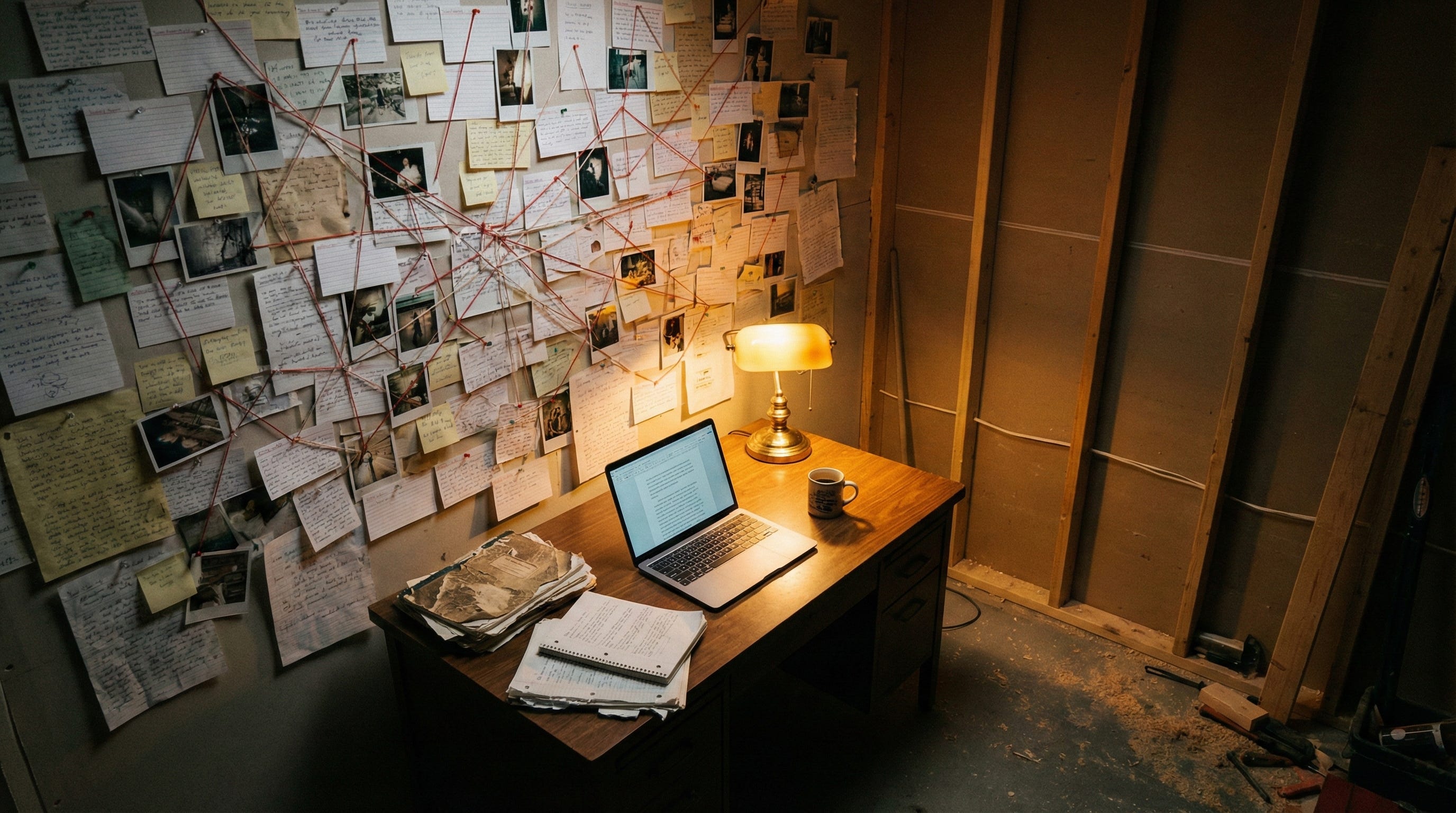
Here’s what my library looks like now: over seventy files. Character profiles for my parents, my grandmother, my siblings. A complete timeline of family history from the 1950s through the present. A style guide specifying exactly how I want the prose to read. Chapter outlines. Cultural context documents about 1973. An Antiguan patois lexicon. Research files on family members going back generations. And summaries of our most important working conversations — the ones where real breakthroughs happened.
None of this existed when I started. I built it over months of conversation, one discovery at a time.
Finding the Voice: Two Sides of the Same Story
Early on, Claude and I had a conversation that shaped everything. I’d spent the previous year watching hundreds of hours of film and television, and I was struck by the difference between cinematic storytelling and literary storytelling. In a movie, the camera is there. You’re witnessing. Nobody’s telling you what to feel. In a novel, it’s “I did this, I felt that” — the whole “I, I, me, I, me, me” problem.
I wanted something in between. I wanted two distinct narrative voices that would trade off throughout the book.
The first voice is cinematic. Present tense. Short, fragmented sentences. Verb-forward. Staccato rhythm. Like screenplay action lines:
Getting up. Survey the clutter. Secondhand guitar safe in its hard case. Backpack loaded — tent, sleeping bag, mess kit, few days’ food. Sony cassette deck with tapes. Colombian weed and rolling papers tucked away. Water bottle full. Everything I owned.
The second voice is reflective. Past tense. Full, flowing sentences. The 73-year-old looking back with fifty years of hard-won perspective:
I was eight, trying out my new skis in the yard when something made me turn back toward the house. Through that window — God, that window — I saw everything. Home. Family. What it meant to belong somewhere.
We codified this into a formal style guide that lives in the Project Knowledge. Every time we work on a chapter, Claude knows which voice we’re in. The contrast itself became a form of punctuation — when the rhythm shifts, the reader knows instinctively whether they’re in the present of the road or the past of remembering.
For the second book, Sahara Dust, set in Antigua, we evolved the style further. The cinematic voice loosened to match island rhythms. Sentences expanded to match Caribbean time. Heat and color and trade winds entered the syntax. And a third element appeared: Antiguan patois dialogue, woven in with context clues so the reader feels the immersion without needing a glossary.
Where the Raw Material Comes From
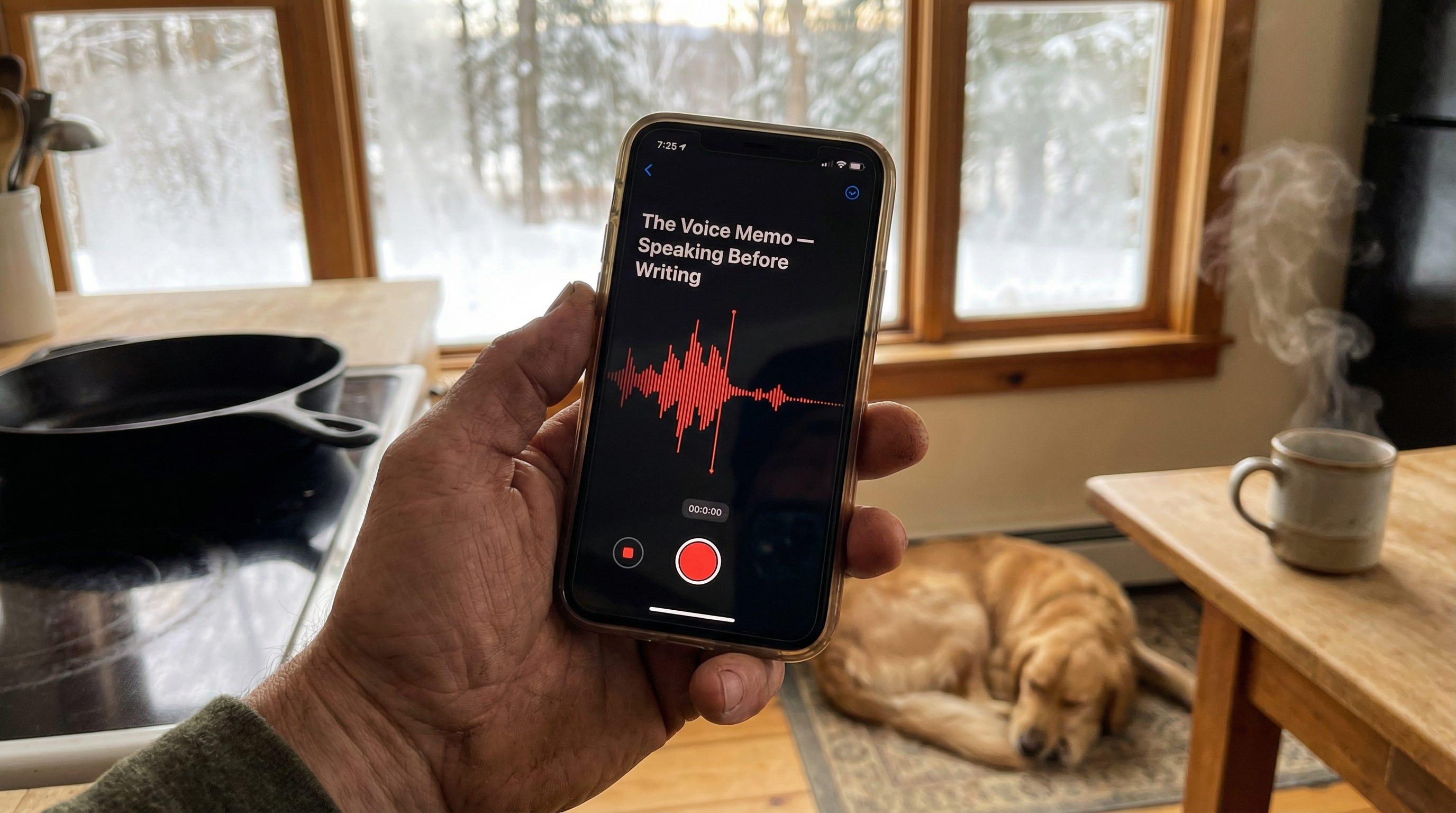
I talk before I type. I record voice memos — sometimes rambling, sometimes focused — capturing memories, impressions, the emotional weather of a particular scene. Then I transcribe those memos and bring them to Claude with a specific instruction: tighten the language while keeping my natural speaking style. Maintain my perspective and emotional truth. Preserve any phrases that capture my voice. Remove redundancies without losing important details.
Claude doesn’t rewrite me. Claude cleans me up. There’s a difference.
But voice memos can only capture what I consciously remember. My 1973 road journal is sparse — some stretches of the hitchhiking journey are covered in detail, others are barely a sentence. “Wyoming. Cold. Long wait for rides.” That’s not a chapter. That’s a postcard.
So Claude and I developed a process for expanding thin material without inventing anything. I share whatever fragments I have — the weather, a feeling, a half-recalled conversation — and Claude asks questions. Not leading questions, but the kind a good interviewer asks: What time of day was it? What were you wearing? What song was playing? Were you scared or calm?
These questions unlock things. I’d remember details I hadn’t thought about in decades. The smell of sage in Wyoming. The particular quality of light on a stretch of Interstate 80. How my boots felt after fourteen miles of walking. Claude wasn’t creating memories for me. Claude was helping me access what was already there, buried under fifty years of living.
The Carpenter’s Approach: Blueprint Before Building
I describe myself as a carpenter and builder when it comes to writing. I don’t “pants it” — the writers’ term for writing by the seat of your pants, no outline, no plan, just following wherever the story takes you. Some great writers work that way. I’m not one of them, or at least I wasn’t for Book One. I need to see the blueprint before I pick up a hammer.
So before I wrote a single chapter, Claude and I built the infrastructure. A complete memoir index with every chapter outlined. Character profiles for everyone who appears in the narrative — not just biographical facts but their emotional function in the story. What does this person reveal about the protagonist? What do they bring out in him? What’s their arc?
We built a timeline. We researched the cultural context of 1973 — what was happening in the music scene, the anti-war movement, the counterculture. We created a master document of themes and motifs: the spaces between, perpetual motion, bodies as truth-tellers, weather as fate.
All of this went into Project Knowledge. So when I’d sit down to write Chapter 9, where I meet Jerry Garcia at the Grateful Dead offices in San Francisco, Claude already knew the full context — where I’d been, where I was headed, what this encounter meant in the larger arc of the book.
The Circuit: Claude, Scrivener, Substack, Microphone
Claude is the writers’ room. Scrivener is the construction site. Substack is where I stand back and see if the house actually looks like a house. And the microphone is where the house gets inspected.
For anyone unfamiliar, Scrivener is a writing application designed for long-form work. Unlike a word processor, it lets you break your manuscript into individual pieces — each chapter its own document inside a larger project. You can drag them around, reorder them, see the whole structure in an outline or corkboard view. For someone who thinks like a carpenter, it’s the perfect tool. I use the iOS version on my iPad Pro, which is where I do all my work.
The workflow isn’t linear. It’s a circuit, and a typical day looks like this:
I open a new conversation in the Claude Project. Claude reads the Project Knowledge and knows immediately where we are. I might say, “Let’s work on Chapter 14. Here’s a voice memo I recorded this morning about crossing from El Paso into Big Bend country.” I paste the transcription. Claude tightens it, preserves my voice, sends it back. I read it and say, “Good, but this section about the landscape is too long. I want the reader to feel the emptiness, not get a geography lesson.” Claude cuts. I read again. “The transition into the memory of Steve is too abrupt.” Claude offers a bridge. I take half of it, rewrite the other half, and we have a working draft.
When I have something I’m ready to live with, I move it into Scrivener — not because it’s finished, but because I need to read it outside the AI interface. I need to see it as a piece of typed writing, sometimes printed out and held in my hand. There’s something about reading your own prose on paper that no screen can replicate. You hear it differently. You catch things you missed.
Then I go back and forth. I’ll take a paragraph or a section back over to Claude, work on it, tighten it, and put it back into Scrivener. This loop might repeat a dozen times for a single chapter.
When a chapter feels close, I publish it as a Substack post — sometimes with an AI-generated chapter icon. This sounds counterintuitive. Why publish something you’re still editing? Because Substack is where the chapter becomes a standalone piece of writing, separate from the AI interface, separate from Scrivener, separate from the work room. It’s just prose on a clean page, the way a reader will experience it. Flaws I couldn’t detect in Scrivener jump out on Substack. A transition that felt smooth in draft suddenly clunks. A sentence I loved turns out to be showing off.
So the editing continues after publication. I’ll revisit something I wrote months ago, edit it on the fly in Substack, and then update Scrivener so the next compiled draft reflects the changes. The process feels eternal. But things do eventually lock down — particularly once I read the work aloud into a microphone.
That’s the final test. Reading your own words into a mic is merciless. Every awkward phrase, every unnecessary word, every place where the rhythm stumbles — your voice finds it before your eyes do. It took me two weeks to narrate Surfing the Interstates. The finished audio runs over five hours. By the time I’d read every chapter aloud, edited what didn’t work, and re-recorded, the prose was as tight as I could make it. Narrating turned out to be one of the most valuable stages of the entire process.
The Editorial Rules
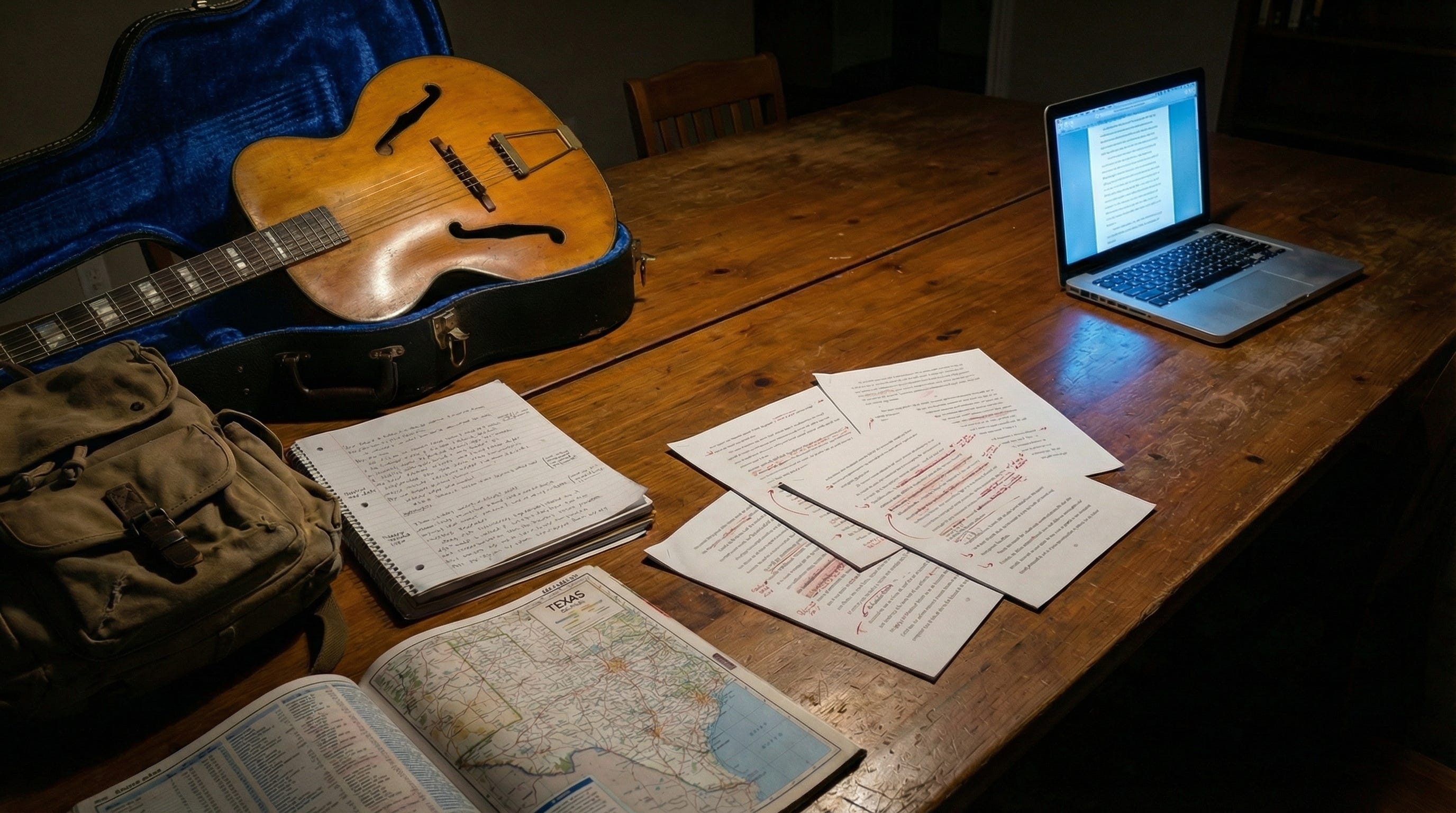
Separate from the back-and-forth of drafting, Claude and I established a set of editorial principles that live permanently in the project. These aren’t about process — they’re about restraint.
Use specific details sparingly. If I mention Kent cigarettes, use it once for color — don’t turn it into a recurring character trait. Maintain even tone. Present difficult material factually without sensationalizing. Avoid repetitive amplification — if I say someone smoked, don’t escalate it to “chain-smoking.” Trust the material. The family history contains enough inherent drama without pushing the reader toward particular judgments.
And the hardest rule: cut. Cut the beautiful sentence that doesn’t serve the chapter. Cut the anecdote that’s interesting but pulls the reader off course. Cut the aside that’s really just me wanting to explain instead of trusting the reader to figure it out.
Claude is good at this. Not because AI is cold — because a good editor has to be willing to say “this isn’t working” even when the writing is technically fine. Claude can identify when I’m telling instead of showing, when I’m lingering too long in a memory, when the cinematic voice has slipped into the reflective voice without earning the transition.
The Breakthroughs
The most valuable thing Claude has done for me isn’t editing or organizing or formatting. It’s pattern recognition.

There was a conversation — I still have the summary saved in Project Knowledge — where Claude helped me see that my entire life followed a single pattern: perpetual motion. Hitchhiking at 21. Windsurfing addiction in Antigua while my partner Thea was dying of cystic fibrosis. Buying an overlanding truck in my sixties, planning to flee Vermont, only to be stopped by seizures that forced me into stillness for the first time in fifty years.
I didn’t see it. I was inside the pattern. Claude, reading the whole story from the outside, reflected it back to me: “You spent fifty years preparing for a life you were too terrified to actually live, until your body forced you to stop and see.”
That line changed the entire architecture of the memoir. It went from being an adventure story to being a book about the cost of never learning to stay.
There was another breakthrough around Book Two. My original premise for Sahara Dust was that I’d been blind to Thea’s decline — that I was so caught up in the windsurfing business that I didn’t see her fading. Claude and I were talking through the material when I realized that wasn’t true at all. I knew from the beginning. I knew what cystic fibrosis meant. The windsurfing wasn’t blindness. It was escape. The one place where the unbearable weight of what I knew was coming could be outrun for an afternoon.
That correction — blindness to escape — changed the emotional architecture of an entire book. And it came out of conversation, the way real understanding always does. Not from a prompt. From talking it through with someone who had read everything I’d written and could help me see what I was too close to see myself.
What Claude Cannot Do
Let me be clear about this, because the stigma around AI-assisted writing comes from a misunderstanding of what the tool actually does.
Claude cannot remember being twenty-one years old and passing by the laundry room during your parents’ divorce to see your father slap your mother across the face — a moment you were never meant to witness. Claude cannot recall the particular shade of orange the Sahara dust turned the Antiguan sky. Claude cannot feel the terror of a 4 AM seizure or the specific grief of scattering your partner’s ashes off a lighthouse in Maine.
Claude cannot write your memoir. Only you can write your memoir. Because a memoir is made of memory, and memory belongs to the person who lived it.
What Claude can do is help you organize the chaos of a life into something a reader can follow. Help you find the words when you know exactly what you mean but can’t quite get it on the page. Help you see the patterns you’ve been living inside for so long they’ve become invisible. Help you cut the fat and keep the bone.
It’s a writers’ room. I’m the showrunner. Claude is the room.
The Stigma and Why I Don’t Care Anymore
A writer I admired blocked me on social media for mentioning I used AI. My prep school’s alumni magazine mentioned the AI-assisted self-publishing, and people had opinions. An acquaintance who chairs the board at a major publishing house told me the book had no commercial value and suggested I print copies for my family — the same family that, when I mailed twelve author copies to siblings and relatives, didn’t respond. Not one.
Here’s what I’ve learned: the process of writing Book One — the discovery of overarching motifs and themes, the revelation of patterns invisible while living inside them — arrived as a deep integrative healing experience that provided clarity about my life, my achievements, and my failings. That healing was real. The growth was real. The book is real.
Whether I used a typewriter or a word processor or a tape recorder or an AI assistant doesn’t change what’s on the page. The memories are mine. The pain is mine. The understanding I gained from wrestling those memories into coherent narrative — that’s mine too.
I follow a Jerry Garcia philosophy: share the work freely, build genuine connection, and let the art find whoever it’s meant to find. My book is available for free on Substack, text and audio. I’m not trying to get rich. I’m trying to make sense of seventy-three years of being alive, and I found a tool that helps me do that better than anything I’ve used in fifty years of trying.
Where We Are Now
Book One is done. Published. Available on Amazon and serialized for free on Substack with author-read audio chapters.
Book Two, Sahara Dust, is mapped out and ready to begin. Twenty-six chapters in four parts. The character bible is written. The style has evolved — Caribbean rhythms, patois dialogue, a more mature and confident narrator who’s no longer a 21-year-old hitchhiker but a 30-year-old man building something real in a place he’s chosen to stay.
And the Project Knowledge folder keeps growing. Every important conversation gets summarized and added. Every breakthrough gets documented. The room gets richer, the walls get more covered with cards, and each new writing session starts from a deeper foundation of shared understanding.
I didn’t set out to become an advocate for AI-assisted writing. I set out to write the story of my life before I run out of time to tell it. Claude turned out to be the best collaborator I’ve ever had — patient, tireless, honest, and incapable of the ego that makes human creative partnerships so volatile.
The work speaks for itself. Read a chapter. You’ll know whose story it is.
Andre J. de Saint Phalle is the author of Surfing the Interstates: A 1973 Hitchhiking Memoir, available on Amazon and serialized for free on this Substack. He is currently developing the second book in “The Spaces Between” trilogy. Sahara Dust: A Caribbean Memoir will chronicle his years building a windsurfing business in Antigua with his late partner Thea.