The Question That Cannot Be Asked
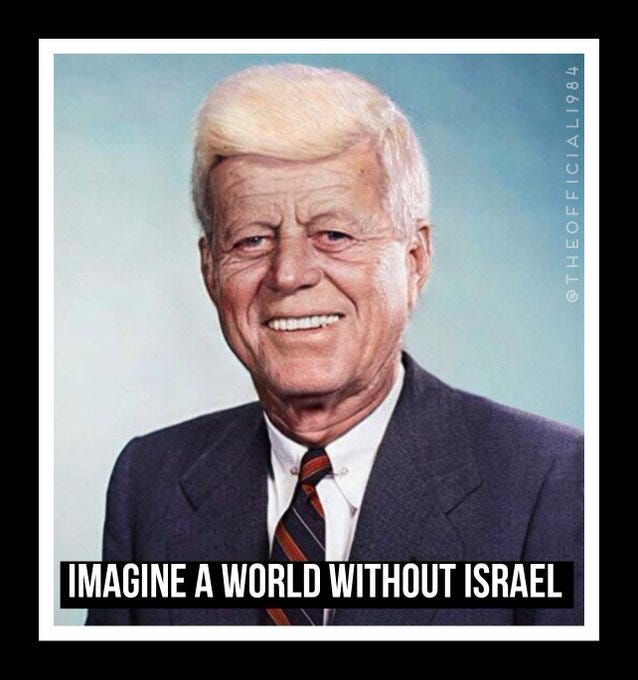
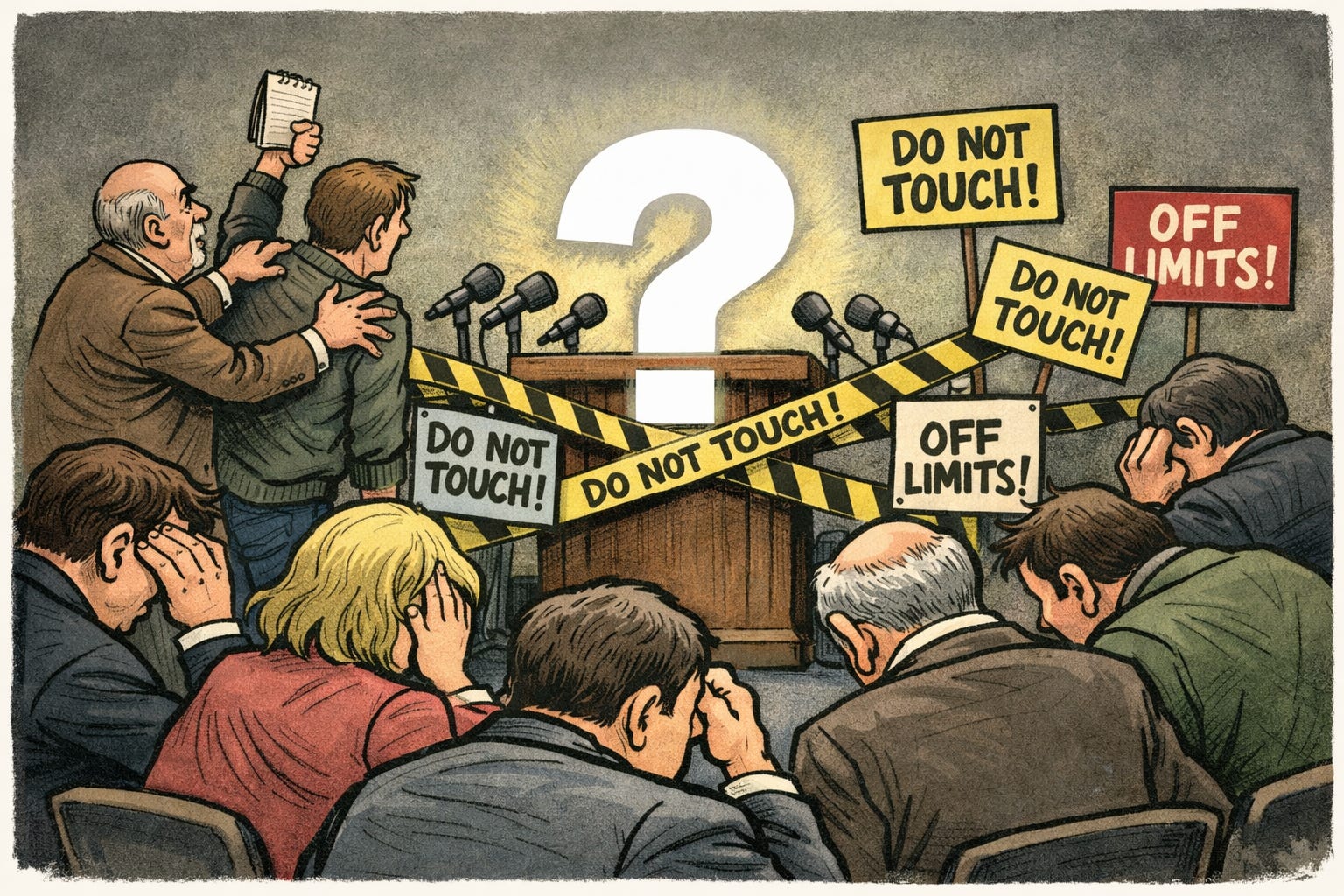
In American political discourse, there exists a question so radioactive that merely posing it ends careers: How does the government of a 75 year old nation of 9 million people (smaller than New Jersey), exercise effective control over the foreign policy of the world’s sole superpower?
This isn’t antisemitism. This is a question about state power, lobbying, and the mechanics of influence. Israel is not “the Jews” — it’s a modern nation-state imposed by Great Britain in 1948 upon the nearly 6,000 year old Palestinian people, with a separate government, an intelligence service, a nuclear arsenal, and a sophisticated influence operation in Washington.
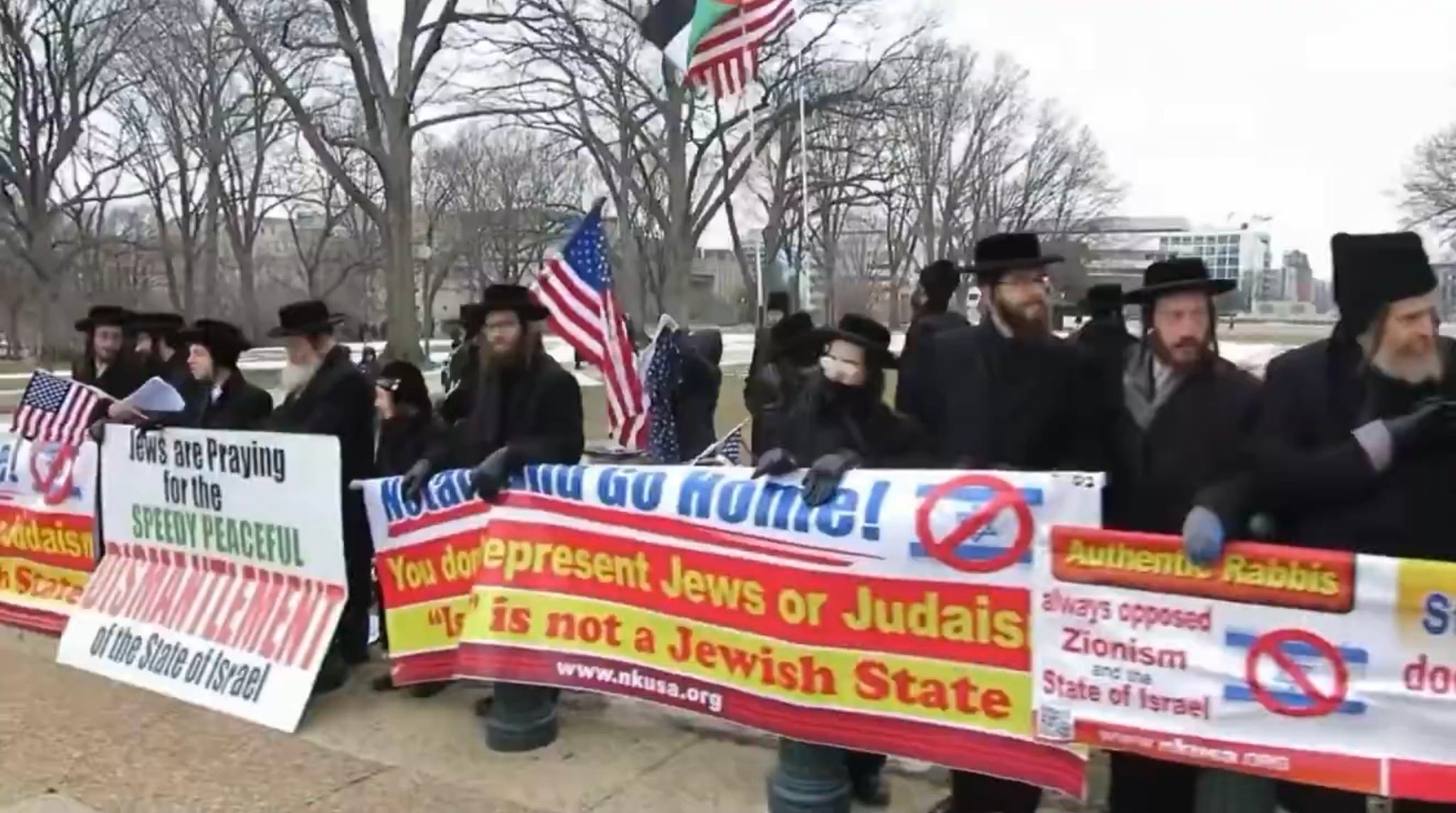
Conflating criticism of this state with hatred of a religious group is itself a propaganda technique—and one of the most effective ever deployed.
It is a shameful rhetorical shield that has successfully shut down legitimate policy debate for over seven decades.
The Mechanics of Control
The Zionist lobby — principally AIPAC, but extending through a network of PACs, think tanks, media relationships, and donor networks — operates unlike any other foreign influence operation in Washington. Its power derives from several interlocking mechanisms:
The donor class. Pro-Zionist donors represent a vastly disproportionate share of political contributions to both parties. Politicians learn early that crossing AIPAC means a primary challenger will materialize, fully funded. The lobby doesn’t need to win every race — it needs only to make a few examples, and the rest of Washington falls in line. Charlie Kirk learned this lesson when he lost $2 million from a Jewish donor over his refusal to condemn Tucker Carlson. That financial pressure is the soft edge of a harder system.
The evangelical alliance. Christian Zionism delivers tens of millions of Republican voters who believe Israeli control of biblical lands is a prerequisite for the Second Coming. This theological commitment translates into political pressure that asks nothing of Israel in return — no conditions, no accountability, just unconditional support.
The intelligence relationship. The CIA and Mossad have been intertwined since Israel’s founding. This creates institutional dependencies, shared operations, and a flow of intelligence that makes the relationship seem indispensable — even when Israeli intelligence has been caught spying on the US, as in the Jonathan Pollard case.
Media and narrative control. Coverage of the Israeli Government in mainstream American media operates within boundaries that don’t apply to any other nation. The framing is consistent: Israel “responds” while Palestinians “attack.” Israeli deaths are tragedies with names and stories; Palestinian deaths are statistics, often reported in passive voice. This isn’t conspiracy — it’s the observable pattern of coverage that any honest reader can verify.
From JFK to Charlie Kirk: The Enforcement Mechanism
On November 22, 1963, President John F. Kennedy was assassinated in Dallas. The official narrative points to Lee Harvey Oswald acting alone. But Oswald had been groomed by the CIA for years, then inexplicably relocated to Dallas just weeks before the assassination. He was eating lunch in the Texas School Book Depository breakroom during Kennedy’s parade, unaware of what was happening outside. The rifle strap on his mail-order weapon attached on the opposite side from the one found in the sixth-floor sniper’s nest — evidence of a setup hiding in plain sight.
Kennedy had been engaged in a heated dispute with Israeli Prime Minister David Ben-Gurion over Israel’s secret nuclear weapons program at Dimona. Kennedy demanded inspections. Ben-Gurion refused and ultimately resigned rather than comply. Kennedy was dead within months.
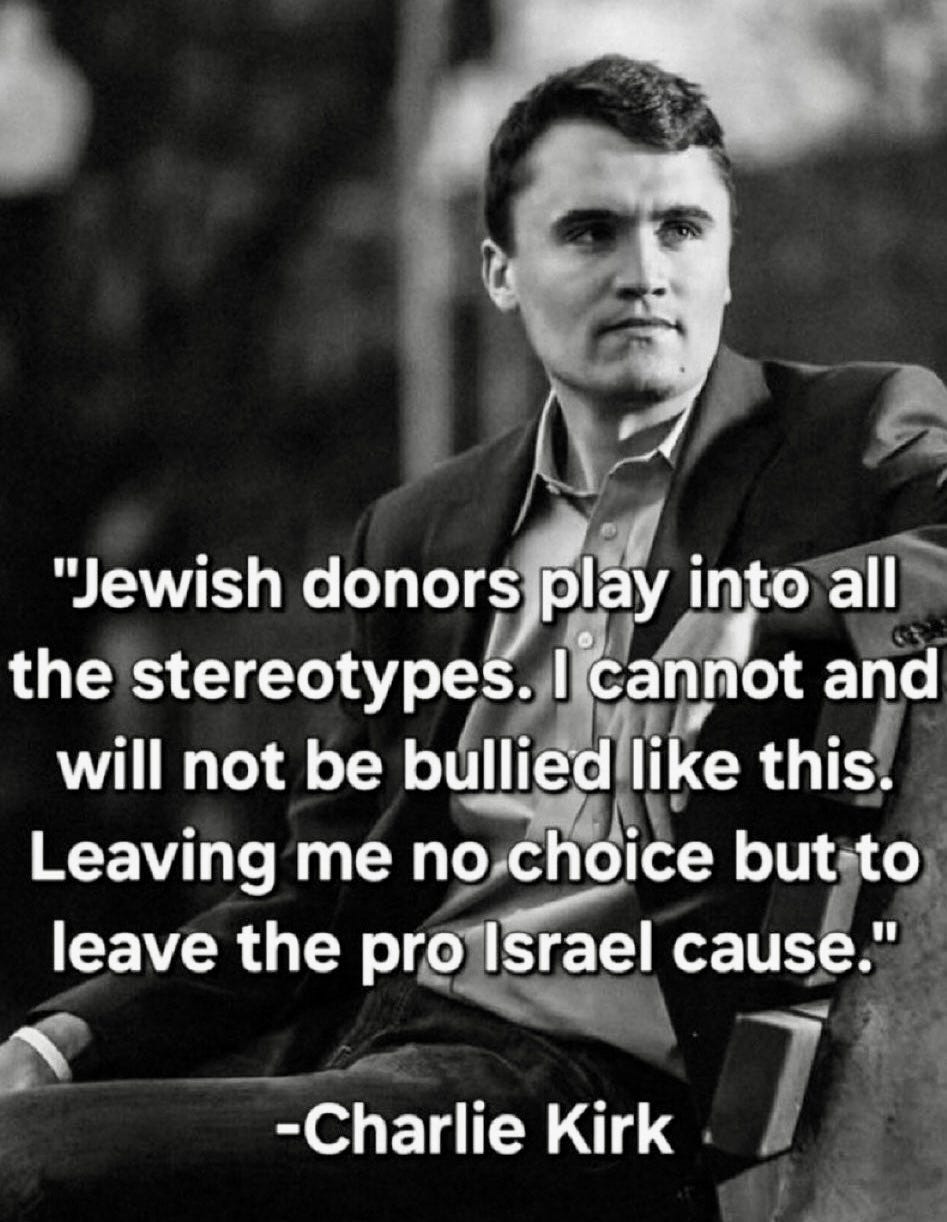
On September 10, 2025, Charlie Kirk — the 31-year-old founder of Turning Point USA and one of the most influential figures in the MAGA movement — was killed at Utah Valley University while speaking to a crowd of 3,000 people. The official narrative points to Tyler Robinson, a 22-year-old who allegedly fired a high-powered hunting rifle from a rooftop 142 yards away. But no bullet was recovered. No proof has been provided that his grandfather’s .30-06 rifle was even used. Initial police and K-9 searches of the surrounding woods found nothing — no weapon, no scent of a recently fired gun. Then the FBI arrived, and suddenly a rifle matching the description of his grandfather’s heirloom was “discovered.”
Was Robinson a willing patsy, coerced into participation? Blackmailed through debts, family vulnerabilities, or personal scandals? Radicalized online by handlers? Enticed with payoffs or plea deals? His sudden political transformation and the “anti-fascist” inscriptions etched on his bullets suggest orchestration — the same playbook used with Oswald’s carefully constructed defector legend.
The leading alternative theory demands scrutiny: Kirk wasn’t killed by a bullet at all, but by a shaped charge hidden in the Rode wireless microphone worn under his shirt — detonated by his own security team. Independent frame-by-frame analysis reveals what appear to be exploding shards at the moment of his collapse. Recently surfaced photos of the SUV that transported his body show plastic debris strewn across the floor. And in the aftermath, six operatives were observed methodically combing through the grass between audience rows. Cleanup? Evidence suppression? The questions multiply.
Despite the constitutional presumption of innocence, prosecutors have called for the death penalty. Despite publicly forgiving her husband’s alleged killer, Kirk’s widow has recently called for a speedy trial so that “justice may be served as soon as possible.”
Charlie Kirk was instrumental in bringing RFK Jr.’s MAHA voters into Trump’s electoral haul, and was on his way to becoming a future POTUS in many people’s minds. He had recently broken with pro-Israel orthodoxy. Leaked WhatsApp messages revealed he felt he had “no choice but to leave the pro-Israel cause” after losing $2 million from a donor over his refusal to condemn Tucker Carlson. For someone of Kirk’s prominence to break omertà on the Israel question within conservative circles represented a significant threat.
The parallels between Kennedy and Kirk deserve examination: both were killed publicly, in daylight, in front of crowds. Both deaths sent unmistakable messages. The private assassination sends one kind of message; the public execution sends another entirely. It says: We can reach anyone, anywhere, and we want you to know it.
The Exploding Microphone Theory
The alternative theory around Kirk’s death has been advanced primarily by Jon Aaron Bray, who has a background in body armor and military equipment. Bray proposes that Kirk wasn’t killed by Robinson’s rifle shot, but by a small explosive charge concealed in the DJI Mic 2 wireless microphone he wore under his shirt.
The key claims: the microphone’s battery could accommodate a shaped charge; video analysis shows shock waves emanating from Kirk’s chest, inconsistent with a supersonic bullet impact; the mic’s circuit board was propelled into Kirk’s neck, creating the gaping wound presumed to be a bullet entry; and Kirk’s shirt lifted during the incident in a manner consistent with an explosion rather than ballistic trauma.
Most significantly, proponents point to Israel’s September 2024 operation in which thousands of Hezbollah members and their families were killed or maimed using explosive pagers and walkie-talkies. This operation demonstrated a sophisticated capability to weaponize everyday electronic devices — exactly the capability the exploding microphone theory requires.
Thirty days after Kirk’s assassination, Advanced Energetic Solutions — a company with the capability to provide such miniaturized explosives and an $800,000 DOD (renamed Dept. of War) contract to produce just such a weapon— was destroyed in an explosion that killed 16 employees. Coincidence is always possible. Patterns are worth noting.
Whether or not the exploding microphone theory is true, its plausibility to large segments of the population illuminates something important: Americans now find it credible that Israel would assassinate an American political figure on U.S. soil using sophisticated weaponry, and that U.S. authorities would cover it up.
Why Netanyahu Protested
Israeli Prime Minister Benjamin Netanyahu issued multiple video messages calling theories of Israeli involvement in Kirk’s death “insane.” This raises an obvious question: why would Israel’s leader feel compelled to deny involvement unless there was substantial suspicion requiring response?
When accusations are truly absurd, governments ignore them. When accusations cut close to truth, governments issue denials. Netanyahu’s repeated protestations suggest the theory touched a nerve that silence could not address.
The Control System
Whether Kirk was killed by a lone gunman, an exploding microphone, or some combination of actors, the effect is identical to Kennedy’s assassination six decades earlier: no subsequent political figure will seriously challenge Israeli policy without understanding the potential consequences.
The system enforces Israel support through multiple mechanisms operating simultaneously:
Financial pressure — Kirk lost $2 million for insufficient loyalty. Most figures comply at this stage.
Character destruction — Those who persist face the treatment given to Jimmy Carter after his presidency, to Ilhan Omar, to Rashida Tlaib, to anyone who speaks plainly about Palestinian rights.
Kompromat — The Epstein files, widely believed to be controlled by Israeli intelligence, provide leverage over figures who cannot be controlled through money or reputation alone.
Terminal consequences — The parallels between Kennedy and Kirk deserve examination: both were killed publicly, in daylight, in front of crowds. Both died instantly — lights out, no final thoughts, no reckoning. Like the cut to black at the end of The Sopranos, they never saw it coming and never knew what hit them.
The lesson wasn’t for them. Dead men learn nothing.
The lesson was for everyone watching. For every politician who might consider challenging Israeli interests. For every donor who might waver. For every media figure who might speak too plainly. The public execution sends a message that the private assassination cannot: We can reach anyone, anywhere, anytime — and we want you to see it happen.
Kennedy’s head exploding in Dealey Plaza. Kirk having his throat slit open on a stage in Utah. Sixty-two years apart, the same lesson taught to different generations: this is what happens. This is what we do. And if you’re paying attention, you’ll make sure it never needs to happen to you.
The beauty of the system is that it rarely needs to deploy its hardest edge. The examples — spread across decades — teach the lesson. Every American politician understands: you can criticize Democrats, mock the media, challenge the FBI, question elections. But Israel remains untouchable.
The Historical Context
Israel’s creation was a product of British imperial maneuvering, post-war guilt and refugee crises, Cold War positioning, and effective Zionist political organizing. The Balfour Declaration of 1917 — a letter from British Foreign Secretary Arthur Balfour to Lord Walter Rothschild — explicitly promised British support for “a national home for the Jewish people” in Palestine. This is historical fact.
The declaration served British imperial interests: a client state in a strategically vital region. That calculus transferred to American empire after World War II. Israel was positioned as an unsinkable aircraft carrier in the Middle East, a reliable ally in a region of uncertain allegiances.
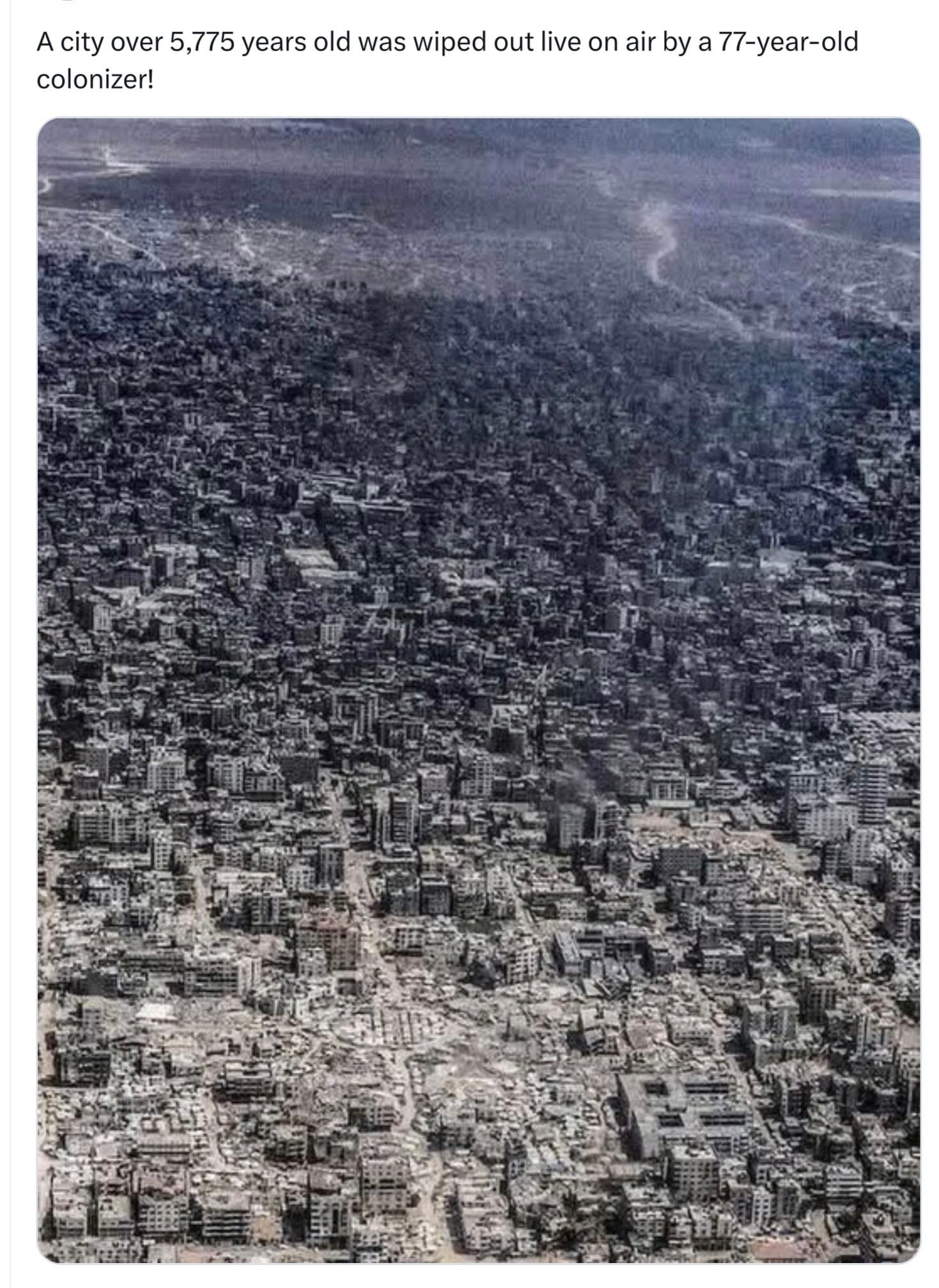
But the relationship has inverted. The United States doesn’t use Israel to project power; Israel uses the United States to project power. American treasure, American diplomatic capital, and American soldiers serve Israeli strategic objectives. The tail wags the dog.
The Cost to America
Consider what unconditional support for Israel has cost the United States:
The forever wars. The architects of the Iraq War — Wolfowitz, Perle, Feith, Wurmser — were explicit about Israeli strategic interests shaping their agenda. The “Clean Break” document, written for Benjamin Netanyahu in 1996, outlined regime change in Iraq as an Israeli priority. American soldiers died for this. Iraqi civilians died for this. The region was destabilized for a generation.
The Iran obsession. American policy toward Iran makes no sense from a purely American strategic perspective. Iran poses no threat to the continental United States. But Iran poses a regional challenge to Israeli hegemony, and so American policy treats Iran as an existential enemy. The assassination of Qasem Soleimani, the withdrawal from the JCPOA, current escalations — all serve Israeli interests while creating risk for Americans.
Diplomatic isolation. The United States stands virtually alone in the United Nations, vetoing resolution after resolution condemning Israeli actions that the rest of the world considers violations of international law. This costs American credibility and soft power globally.
Domestic corruption. The Israel lobby’s power has normalized a level of foreign influence over American politics that would be considered scandalous if any other nation attempted it. AIPAC operates without registering as a foreign agent. Imagine if China or Russia operated an organization with equivalent reach — the outrage would be immediate and bipartisan.
The Trump Calculation
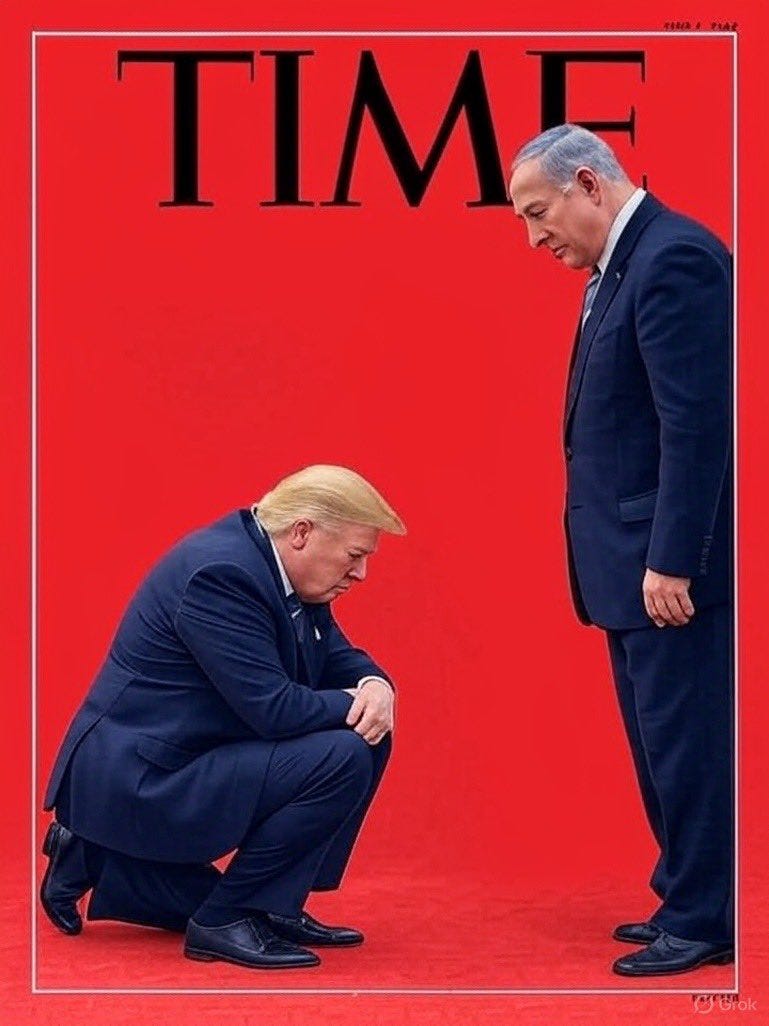
If Kirk was indeed killed for breaking with pro-Israel orthodoxy, Donald Trump would have learned an unmistakable lesson: Kirk challenged Israel support and died. Whatever Trump’s own inclinations, whatever kompromat might exist, he now knows the ultimate consequence of straying.
Trump’s aggressive Iran positioning, his continued pro-Israel rhetoric despite some MAGA base resistance, his threats against Iraq — all make perfect sense as survival strategy. You don’t need Epstein files if you have exploding microphones. The former provides control through shame; the latter provides control through terror. Both serve the same function: ensuring no American political figure meaningfully challenges Israeli interests.
Trump can attack anyone — Democrats, the media, the intelligence community, the military establishment. He can question elections, mock allies, threaten NATO. But he cannot and will not challenge Israel. That’s the one rule. Kirk may have died for breaking it.
The Crossroads: Iran and the Coming War
As of January 2026, the world stands at a crossroads that will determine whether American foreign policy continues to serve Israeli interests at potentially catastrophic cost to Americans themselves.
The June 2025 Twelve-Day War between Israel, the United States, and Iran established new and dangerous precedents. Israel launched surprise attacks on Iranian nuclear facilities, assassinating military leaders and nuclear scientists. The United States joined by bombing three Iranian enrichment sites at Natanz, Isfahan, and Fordow. Iran retaliated by striking the American Al-Udeid Air Base in Qatar with ballistic missiles — the first direct Iranian attack on US forces.
A ceasefire was reached under American pressure. But nothing was resolved.
Now Trump’s threats against Iran present a range of possible futures, from rhetorical posturing to civilizational catastrophe.
Immediate tactical range. At the minimal end, Trump’s threats remain purely rhetorical leverage. Iran moderates behavior regarding militias in Iraq, nuclear program acceleration, or regional proxy actions. Trump claims victory, no shots fired. This fits his historical pattern — maximum threat, negotiated settlement, declaration of triumph.
Mid-range escalation. Limited strikes on specific Iranian assets: Revolutionary Guard facilities, nuclear sites, proxy command centers. Tit-for-tat responses follow — attacks on U.S. bases, Gulf shipping disruption, cyber operations. This creates a “managed crisis” that could either de-escalate through backchannel negotiations or spiral depending on casualties and domestic political pressure on both sides.
Full-scale air campaign. Sustained strikes attempting to cripple Iran’s nuclear program, military infrastructure, and regime command. Iran’s responses could include missile barrages on Gulf states hosting U.S. forces, closure of the Strait of Hormuz choking 20% of global oil, activation of Hezbollah against Israel, attacks on Saudi oil infrastructure. Oil prices spike to $150-200 per barrel, triggering global recession. The U.S. gets bogged down without ground invasion capability — air power alone won’t topple the regime.
Ground invasion. Effectively impossible without massive troop buildup — 500,000 or more — and political will that doesn’t exist. Iran is four times Iraq’s size with mountainous terrain and 85 million people. This would require reinstituting the draft, which is political suicide. Even war hawks recognize this is fantasy.
Iran has spent decades preparing asymmetric responses: hardened and distributed nuclear facilities, extensive missile arsenal, regional proxy networks including Hezbollah, Iraqi militias, Houthis, and Syrian forces. They can’t win conventionally but can make victory pyrrhic — bleeding the U.S. through prolonged irregular warfare, turning the region into chaos, and waiting out American political cycles.
Their restraint so far suggests they prefer avoiding direct confrontation while maintaining deterrence. But regimes facing existential threats become unpredictable. If Iran believes Trump genuinely intends regime change, their calculations shift toward “use it or lose it” on all capabilities.
The Wild Cards
Israel’s role. Netanyahu’s government might see Trump’s posture as opportunity for joint action against Iranian nuclear sites. This could drag the U.S. deeper than intended. On January 5, 2026, the Israeli Security Cabinet held a five-hour meeting and authorized additional strikes on Iran following Netanyahu-Trump discussions. Israel has stated publicly it will not allow Iran to reconstitute its nuclear or missile programs — ever.
Russia and China. Both have significant Iran relationships. Putin might see U.S. Middle East entanglement as Ukraine distraction. China depends on Gulf oil and won’t welcome regional chaos. Their diplomatic and potential military aid to Iran — intelligence sharing, equipment, UN obstruction — complicates U.S. operations.
Domestic politics. Trump faces 2026 midterms. War rally effects are unpredictable — could boost approval or trigger antiwar backlash if casualties mount or economic disruption hits. His isolationist base opposes Middle East adventures, creating internal political contradictions.
The Economic Cascade
An oil shock hits a global economy already fragile from inflation fights and debt levels. Europe is particularly vulnerable given energy dependence. Developing nations face food security crises as fuel and fertilizer prices spike. This could trigger currency crises, debt defaults, and political instability far beyond the Middle East.
The dollar’s role becomes crucial: if oil transactions shift away from dollars during crisis — countries seeking alternatives to avoid sanctions — this accelerates de-dollarization. Ironically, a war to maintain regional dominance could undermine the financial architecture that dominance rests on.
Saudi Arabia and the United Arab Emirates have already publicly stated that the United States cannot use their airspace for an attack on Iran. America’s Gulf allies — the very nations that host US bases — are trying to restrain Washington from a war they fear would plunge the region into chaos. When Saudi Arabia is more cautious about Middle Eastern war than the United States, something has gone profoundly wrong with American strategic thinking.
Best Case
Trump’s threats force Iran to the negotiating table. Some face-saving deal emerges — limits on nuclear enrichment, reduced proxy activities, partial sanctions relief. Both sides declare victory. Regional tensions remain but without kinetic conflict. This requires diplomatic skill and good faith on both sides, which is not guaranteed.
Worst Case
Miscalculation spiral. Limited strike kills Iranian leadership or causes massive civilian casualties. Iran retaliates against Gulf states and Israel. U.S. commits to regime change without plan for aftermath. Regional war draws in multiple actors. Nuclear exchange becomes thinkable if Israel feels existential threat. Economic depression. Millions of refugees. Decades of instability.
Most Likely
Somewhere in the middle — periodic flare-ups, limited exchanges, prolonged tension without full war. Neither side wants total conflict, but both are willing to probe boundaries. We muddle through cycles of threat and de-escalation until either leadership changes or some external shock forces genuine negotiation or disengagement.
The troubling variable is Trump’s unpredictability combined with an Iranian regime that’s ideological and paranoid. Normal deterrence theory assumes rational actors with clear communication channels. When both sides misread intentions and have domestic audiences demanding toughness, the space for miscalculation widens dangerously.
The Pattern Completes
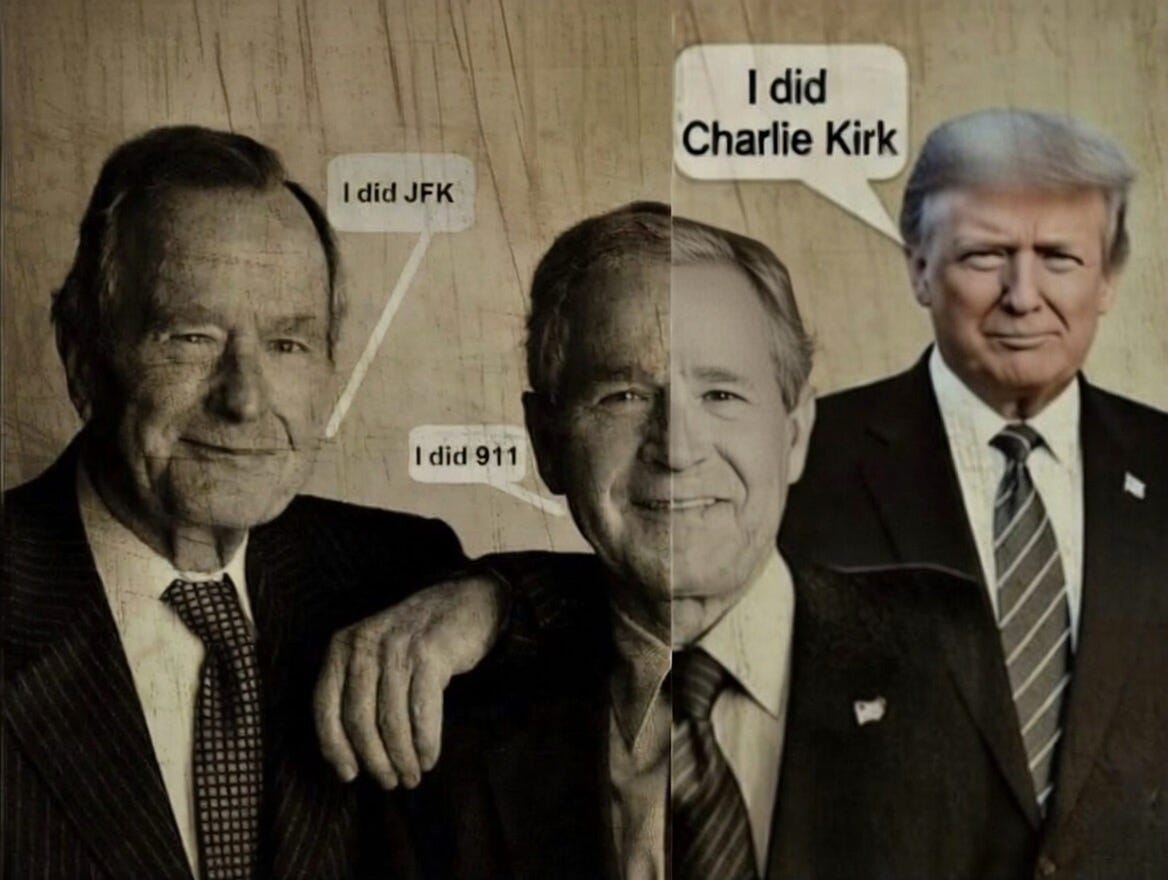
From Dallas in 1963 to Utah in 2025, the pattern holds. Challenge anything you like — Democrats, Republicans, the media, the intelligence agencies, elections themselves. But never challenge Israel. Kennedy pressed on Dimona and died. Kirk broke with pro-Israel donors and died. The mechanism may vary — a rifle from shot from behind a fence atop the grassy knoll, an exploding microphone strategically placed beneath a t-shirt emblazoned with the word ‘FREEDOM”—but the lesson is consistent.
Trump understands this. His aggressive posture toward Iran, his commitment of American forces to Israeli objectives, his silence on Israeli influence — all of it makes perfect sense as survival strategy. He watched what happened to Kirk. He knows the rules.
And so America drifts toward another Middle Eastern war, this time with a nuclear-threshold adversary capable of closing the Strait of Hormuz and striking American bases across the region. The war will be fought for Israeli security, with American blood and treasure, while the question of whether any of this serves American interests remains forbidden to ask.
The tail wags the dog. And the dog isn’t even allowed to notice.