

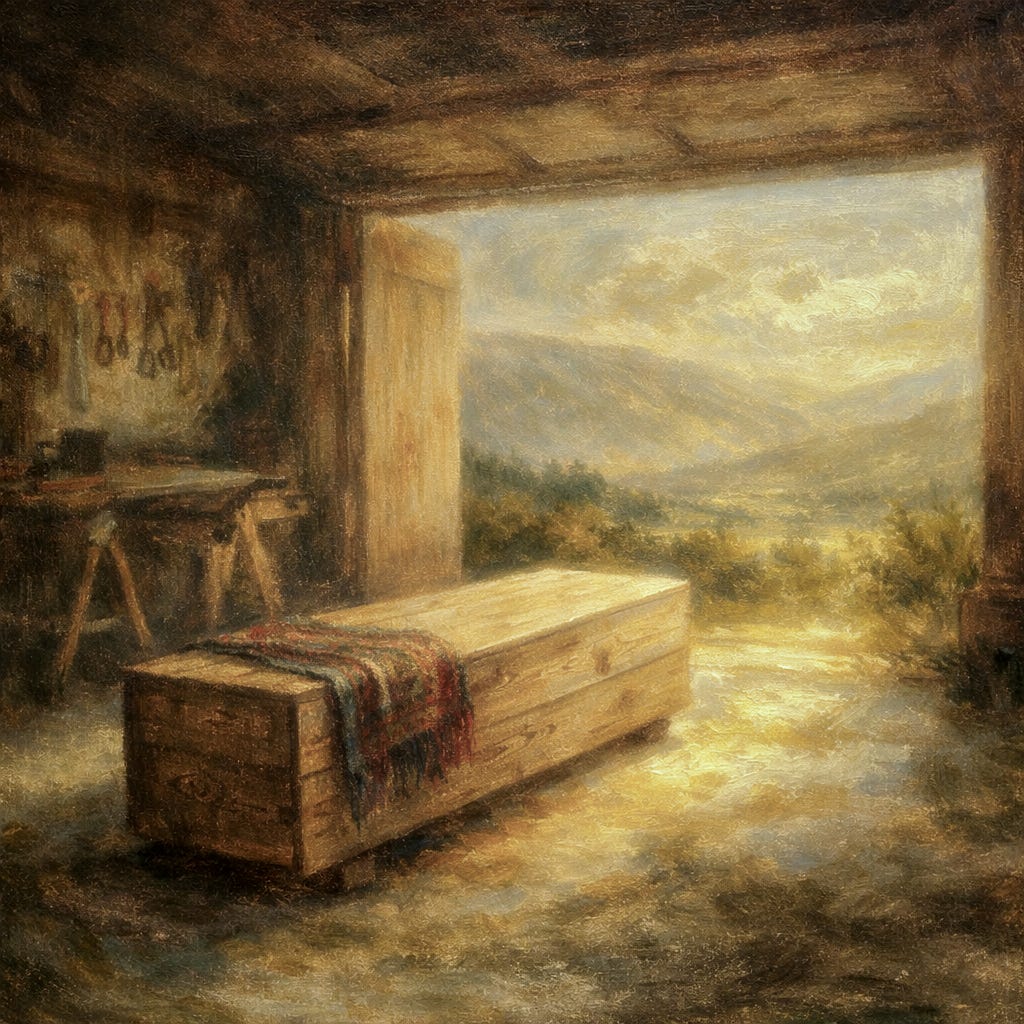
My beloved Nana died on St. Patrick’s Day, 1974. The cause was a grand mal seizure. She’d suffered from epilepsy for a number of years. I was twelve or thirteen when I watched her drop to the living room floor while playing the piano at our home in Armonk, convulsing and frothing at the mouth while my mother screamed at me to go get a wooden spoon. It was one of the most terrifying things I’ve ever witnessed — someone you love that much, in the grip of something you can’t fight.
She was 73 when she died. My brother Jacques, home from boarding school on spring break, found her on the floor beside her bed the next morning. I flew home from San Francisco.
She had an open casket.
Visiting the funeral home with my mother and siblings and being shown all the options — everything from hermetically sealable bronze all the way down to a pine box — was something I’ve never forgotten. I was twenty-one years old, and I decided right then and there that when my time came, I wanted a pine box.
I didn’t fully understand that decision at the time. I thought it was practical — why spend money on a box that’s going into the ground? But something deeper was operating. The man I’d been raised to worship was a carpenter. He threw the merchants out of the temple. He disdained wealth and power and status. The devil offered him everything the world contained if he would bow down before him, and he refused. I’d rejected the Catholic Church by then — the institution, the hierarchy, the guilt — but the teachings of Jesus Christ had never left me. They were in my bones. A pine box was what the carpenter would have chosen.
That decision sat quietly inside me for forty-six years.
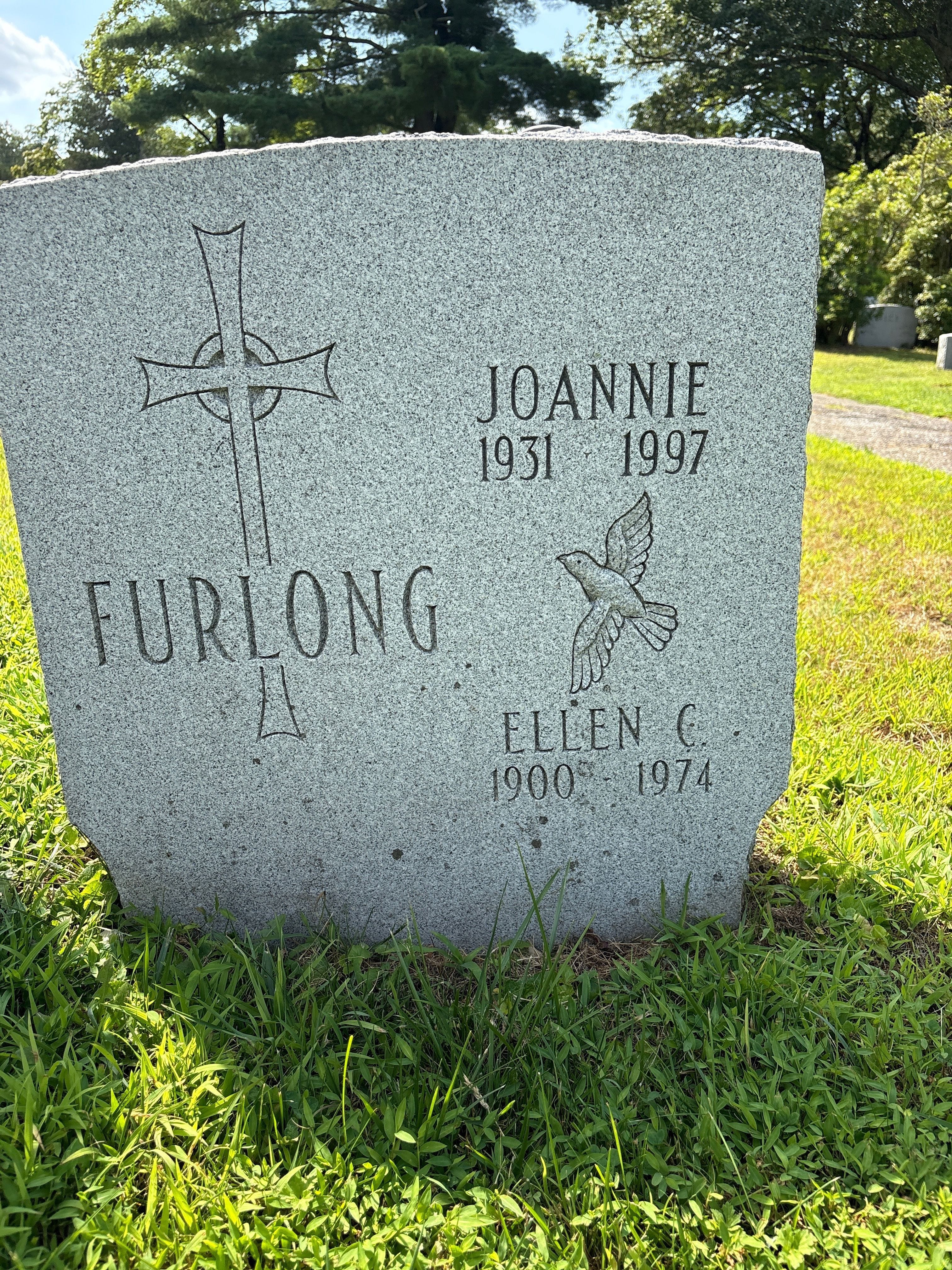
My mother bought a double plot at Middle Patent Cemetery in Banksville, New York, across the lane from the large de Saint Phalle family plot where my father and his parents and siblings would eventually be laid to rest. She bought it so she and Nana would never be apart. And they aren’t. Joannie, 1931–1997. Ellen C., 1900–1974. Side by side.
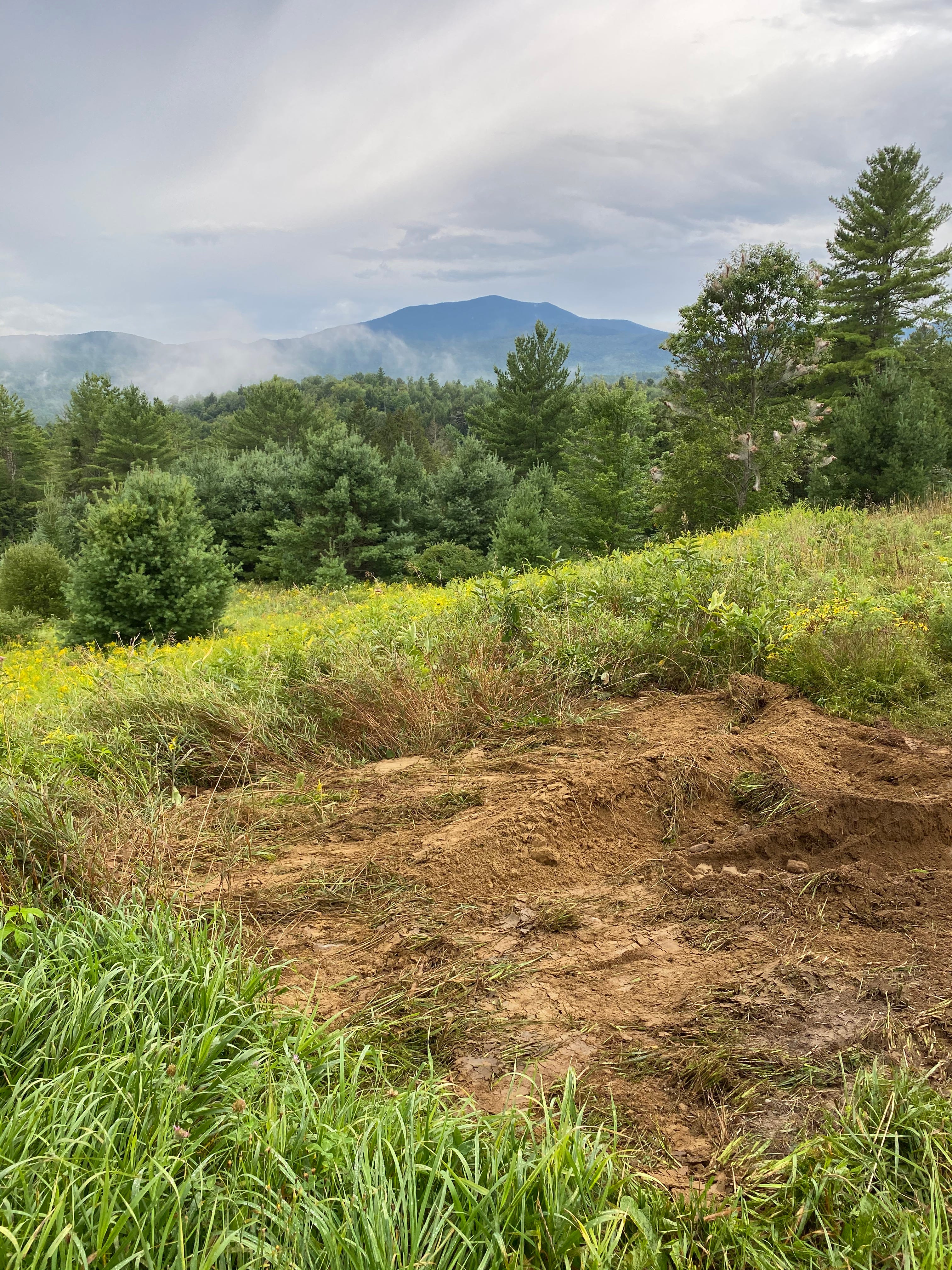
In the summer of 2020, our golden retriever Izzy died at age fourteen. I wrote about his last days in yesterday’s post — how he spent his final weeks visiting his favorite spots in the house, how he chose his own time, and how we buried him on the western edge of our property with its sweeping view of the Green Mountains. Burying Izzy on our own land — something I stumbled into discovering is entirely legal in Vermont — was the final piece that fell into place.
By that summer, I had survived nine nocturnal seizures in fifteen months. Nine. The first hit at 4 AM on March 22, 2019. The last on June 12, 2020. My wife Veronica kept a medical journal. The snorting, the thrashing, the stiffening so rigid she couldn’t roll me onto my side, the soaked sheets, the fog afterward. I remember none of it. She witnessed all of it.
I was sixty-eight years old. I weighed 274 pounds. I was still drinking. I had the same condition that killed my Nana, inherited directly through my mother’s line — forty-three years of electrical storms slowly kindling toward the main event.
Nana’s path had been seizures, then medication, then alcohol, then death. My neurologist wanted to put me on Keppra, a powerful anti-seizure drug. I’d watched others on it. The zombification. The blank eyes. I told them no. I didn’t want to throw a blanket over my brain.
So I did my own research. And I built my own casket.
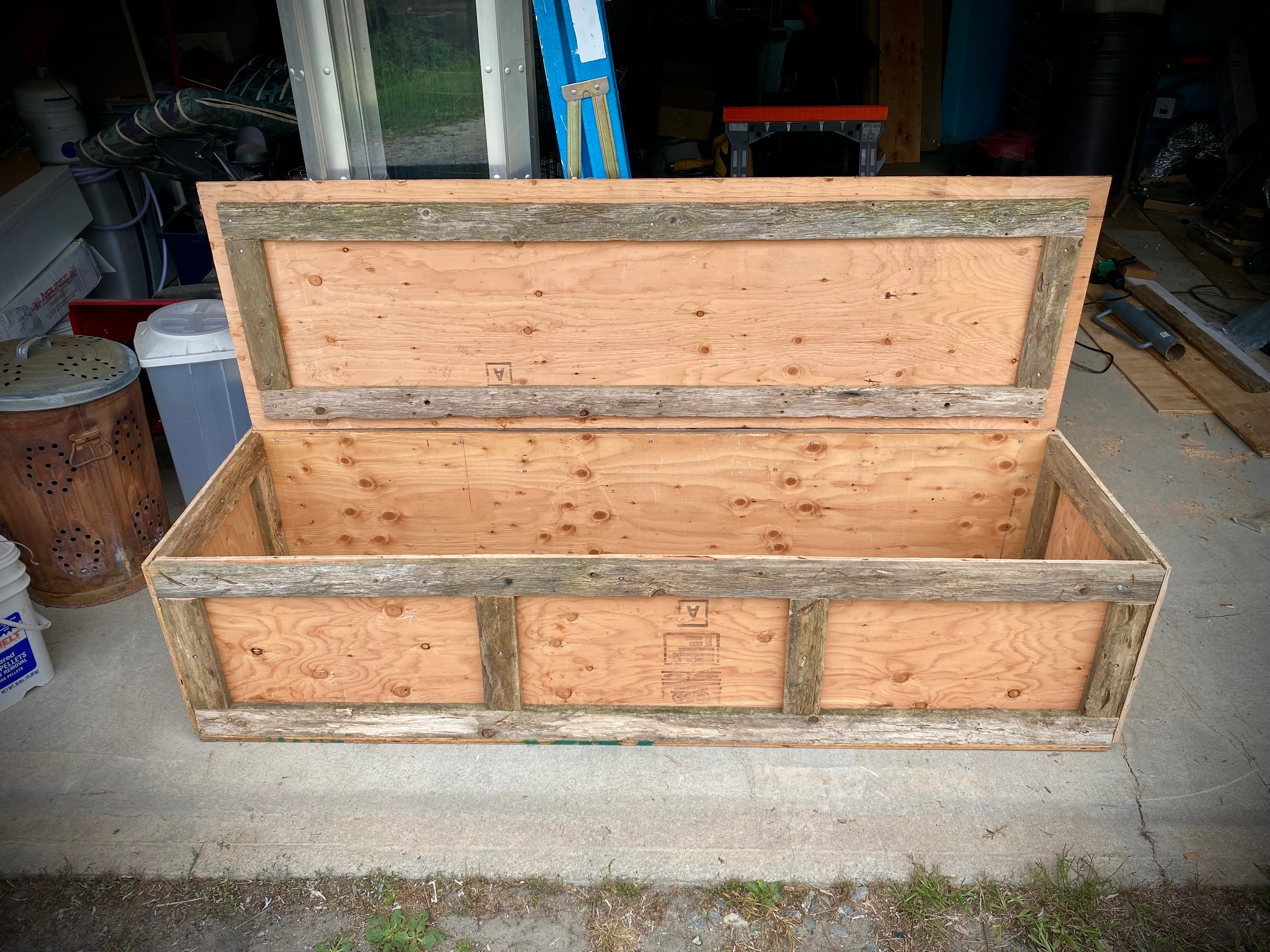
I used half-inch plywood from last summer’s deck project and reclaimed cedar boards from raised garden beds I’d built a decade earlier. Every piece of wood carried a memory. The cedar still smelled faintly of the soil and tomatoes it had held.
It’s not a fancy thing. Cedar trim on plywood. Screws showing. Pencil marks still visible on the corners. It looks like what it is — something a man built with his hands from materials that were already part of his life. The carpenter would have approved.
Draped over one end is a rug that Nana and Mama made together in the 1970s. It has a house, trees, birds, a dog and a cat stitched into it. My cousin Kathy Kelly had it for years and mailed it to me out of the blue. Veronica suggested it might be placed over me when the time comes. We wrapped Izzy in the blanket Veronica had made for him — white fleece on one side, a printed fabric of dogs on the other. That felt right. This feels right too.
Building my own casket calmed something in me. The anxiety of the unknown was replaced by the peace of having decided. I started a list of names I wanted painted on the outside — not a will, not a ledger, but a love letter. Everyone who mattered. The living and the dead, all together, because that’s how they live inside me anyway. Mama. Daddy. Nana. My five siblings. Thea Ramsey, who died at 39. Normandy and Shines, my surrogate sons from the windsurfing years. Steve Ferry. Brad Barrows. Tom Bobbin. John Fuller and his mother Del. Veronica. The grandchildren. Over sixty names.
I wanted all of them on the outside of my box, traveling with me.
That was 2020. I was sixty-eight and preparing to die.
Instead, I refused the Keppra and found my own way — keto, CBD, sobriety. I stopped drinking. I lost a hundred pounds. I saved my eyes through three cataract surgeries and a torn retina repair. I eliminated the heartburn that had plagued me for years. Five years now without a single seizure.
Nana’s path was seizures, medication, alcohol, death. Mine became seizures, refusal, sobriety, survival. Same inheritance. Different choices.
The other day, a conversation with Perplexity AI about lifespan projections told me I might live to 92. Maybe 96. My father lived to 94 and outlived all four of his siblings. The data says I’ll likely do the same. Twenty years I didn’t think I’d get when I was screwing cedar boards onto plywood in my garage, wondering if the next seizure would be the one that took me.
Twenty years is not a coda. Twenty years is an entire creative life if you don’t waste it.
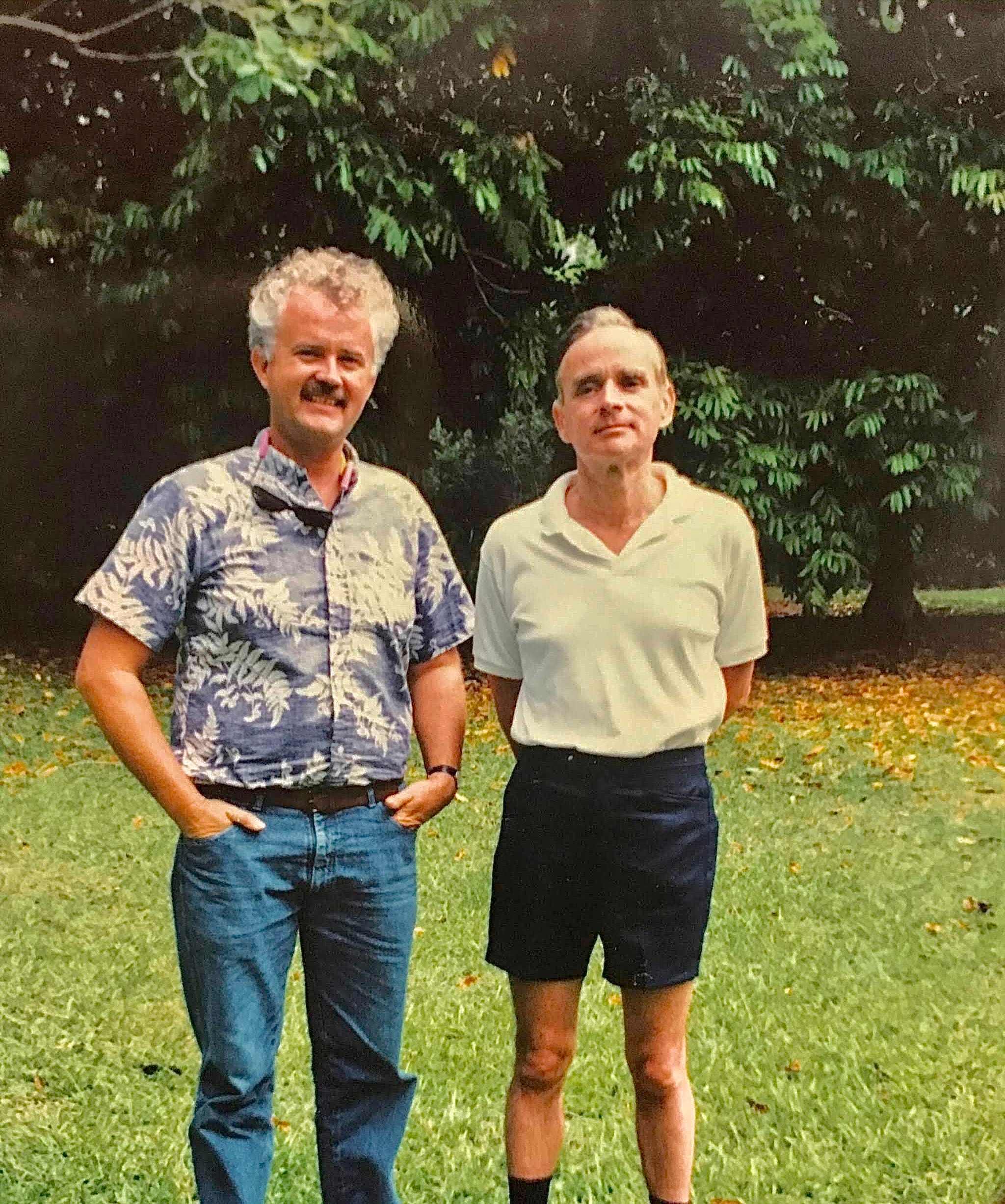
I have written about my father as a tyrant. The belt across bare skin. The broken promises. The withdrawal. All of it true. But there is something I haven’t written about enough, and it matters now more than it ever has.
When we were children, my father adored us. He kissed us goodnight every night. He would gather all six of us on the couch and we’d sing together — “Camptown Races,” “Swing Low, Sweet Chariot,” “Shall We Gather at the River.” I didn’t understand it then, but those weren’t just songs. They were spirituals. Hymns. My father was teaching us something about where he believed we came from and where we were going, and he was doing it with his arms around us.
He walked with Monsignor Blake after Sunday lunch, discussing matters of the spirit. He kept Kierkegaard on his nightstand. He had a quiet fascination with thresholds — watching the odometer roll from all 9s to all 0s like a small miracle had occurred in the dashboard. He was a man of deep faith who firmly believed in an afterlife and a judgment day.
I rejected his authoritarian control as an adolescent. I rejected his Catholic Church and its Latin Mass, robes and incense censers. But I never rejected what was underneath it.
The historical Jesus — the brown-skinned Jewish radical who was colonized by Rome, who hung out with the poor and the dispossessed, who befriended sinners and outcasts, who subverted empire, who was homeless, nonviolent, executed by the state at the request of the very religious authorities he threatened — that Jesus has been with me my whole life. I love the New Testament. I love my understanding of Christ as a revolutionary who went willingly to his death because he knew something about what survives it.
My father gave me this. Not the Catholic institutional tradition — I couldn’t keep that. But the sense that life has higher purpose. The kind that says you’re here to do something, and the doing matters more than the reward. My aunt Niki de Saint Phalle had it — she called her work her husband. My father had it, though he expressed it through faith and control and ultimately through isolation. I have it too. Purified, I hope, of the pretense and the ostentation and the ambition that weighed him down. Stripped to the essential thing.
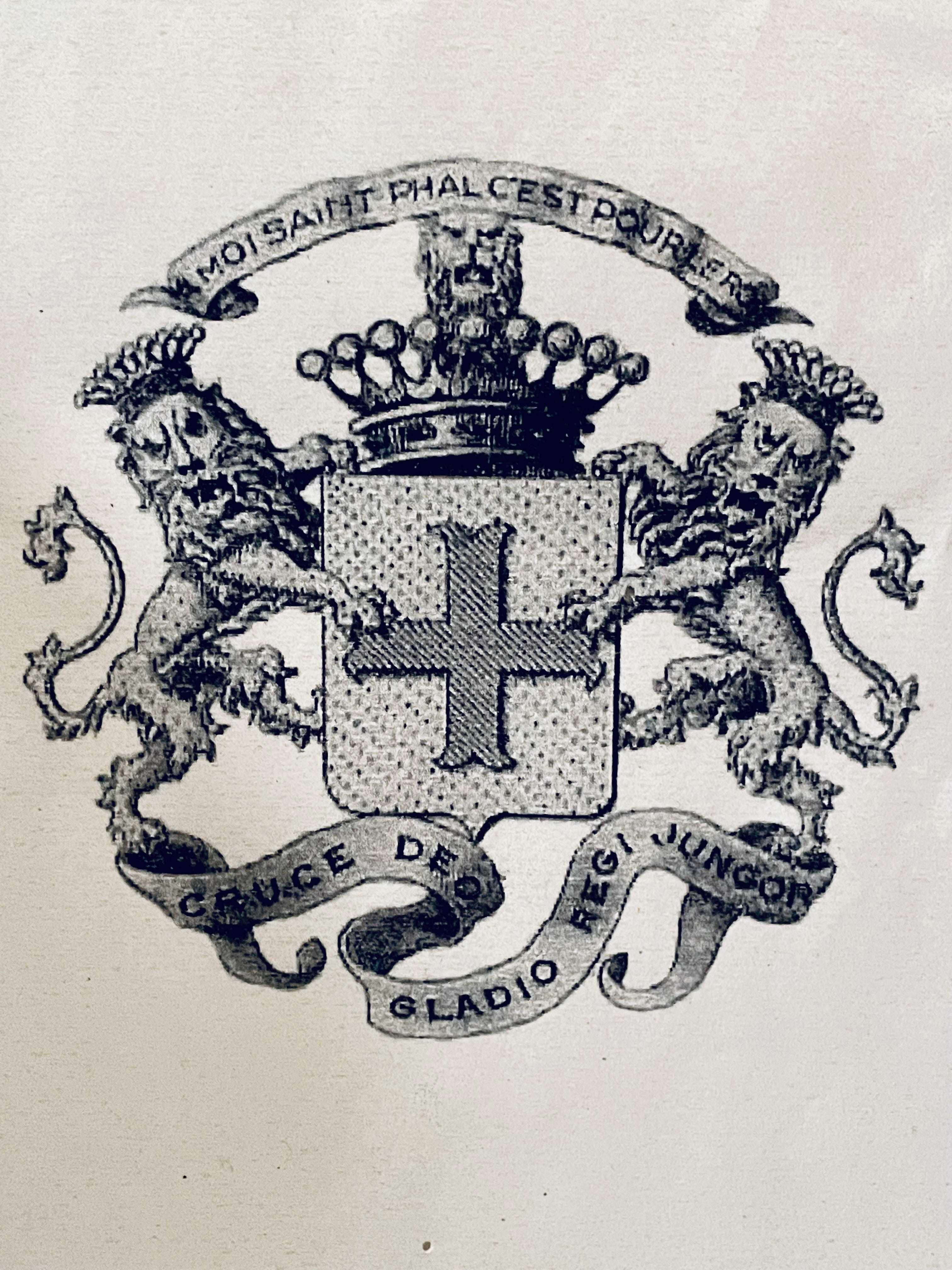
There is something terrible in this gift, because the traditions that housed it — the Christian faith as my father’s generation understood it, the sense of duty and purpose and reverence — feel like they’re being cast to the wayside. The institution has betrayed the man it claims to serve. The container is cracking.
But the thing inside the container is indestructible.
So this is what I do with it.
I freed myself this past year from the burden of writing a memoir trilogy. The first book, Surfing the Interstates, is done and published. It’s good and I’m proud of it. The remaining stories are finding their way onto this Substack as standalone pieces, portraits, vignettes. They don’t need a binding. They need air.
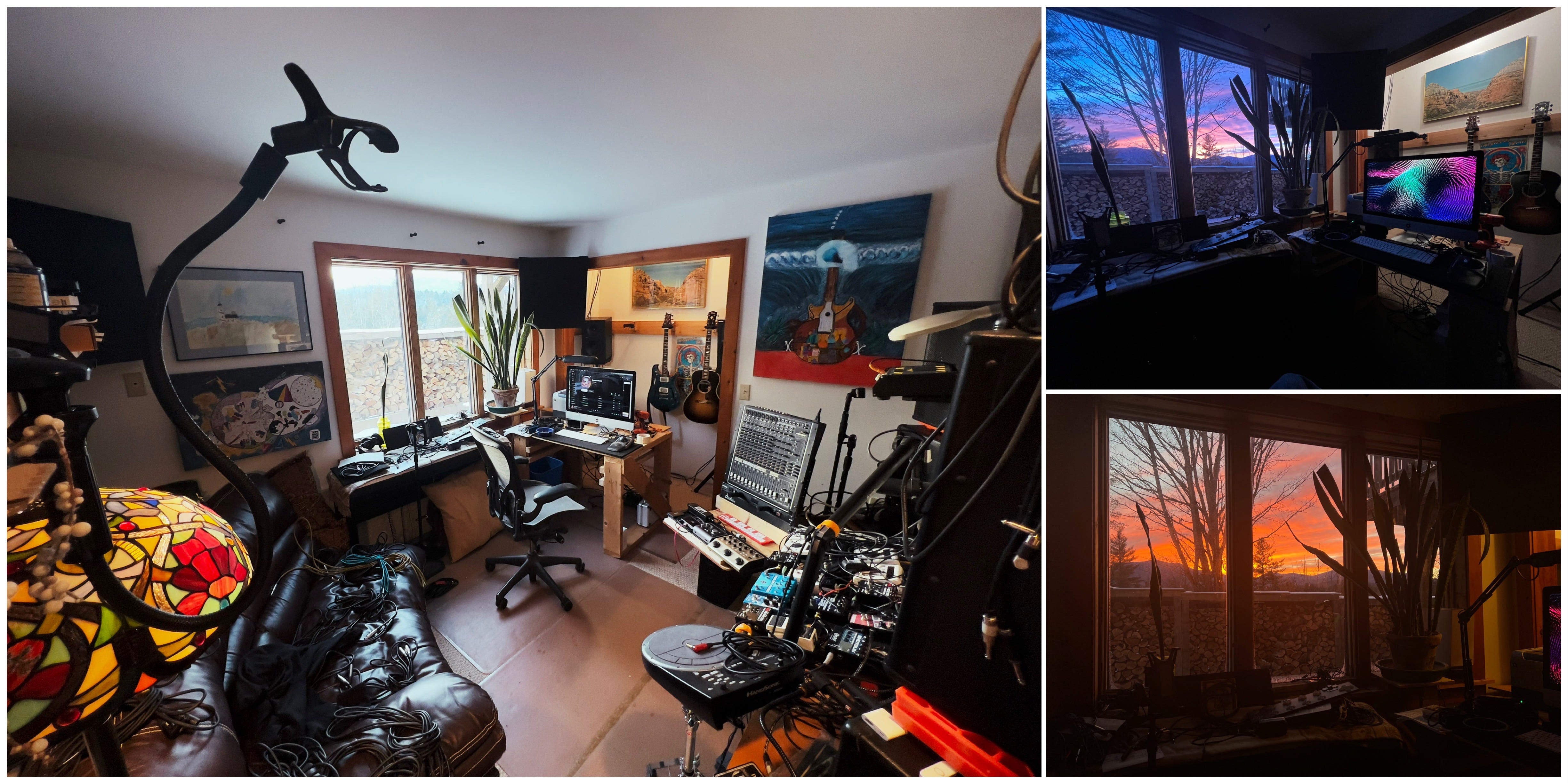
I have a recording studio I’m setting back up. I have Claude as a writing partner. I have Substack for the publishing. I have Veronica, who turned me on my side during nine seizures and never left. I have this desk, this morning, this work.
The perpetual motion that nearly killed me — the decades of running, preparing, building the perfect conditions for a life that was always about to begin — is over. I’m not chasing anything anymore. I’m doing the work. Not for recognition or remuneration or adulation. Because the doing is the thing. The carpenter knew that. My father knew it too, even if he lost his way. And now I know it.
I am clear about what happens when we die. Me as me ends. The consciousness typing these words, the man who built that box in the garage, the boy who watched his Nana seize on the living room floor — that person is extinguished. But something essential survives. The flower of all the pain and suffering. The fruit of my time here. It gets extracted somehow — I don’t pretend to understand the mechanics — and accepted back into the inner magma of the spirit of the earth.
That’s not agnosticism. That’s not my father’s Catholicism. It’s what came through him — through the songs on the couch, through the walks with the Monsignor, through the Kierkegaard, through the odometer rolling over — refined by fifty years of my own searching, my own suffering, my own terrible clarity.
It’s what I know.
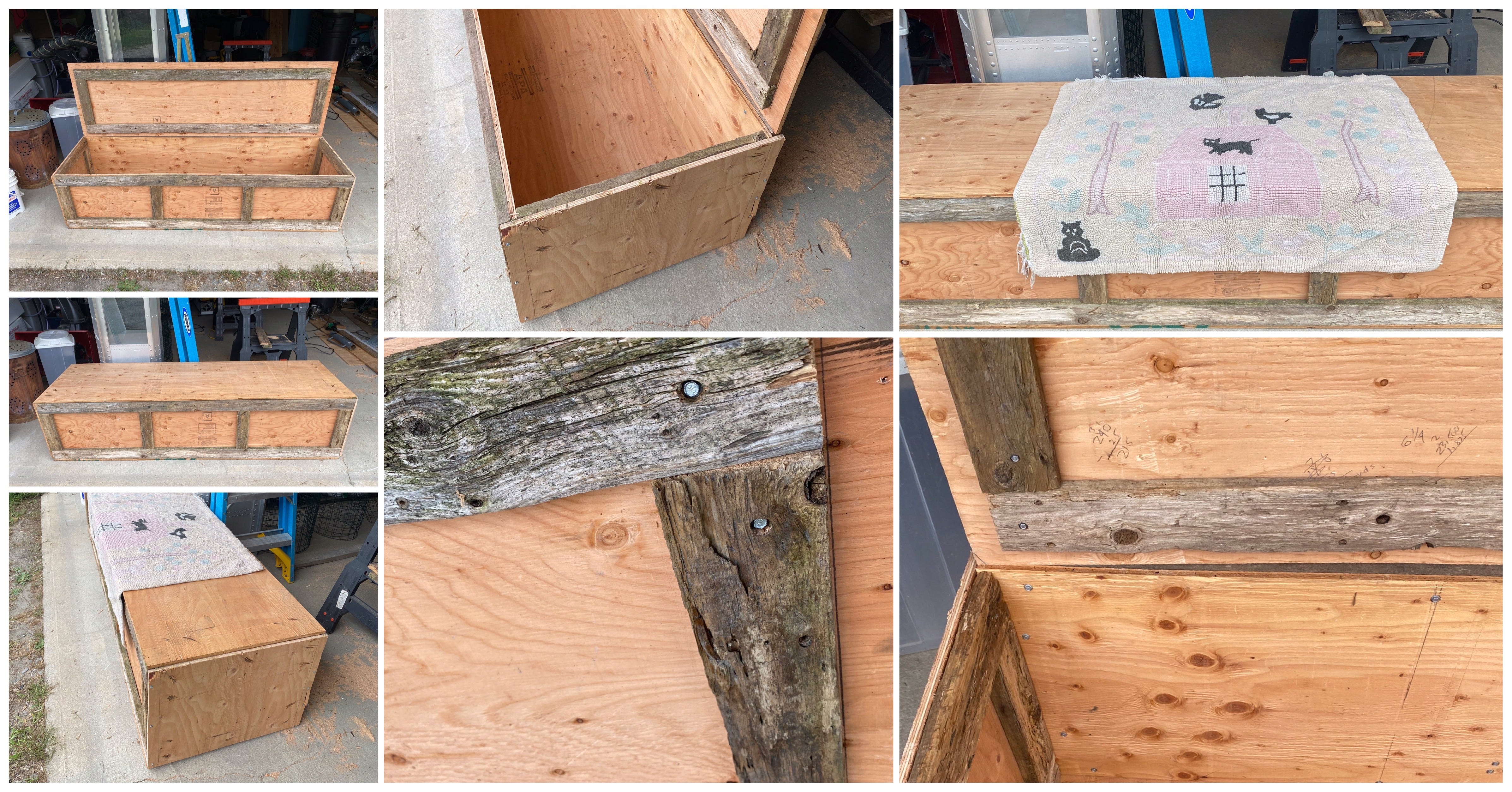
The casket is in the garage. Nana’s rug is draped over one end. The names aren’t painted on yet — there’s still time for that. I even want to laminate photos of my loved ones into the panels. The view spot where Izzy is buried faces southwest toward the Green Mountains and the setting sun. There’s room next to him.
But I’m in no rush. I’ve got work to do.