

I Wanna Be A Paperback Writer
“Dear Sir/Madam, will you read my book? It took years to write.””

Some songs don’t enter through your ears. They enter through your chest.
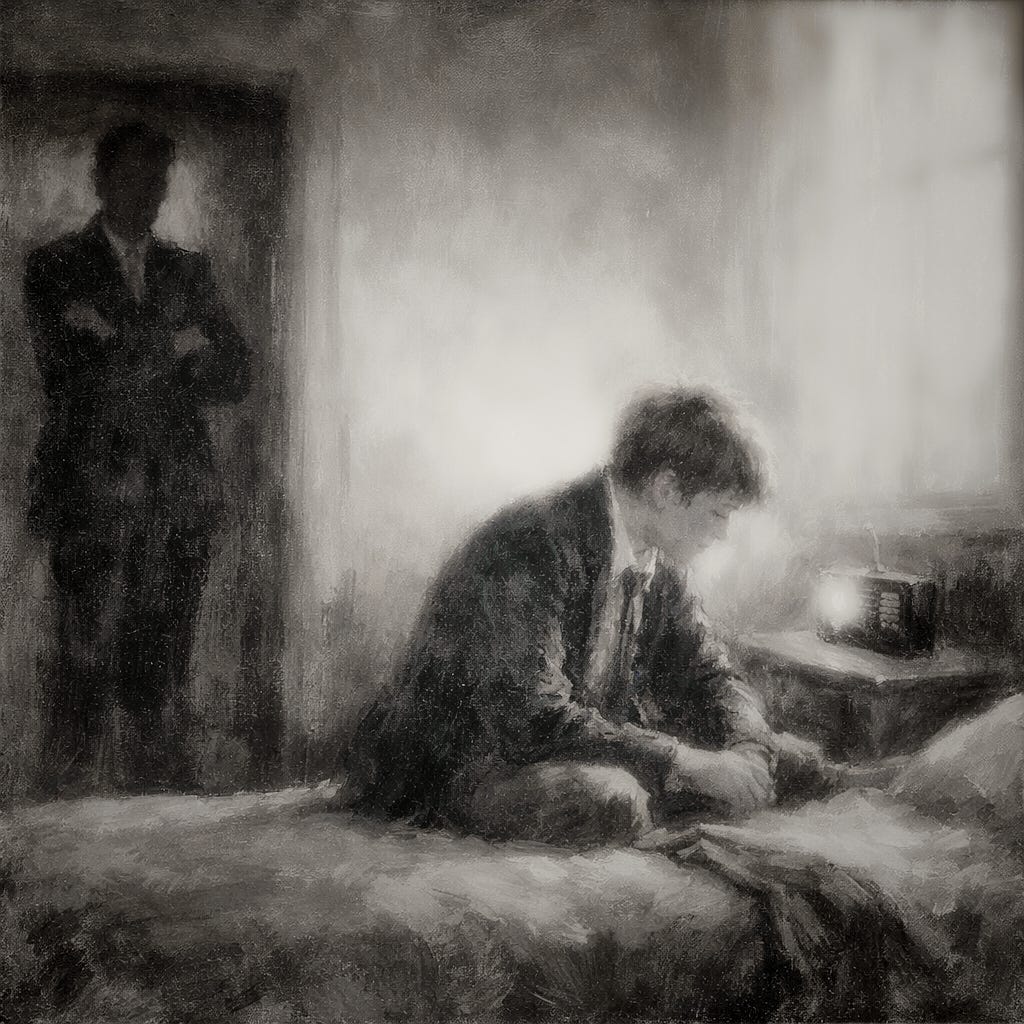
Dorm room. Exeter. 1966. Thirteen years old in a blazer and a tie that’s been loosened since chapel. Transistor radio on the nightstand, dial locked to WBZ-AM. Homework untouched. The signal drifts in and out, and then the harmonies hit — McCartney’s voice climbing over itself, layered, insistent — and something locks into place that will never come loose.
I didn’t fully grasp the lyrics. Didn’t care. The song wasn’t about words yet. It was about a sound that lived somewhere between the melody and the blood. Three voices braided together into something that bypassed the brain entirely and went straight to the body. You know the feeling — certain songs just move in. They don’t ask permission. They take up residence in a room inside you that you didn’t know existed, and they never leave.
I was thirteen. I would carry that song for the rest of my life, like a touchstone.
Certain music does this. It isn’t about taste or preference. It’s deeper than that — almost biological. The way Neil Young’s single distorted note at the opening of “Cinnamon Girl” can rearrange something in your nervous system. Or Donovan singing “Wear Your Love Like Heaven” — that wash of color and light that doesn’t describe transcendence so much as produce it, right there in your eardrums. These songs don’t represent feelings. They are feelings, compressed into three minutes of sound, and once they’re inside you, they become part of your operating system. You hear them at thirteen and they’re still running the software at seventy-four.
My father didn’t understand this. To him, the music I loved was noise. He was a classics man — structured, formal, composed. The Beatles were chaos. Neil Young was an assault. He couldn’t hear what I heard, and I couldn’t hear what he heard, and that gap between us was one of many that would widen for decades before it finally — slowly, improbably — began to close.
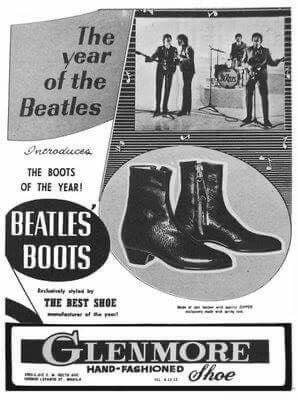
He had come home from New York one evening to find me wearing Beatle boots, the ones my cousin Edme had urged me to buy in the city. Too expensive, he said. Go back to New York tomorrow and return them. I was twelve. I took the train back and returned the boots. The boots weren’t the point. The point was that anything associated with that music — the sound, the look, the culture — was suspect. Dangerous. A distraction from the serious business of becoming the man he’d decided I should be.
What he’d decided was philosophy. I wanted film school — wanted it the way you want air when you’re underwater. I was going to be the next Peter Fonda, the next Ingmar Bergman. I had the Ralph Bradley Prize for film from Exeter. I had talent. I had ambition. And my father looked at all of it and said no.
Not cruelly. Not even wrongly. He said: You can’t tell the world a story until you know what it means.
I hated him for it. Hated him for decades. Carried it like a stone in my chest — the father who blocked his son’s artistic life, who chose philosophy over film, who valued the examined life over the lived one. He wanted me to sit in a classroom and read Kierkegaard. I wanted to pick up a camera and go.
So I went. Not to film school. Just — out. Into the world. Thumb out on 684, eighty dollars, a guitar, a backpack. Ten thousand miles of American highway in the summer of 1973. Then California, then New York, then Antigua, then Maine, then Hollywood, then back. Decades of motion. Decades of running from that study where he sat with his index cards, handicapping horses, demanding I account for every conversation, every aspiration, every stray thought.
The music came with me everywhere. It was the one inheritance he couldn’t confiscate. The Beatles, Dylan, Neil Young, the Dead — they were the soundtrack to every departure, every highway, every rented room. When I played guitar in Tompkins Square Park with a drummer from Harlem and a rhythm player from Queens, I was speaking a language my father had never learned. When I played in Antigua with the trade winds coming through the open shutters, the music was still the same conversation I’d started at thirteen with a transistor radio on a nightstand in New Hampshire. My father heard noise. I heard a lifeline.
Here’s what fifty years teaches you.
He was right.
Not about the boots. Not about philosophy as a college major. Not about West Point or the priesthood or any of the specific ambitions he tried to graft onto me like branches onto a tree that didn’t want them. He was wrong about all of that, specifically and sometimes damagingly.
But the principle underneath — the insistence that you can’t tell a story until you understand what it means — that was exactly right. I just didn’t know it would take fifty years to understand it. He thought four years at Penn reading Kant would do the job. It took the open road, Antigua, Thea’s death, the seizures, a simple house in Vermont with two dogs and a guitar, and finally — finally — sitting down at seventy-two to write the book.
Not a film. A book.
The thing he’d been pointing toward all along. Not because he knew I’d be a writer — he didn’t. But because he knew that surface wasn’t enough. That the camera could show you what happened but not what it meant. That the music could make you feel everything but explain nothing. He wanted me to go deeper, and he was right, and I spent my whole life resisting the very thing that would ultimately save me.
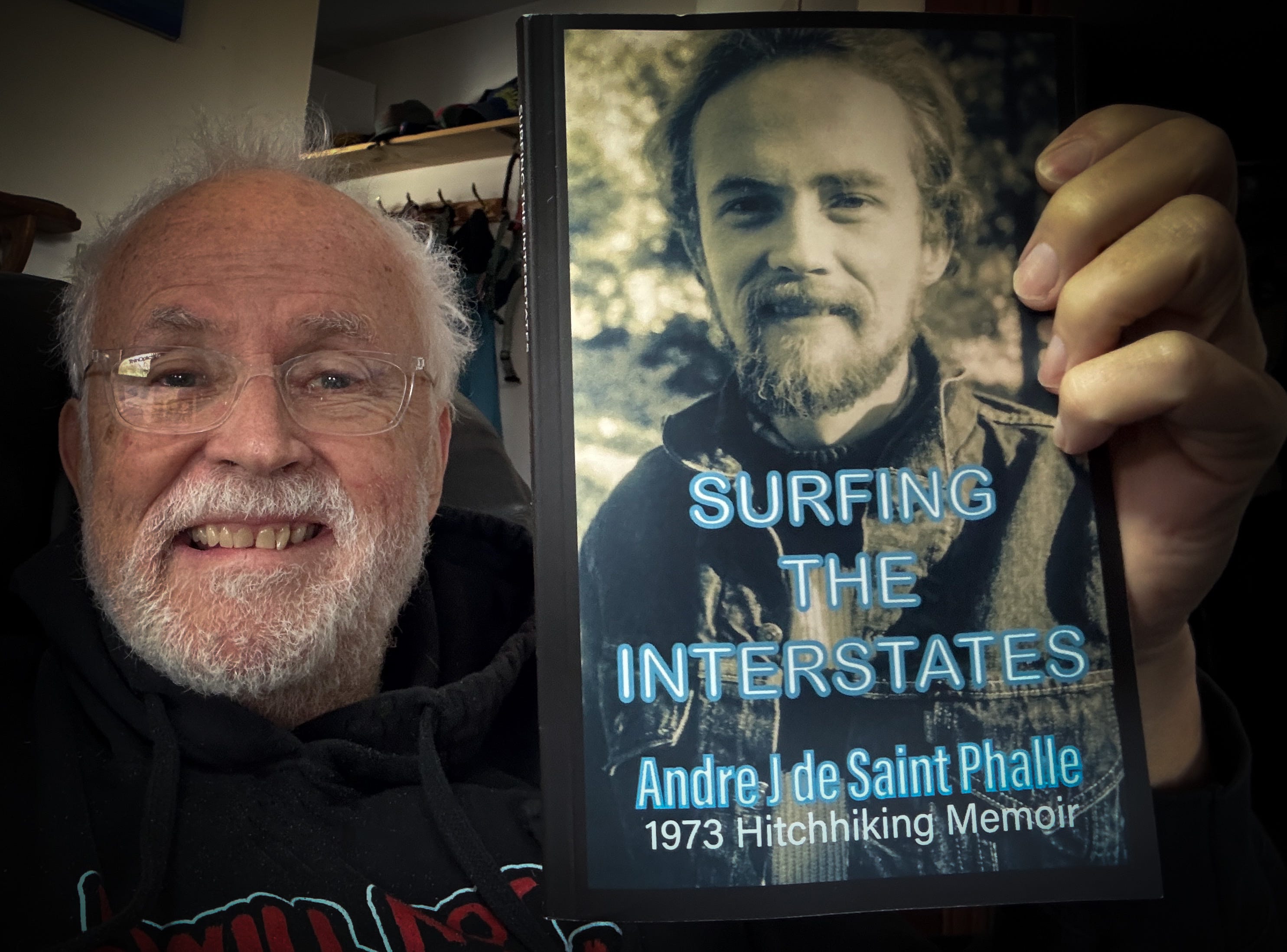
The song came out in 1966. I published the paperback in 2025. Fifty-nine years between the boy hearing it on the radio and the man holding his own paperback.
McCartney’s character in that song is desperate. Dear Sir or Madam, will you read my book? It took me years to write, will you take a look? He’s willing to change the style, make it longer, do whatever the publisher wants. He needs a job. He needs validation. He needs someone in a position of authority to say: Yes, this is worth something.
I know that desperation. I mailed twelve author copies to siblings, old friends, people I thought might care. Not one person responded. A boarding school acquaintance who became chairman of the board at Farrar, Straus and Giroux read the manuscript and told me it had no commercial appeal. He suggested I print copies for family distribution. The family, of course, being the very people who refuse to read it.
But here’s where the song and I part company. McCartney’s paperback writer is begging for permission. He’ll change anything — the story, the style, the length — to get a yes. He’s selling. I didn’t sell. I wrote the uncomfortable version. The version that names what happened in the laundry room. The version that cost me what was left of my family. I didn’t make it longer because someone liked the style. I didn’t change it round. I wrote what I saw.
The father who blocked film school, who tried to force me to study philosophy, who heard noise where I heard God — that man gave me the only tools that could have produced this book. Not the camera. Not the guitar. The depth. The insistence on meaning. The refusal to let his eldest son skate along the surface of a life without understanding what was underneath.
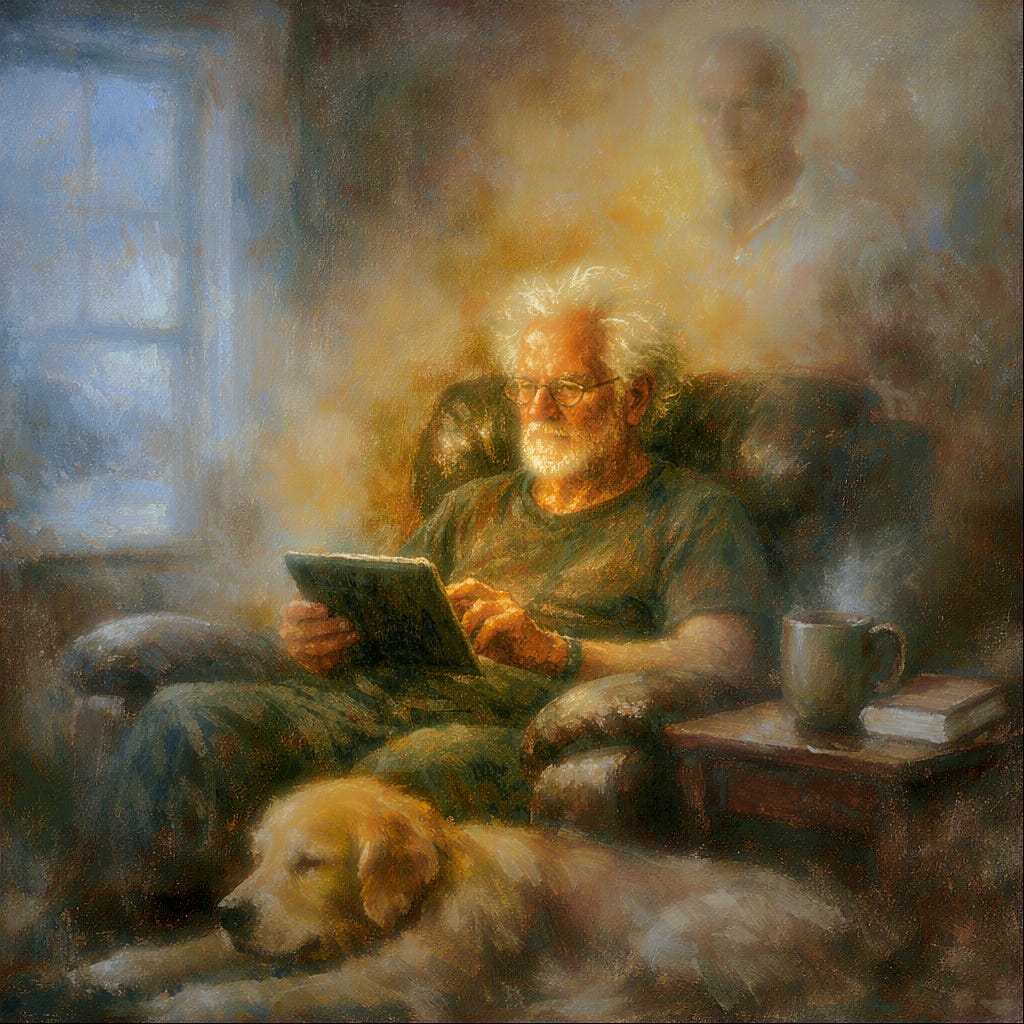
I’m sitting in a recliner in northern Vermont. The dogs are at my feet. The guitar is in the corner. The iPad is floating above my knees and I’m speaking these words into it — dictating to an AI that helps me find the shape of what I’m trying to say. My father would have had opinions about this. He would have called it noise.
But the book exists. The paperback is real. You can hold it in your hand. It took me fifty years because it needed fifty years — the hitchhiking, the windsurfing, the love, the losses, the long silence, the whole life lived before the story could be told. My father planted the mission: find out what it means. He just didn’t know the classroom would be ten thousand miles of highway and a Caribbean island and a woman who died too young and a lifetime of music that kept me alive long enough to finally sit down and write.
The harmonies are still in my chest. McCartney’s voice layered over itself, Lennon underneath, Harrison floating on top. Sixty years later and the song hasn’t moved. It’s still in the same room where it took up residence when I was thirteen — the room my father never entered, the room where I kept everything he called noise, the room that turned out to hold the answer he was looking for all along.
Dear Sir or Madam. There is no sir or madam. There is no publisher. There is just a man at seventy-four with a paperback and a long story about how the song and the father and the fifty years between them were always heading to the same place.
I just couldn’t hear it yet.