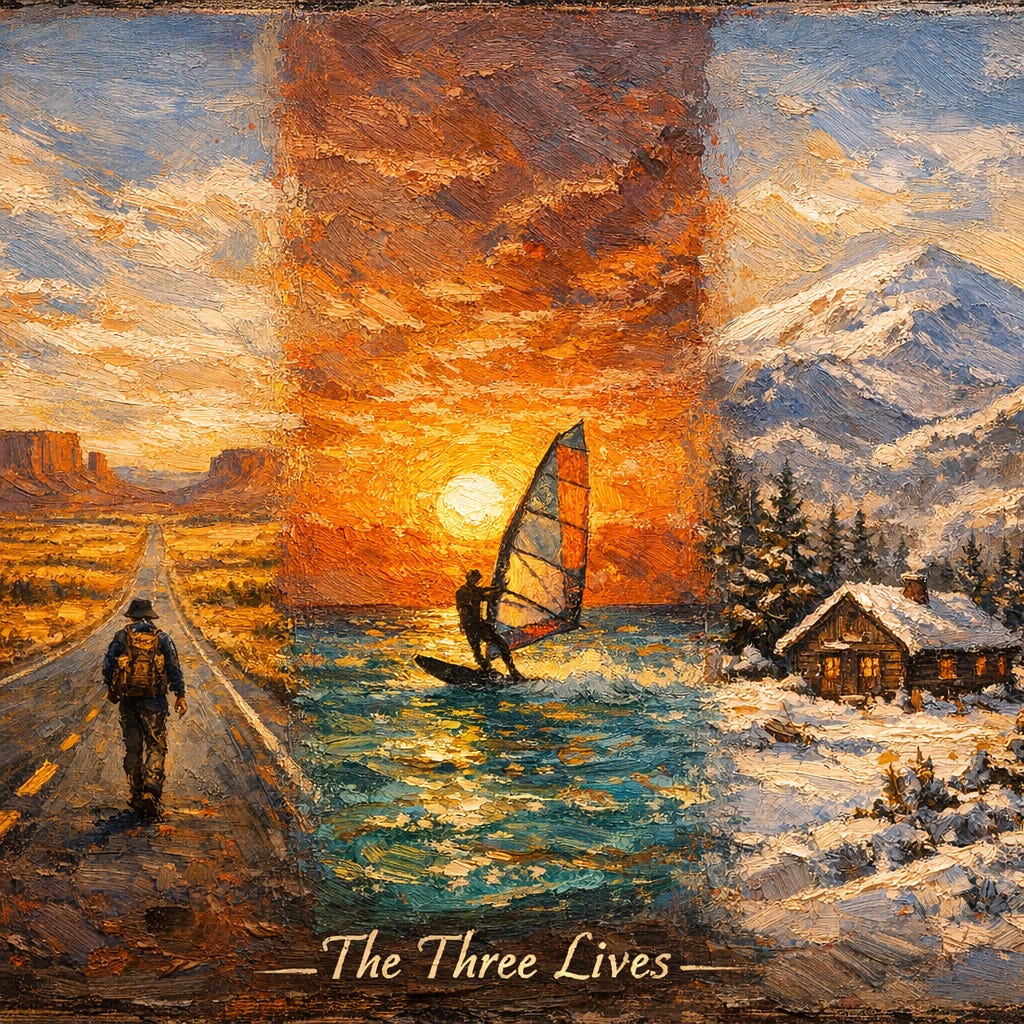
I’ve lived three lives. Not metaphorically—three distinct lives, each with its own geography, its own cast, its own way of breaking me open and putting me back together wrong. When I finally sat down to write about them, I realized they weren’t three separate stories. They were a trilogy.
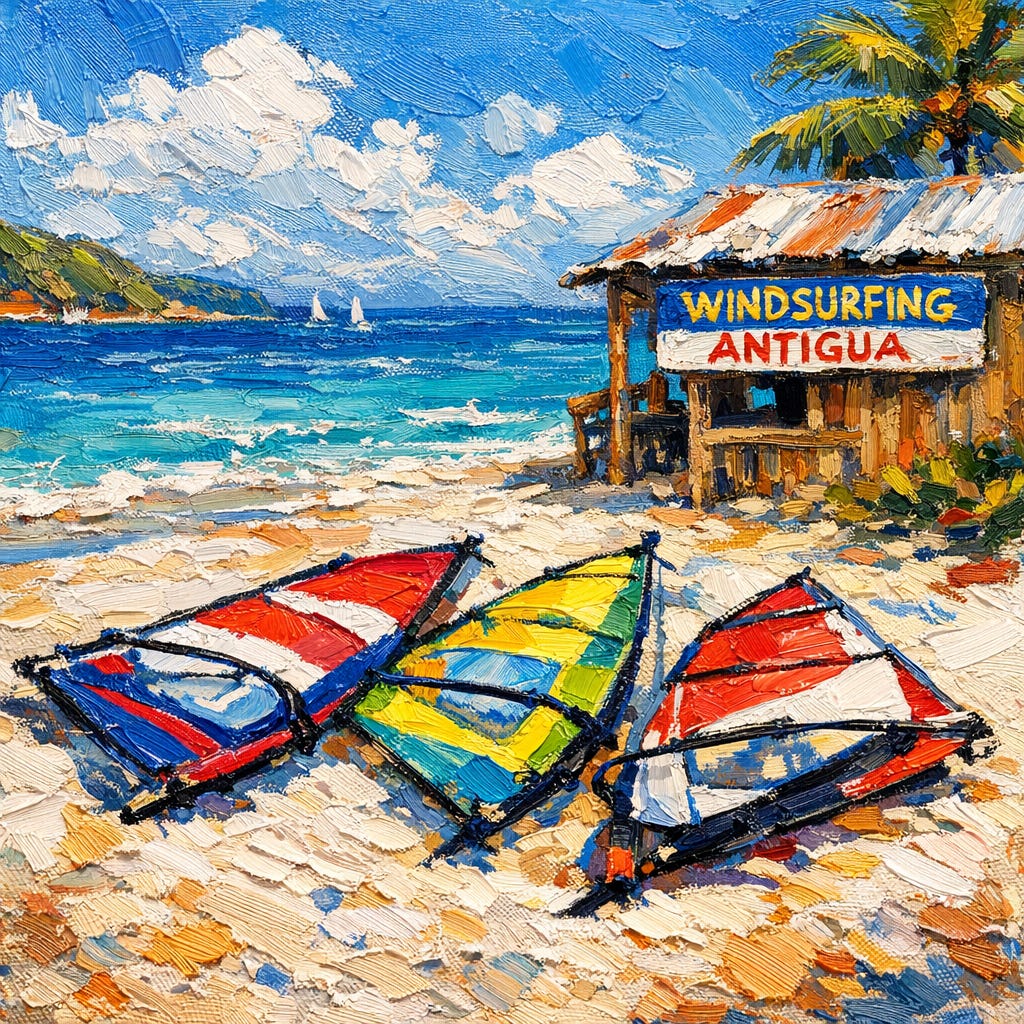
I called it “The Spaces Between.” The first volume, “Surfing the Interstates,” covers my summer of1973 hitchhiking journey across America, with a backpack and a 1943 Harmony Cremona guitar, sleeping under stars in the Rockies, tripping on peyote in the Redwoods, a vision quest in Santa Elena Canyon. The second, “Sahara Dust,” tells the story of paradise found and lost in Antigua—building a windsurfing school with a woman who was dying, watching five young men die in a plane crash at a birthday party, and leaving the Caribbean when the dust from the Sahara made it impossible for Thea to breathe. The third, “Green Mountain Flash,” follows the long slow landing in Vermont—marriage, entrepreneurial successes, bankruptcy, seizures, and the unexpected discovery that stillness could be its own kind of adventure.
Three lives. Three books. That was the plan.
Finding the Shape
Most memoirs bore me. I’ll say it plainly. The chronological yawn-fest—born here, went to school there, married this person, got that job—it’s a life reduced to a résumé. I didn’t want to write my résumé. I wanted to write the moments that cracked me open.
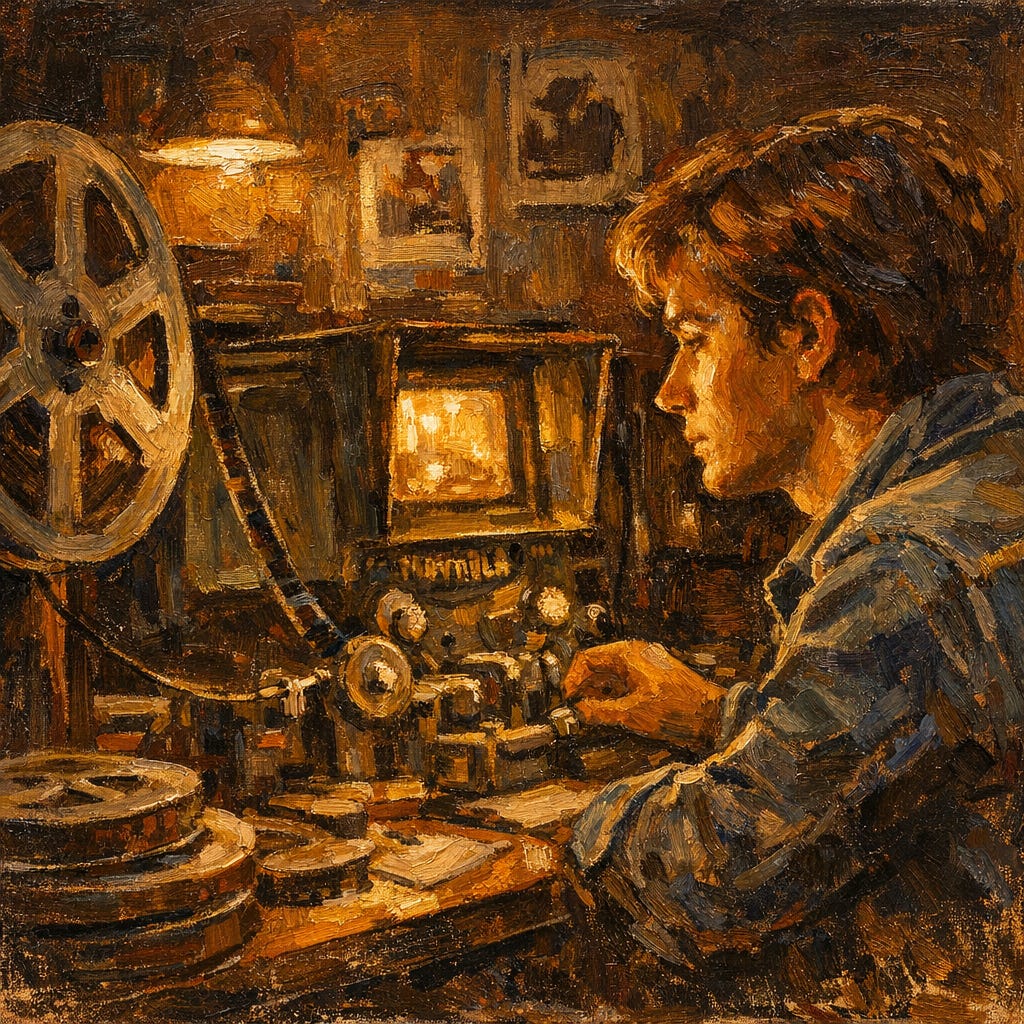
So I examined my seventy-plus years and asked a simple question: where are the stories? Not the facts, the stories. Where does the camera push in? Where does the soundtrack change? I’d spent years dreaming of being a filmmaker—winning awards at Exeter for a 45-minute 16mm film, working as a projectionist, editing television at Universal Studios—and even though that dream never materialized the way I’d imagined, the filmmaker’s eye never left me. I learned to see my life in scenes, not summaries.
Three narratives emerged. Each one had what any good film needs: a journey with real stakes, characters you couldn’t invent, and an ending that changed everything. The hitchhiking odyssey was a young man’s rebellion—eighty dollars stolen from my mother’s cupboard, a ringless twenty-first birthday, and the open road as an answer to my father’s suffocating expectations. The Antigua years were a love story disguised as an adventure—Thea’s opening line at a cocktail party was “Have you ever heard of Andre the seal?” and from that moment I was hers. The Vermont years were about what happens after the motion stops and you have to sit with who you actually are.
I wanted to write each one in first person, cinematic, present—recreating key moments so vividly that readers wouldn’t be reading about my life, they’d be inside it. Not telling. Showing. The way Paul Czaja, my mentor at Whitby School, taught me that art was civilization’s highest expression. The way the road taught me that expression meant nothing without experience.
What Book One Taught Me
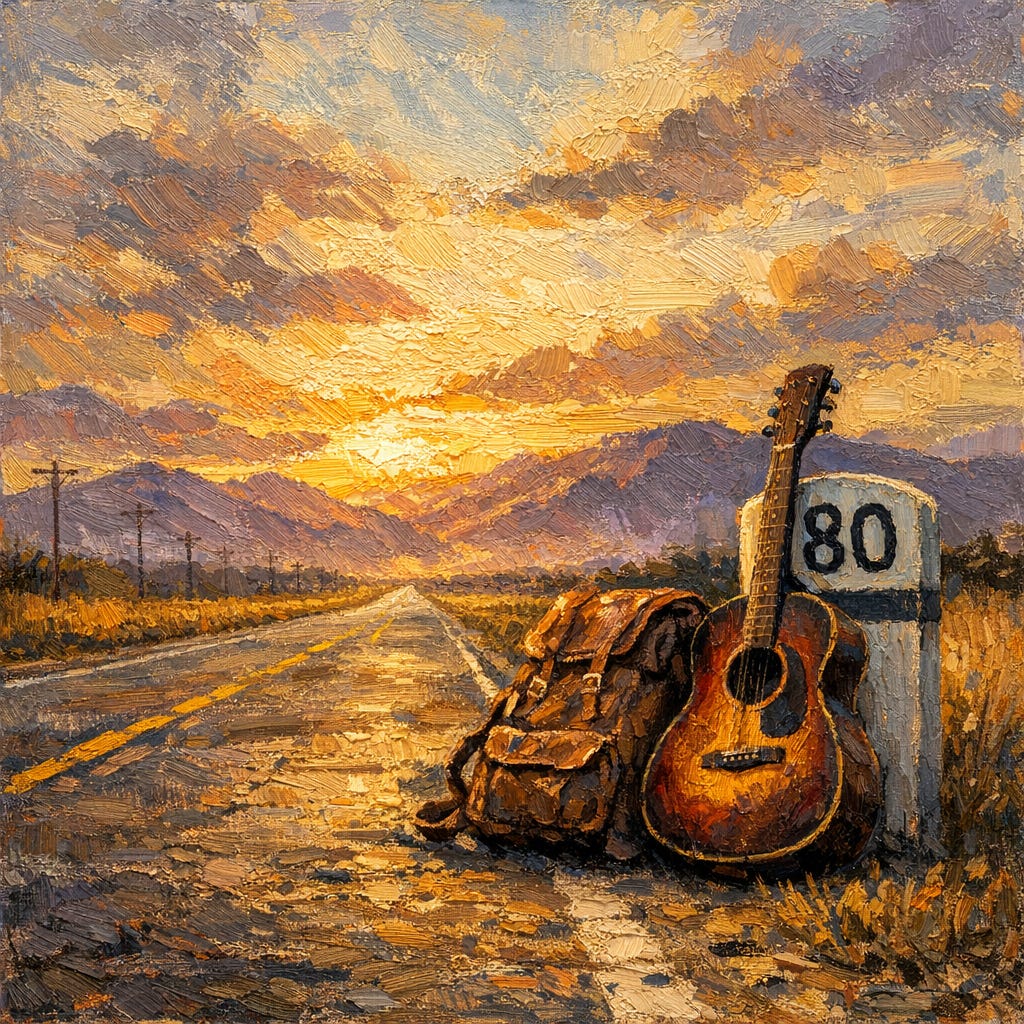
“Surfing the Interstates” took everything I had. I wrote it, revised it, tore it apart and rebuilt it. I learned to select moments the way a director selects shots—what to include, what to leave on the cutting room floor, how to let silence do the heavy lifting. The book is available now on Substack, on Amazon Kindle, and as an audiobook, and I’m proud of what it became.
But here’s what I didn’t anticipate: Book One was relatively easy because so many of its characters were transient. The trucker who picked me up outside Boulder. The hippies in the communal house. The girl in the San Francisco café. They passed through my life like weather—vivid, transformative, and gone. I could write them fully because they existed only in that story. They wouldn’t read the book and call me to say I’d gotten it wrong. They wouldn’t sit across from me at Thanksgiving and wonder what I’d written about them.
Books Two and Three are a different animal entirely.
Why I Stopped
The characters in “Sahara Dust” and “Green Mountain Flash” persist. They’re not strangers on the highway—they’re people I know, people I love, people who are still alive. The Fullers, who gave us everything in Antigua. Veronica, who has shared my life for over two decades. My siblings, most of whom no longer speak to me since I began writing about our family. Writing about transient characters in a cinematic style is one thing. Doing the same with people who will read every word and measure it against their own memory of the same events—that’s something else entirely.
The cinematic approach I love—selecting key moments, recreating scenes, making choices about what’s in the frame and what isn’t—becomes an ethical minefield when your characters have phone numbers. Every scene you choose to include is a statement. Every scene you leave out is a different statement. And the people in those scenes have their own versions, their own truths, their own wounds. I found myself paralyzed not by writer’s block but by something worse: the knowledge that telling my truth would inevitably distort someone else’s.
That was the first reason I stopped. The second was simpler and harder to admit.
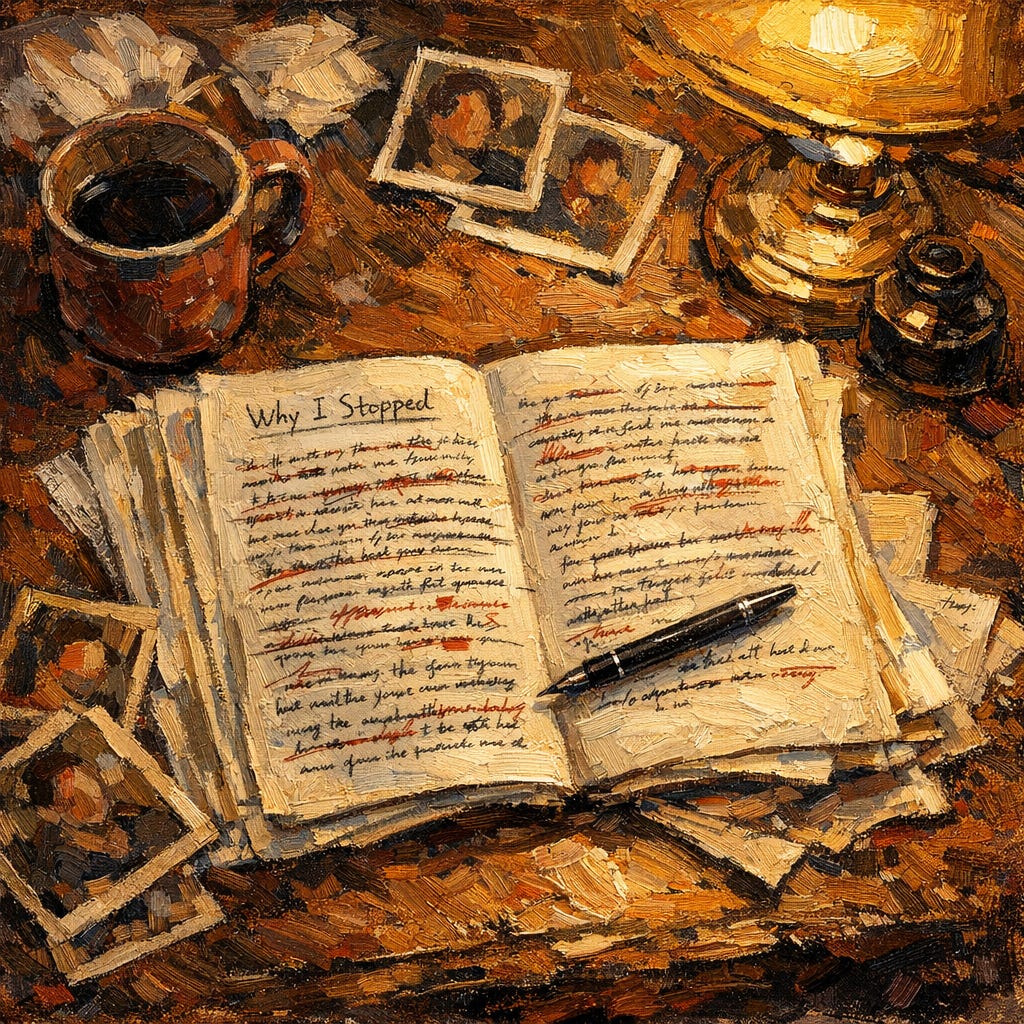
I did all this work—years of it—and there was no external validation. No agent knocking on the door. No reviews in the places that matter. No sales numbers that would make anyone nod approvingly. I’m not complaining; I’m being honest. The publishing world is what it is, and a seventy-four-year-old first-time memoirist with no platform and a famous aunt who overshadows him in every Google search is not exactly what the industry is looking for.
So I asked myself: if the only reason to keep writing is for my own growth, my own understanding, my own reckoning with the past—and it is—then what’s the best way to do that? Does it have to be two more books in a trilogy? Does it have to follow the same demanding, cinematic, scene-by-scene approach that nearly broke me the first time?
The answer, it turned out, was no.
What Comes Next
If you’ve been following this Substack, you’ll notice it’s organized into three sections: “Surfing the Interstates,” “Sahara Dust,” and “Green Mountain Flash.” The trilogy lives on—but not as books. Instead, these sections have become what I think of as a freeform canvas. Sketches and vignettes. Character studies. Moments that deserve their own space without the architecture of a full manuscript pressing down on them.
This isn’t retreat. It’s liberation.
A Substack post can be three hundred words about the color of Caribbean light at six in the morning. It can be a meditation on what it means to bury a dog on your own land in Vermont. It can be a portrait of Thea that doesn’t have to serve a narrative arc—it just has to be true. I can write about my father’s golden ring, the one he promised me for my twenty-first birthday and never delivered, without building an entire chapter around its absence. I can let the moment breathe.
The filmmaker in me hasn’t disappeared. I still think in scenes. I still believe that the best writing makes you see and hear and smell the world it describes. But I’ve stopped believing that those scenes need to be assembled into a feature film. Sometimes a short is more honest. Sometimes a single photograph says what an album can’t.
So here’s what this space is now: the place where three lives get told in whatever form they need. Some posts will be polished essays. Some will be raw sketches. Some will be fragments I’m still trying to understand. All of them will be true, as true as I can make them, written by a man who spent fifty years in motion and is finally learning what it means to sit still and remember.
The trilogy isn’t dead. It just learned to breathe differently.