

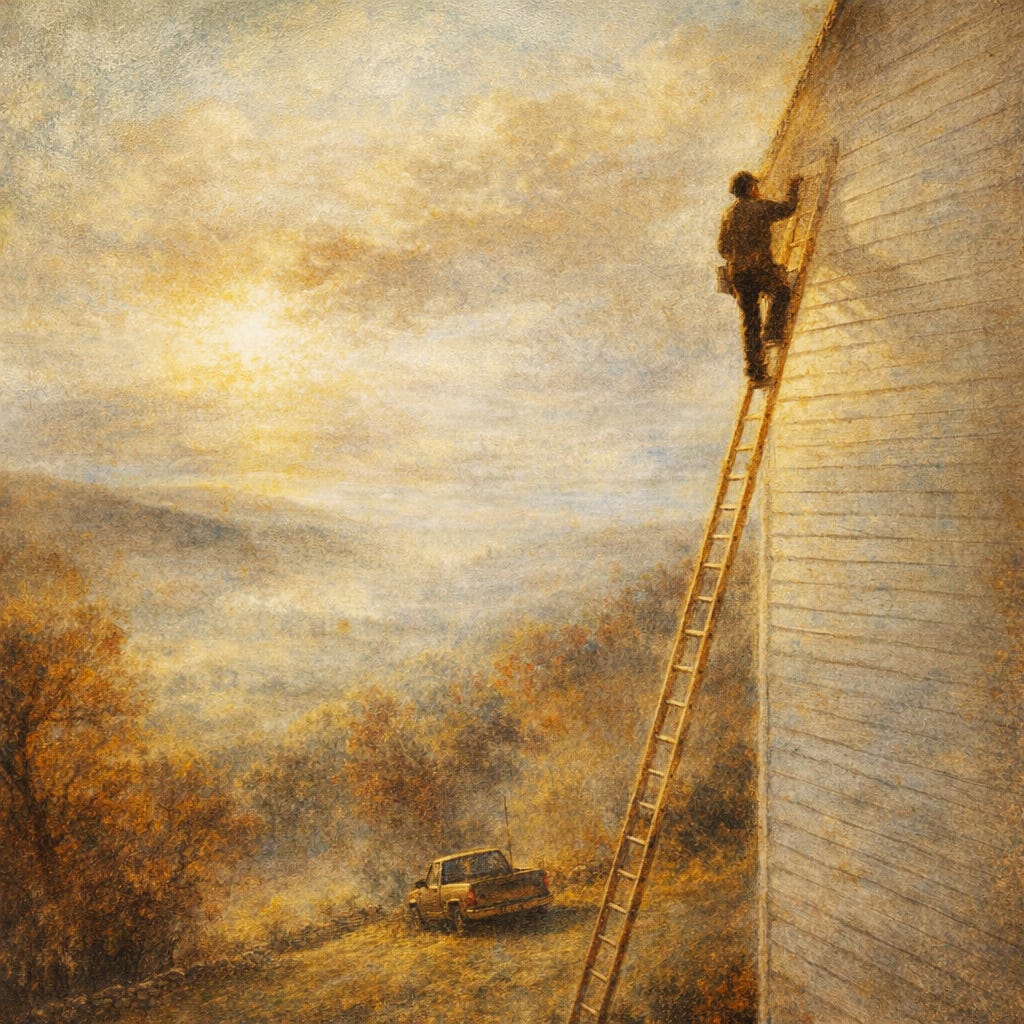
It was a windy day in the summer of 2020, and I was painting my house, which I had no business doing at my age except that I had been a house painter in my youth and some jobs you never stop believing are yours. And there was another reason, though I would not have named it then. I had lost ninety pounds on the keto diet that year, ninety pounds off a body that had carried them a long time, and a man who has just set down that much weight feels twenty years younger and twice as certain. I felt capable. I felt like the kind of man who climbs a ladder in a wind.
I should say too what the diet was for. That was the year of the seizures, nine of them, all at night, arriving in the dark like something coming up out of the floor. The doctors wanted me on Keppra, on Lamictal, and I had seen what those drugs did to people I knew. Zombification. A dimming of the person until what was left sat in a chair and looked at the wall. I refused them. I found my own way through with diet and with full-spectrum CBD oil taken at night, botanical, the real thing, and it worked, and it has kept me seizure-free ever since. Remember that lovely, healing tincture. It comes back later and saves me at the last possible moment from what ultimately proved to be an unnecessary surgery.
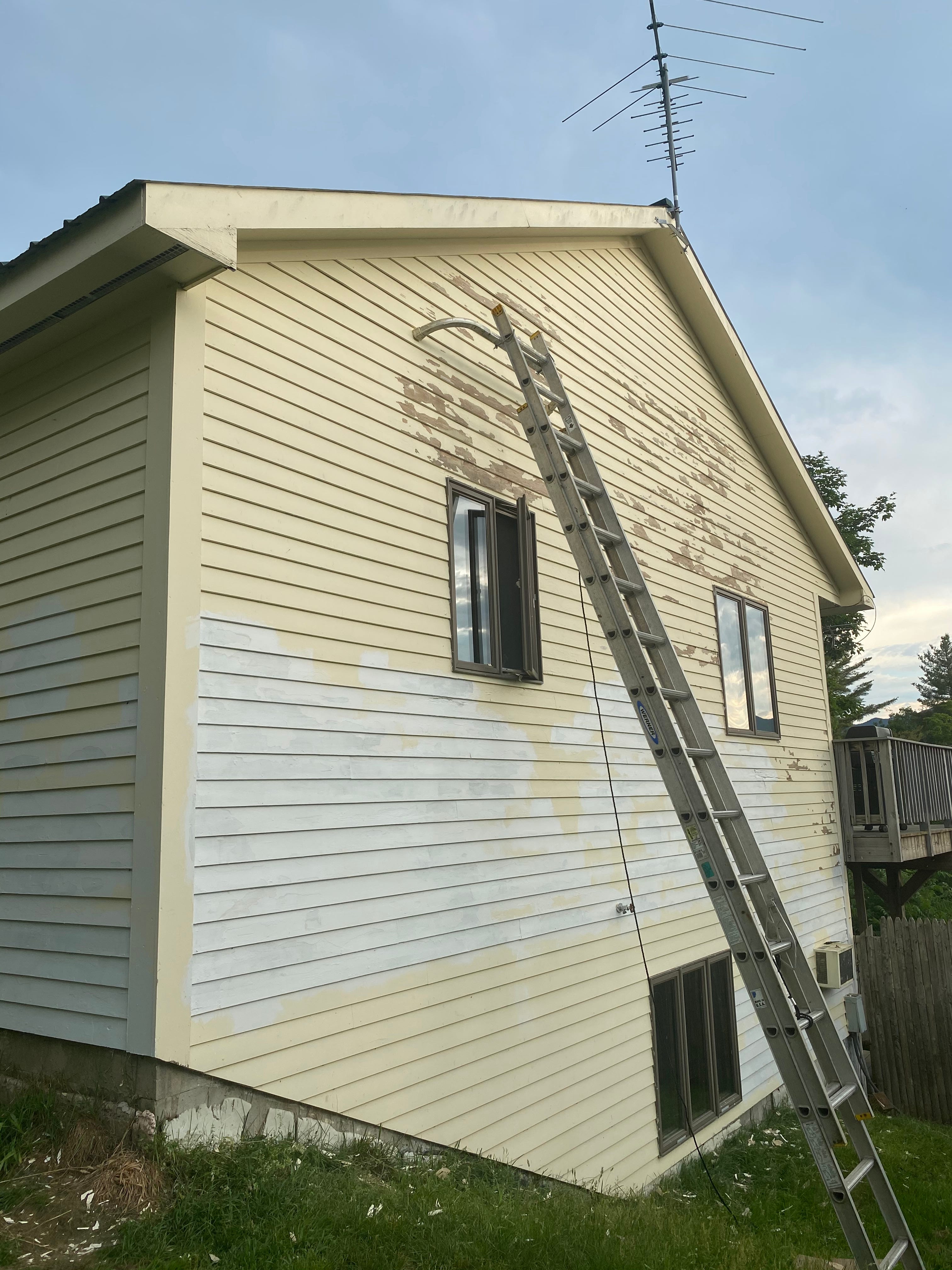
So there I was, ninety pounds lighter and full of the wrong kind of confidence, with a twenty-four foot ladder extended and raised over my head, walking it up a steep slope, when the wind caught it broadside. It began to pull away from me, up and out of my grip, and I fought it the way you fight a thing you already know you are going to lose, and I lost. The ladder crashed down the hill. And somewhere in that losing, in that twist and haul against the weight of it, I felt a sharp pain low in my groin.
It subsided, the way these things do. And then it came back. And then ice would send it away again, and I would forget about it until the next time. That was the beginning, though I did not know it was a beginning. I only knew I had a thing that hurt and then stopped hurting, which is the easiest kind of injury to ignore and the easiest kind to let quietly rearrange your life.
For six years now I have been carrying this intermittent and occasionally unbearable pain, and for six years I have been carrying a question, “do I have a hernia?”which led to another question, which is whether the people we are taught to trust with our bodies are actually looking at us at all.
When I finally saw my primary care physician, she put her hands on me and said, with the flat certainty of someone reading a grocery list, that I did not have a hernia. Categorically. Those ten square inches of me held nothing, in her judgment, worth naming. So I went home and I iced it and I waited, and it kept coming and going, until one day it did not go. One day the pain was such that I could barely move my leg. I was in real agony, the kind that finally overrides a man’s talent for pretending.
That is when I saw the bone doctor my primary referred me to, that fall. He wanted to x-ray my hip. I asked him why. He said I might need a hip replacement. I told him no. I made him put his hands on the same spot my primary had, and feel, and tell me whether there was a hernia there. Well, he said, you might have a small one. But this isn’t really my field.
Two clinicians, the same ten square inches of me, opposite conclusions, and neither of them certain enough to help. I read about sports hernias. I read about trusses. I went looking on my own and found a comfort truss that seemed to hold things in place, and I learned that ice would bring down the swelling when it rose. And that was how I lived. It was, without my ever quite admitting it, a limiting factor in everything I did for six years.
Searching the internet, reading and watching videos, I eventually found a specialist outside Boston. A man who has done seven thousand of these repairs, who has built a following on the internet explaining exactly what he does and why, which in the opaque world of elective surgery makes him something close to a prophet. I drove three and a half hours down just to be seen by him, three and a half hours back. He agreed it was a hernia, small, and scheduled me for surgery at his outpatient center.
The surgery was early in the morning, early enough that we drove down the day before and spent the night in a hotel so I would be there and ready. And in the morning, on the table, all but under, an anesthesiologist canceled the whole thing. Because of the CBD oil. The seizure medicine I had chosen over the drugs that turn men into furniture. The attending nurse had read a study once, about rats, involving a synthetic version of the compound, nothing like what I take, and that was enough. The doctor would not proceed. I remember asking him. What’s the worst that could happen? And he replied, you could die on the table. We drove the three and a half hours home with nothing repaired but a good deal broken, and a hotel receipt, and the particular exhaustion of a thing built up to and then taken away at the last possible instant. Frankly, I was relieved, elated even. Like I had dodged a bullet.
The surgeon told me afterward that nurse had conflated a synthetic form of CBD called Epidiolox with the herbal supplement I was taking. The study (done on rats) had nothing to do with what I take. He said he would clear it up himself. But I had already learned the lesson that the system teaches you over and over if you let it: that the person with the credential and the person who is actually paying attention are not always the same person, and that the gap between them is where you fall. An example — the nurse at the neurologist‘s office told me privately that if I was going to try to use CBD instead of anti-seizure meds, I would need to take quite a bit of it, which led me from going from 60 mg all the way up to 100 mg over the course of a year through which I suffered nine seizures before stumbling on the magic titration.
I suffered with the hernia for two more years. Then I called him back, ready at last to try again. And this time he told me he would not do it in the outpatient suite under sedation. He wanted a full hospital, general anesthesia, the whole apparatus. Why, I asked. Because of my age, he said, and because of the scar tissue from the weight loss, which could make the thing longer and bloodier than it looked. I asked him why the sudden change.And then he said a name. Joan Rivers. She died at a surgical center, he said, when something went wrong and the place was not built to catch it. You don’t want to die on the table. That was the second time doctors had said you don’t wanna die on the table.
He scheduled the surgery. And I eventually canceled it at the last minute. I canceled it because I was afraid, plainly and simply afraid, and because I had done the arithmetic in my mind and decided that an intermittent pain I had lived with for years was not worth dying for, nor even worth the fourth full pilgrimage to Boston and back. I put the truss back on. I went on with my life. Three more years went by that way.
Here I should tell you about my face, because it is the same story wearing different clothes.
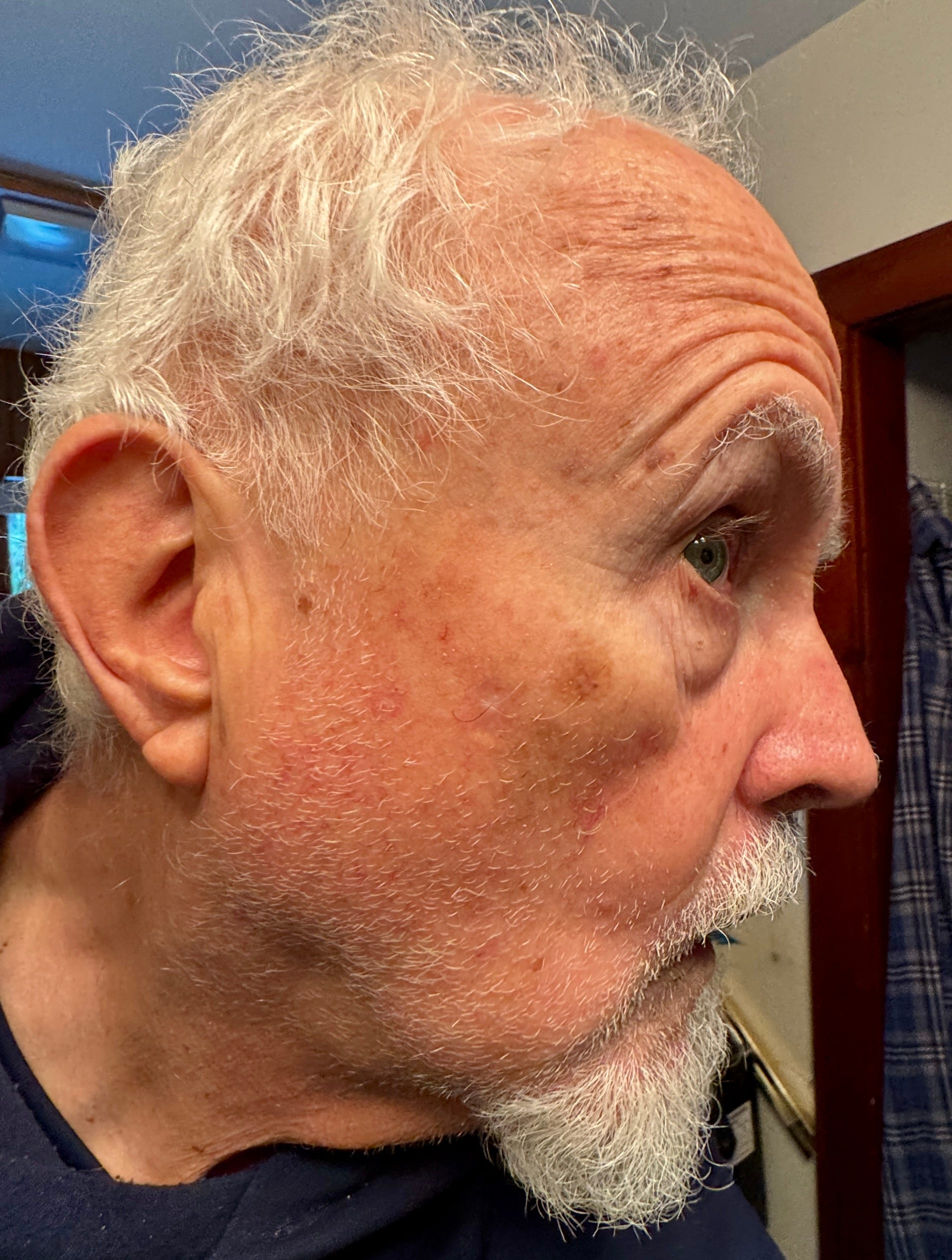
Four years ago something appeared on my forehead. My sister, who is a nurse and who has had cancer cut out of her own face, told me to get it looked at. The only appointment I could get that wasn’t three months out was two hours away in Plattsburgh, so I drove around the top of the lake and down the other side. The physician’s assistant there was kind. He explained, carefully, that it was a keratosis, nothing sinister. He laid out my options like a man who had all the time in the world. Nitrogen, or a cream, this or that. I chose the nitrogen. I drove home feeling, for once, like I had been seen.
The next summer another one appeared, and I got in closer to home, and another patient assistant froze it off, and again it was fine.
Then the year after that, another. And this time the man who saw me did a full body exam, took a scraping off my face without telling me what it would do to me, and had me dressed and out the door in fifteen minutes. It was the most impersonal, rushed, uncaring quarter of an hour I have ever spent in a doctor’s office. I walked out with a hole in my face the size of a dime. I had been expecting a needle. It is tender to this day. It turned out to be a basal cell, the mildest kind of skin cancer there is, and I treated it myself with Ivermectin cream I put on every day for two months, and it went away, and it has not come back.
After that I saw a young doctor at the same place, freshly graduated, late twenties, who was very excited about an app. The app, she wanted me to understand, could solve almost anything. I showed her a sore on my ankle that had refused to heal for two years, a thing like a pimple that would not quit. She asked if I wanted her to biopsy it. I said no, couldn’t she just tell me what it was. She said she had no idea.
She had no idea. And she was reaching for a scalpel.
I want to be careful here, because I am not a man who thinks doctors are villains. Most of them are working inside a machine that gives them fifteen minutes and a quota and an app, and the machine is the problem more than the person. But something happened to my trust during the COVID years that I have not been able to undo. The confident pronouncements that turned out to be wrong. The things we were promised about the vaccines that did not hold. The sense, growing quietly and then not quietly, that certainty was being performed at me rather than earned. By the time I came out the other side of all that, my instinct when a person in a white coat opened their mouth was no longer to lean in. It was to take a step back.
Which brings me to this summer, and the end of it, the part that gave me back something I thought I had lost. The pain had been getting worse. Six years in, the thing was speaking up more often, and I decided I would finally deal with it, close to home this time.
I went to see a surgeon here in Vermont, a man in his sixties who had retired, been sent back to work by his wife, relocated north, and opened a small practice with one administrative assistant and a standard poodle named Andy. The dog lay in the corner of the office the whole time, watching me the way dogs do, taking my measure. His owner examined me more thoroughly than anyone had in six years. Pants off, the whole business. And then he did something none of the specialists had thought to do. He took the hernia in his hands and pushed it back inside me, and the pain I had been carrying all the way down in the car simply stopped. Then he taught me how to do it myself. Squeeze it like the last of the toothpaste, he said. My wife told me later her father used to do the very same thing.
The dog, it turned out, was supposed to dislike older men. His owner mentioned it almost as an apology, except that Andy had already crossed the room and decided in my favor. I have thought about that more than I should. After six years of being processed by a system that could not agree on whether I was sick, a dog made up its mind about me in about four seconds, and it turned out to be the warmest reception I got in the whole ordeal.
Then I finally got a CAT scan, the first anyone had ever taken. And a fourth surgeon, this one on a hospital salary with no procedure to bill and nothing to gain from cutting me, looked at the scan and looked at me and told me the truth. He said he saw no hernia on the scan and no danger of the thing strangling. He said if I could manage it with a good belt and a little care, I was better off leaving it alone. He said he would never put a man through anesthesia and a knife for something that did not need it. He mentioned, almost in passing, that the surgeons who are paid by the procedure and the surgeons who are paid a salary do not always arrive at the same recommendation, and that I might keep that in mind. Then he handed me his card. If it comes out again, he said, call me and I’ll have a look at it.
It has come out since. Just last night, in fact, after a hot tub and too long in a chair with a guitar and no belt on, I felt the old swelling arrive, and I pushed it back in the way the man with the dog had shown me, and I went to bed. The defect must be so small that a scan taken while I lie flat cannot even find it. Bartels, the man with the dog, told me these things start out about the diameter of a pencil, and over years can widen to the size of a quarter, a golf ball, bigger. Mine is somewhere in the early middle of that road. So I do have a hernia. It is a genuine inguinal hernia. It is simply invisible until it decides to open, and then it closes again under my own hand, and the headline, the thing that matters, is that it is not a danger to me.
That is the part worth sitting with. Because so often what we are handed is the dramatic version, the one engineered to move us toward action. The word cancer with no adjective in front of it. The scan finding read aloud in its most alarming register. The name Joan Rivers, invoked across a desk. The surgery scheduled before the question is fully asked. My wife’s father carried a hernia for years and pushed it back in himself whenever it appeared, the same trick, passed down from a time when people simply knew such things. It finally grew bad enough, late in his life, that he had it repaired. But he was a stonemason, a man who spent his days lifting stone, and his body was under a different kind of load than mine. He got the surgery when he needed it, which is to say when he actually needed it, and not one day before.
I am seventy-four. I have been given, over the years, a great deal of confident information about my own body that turned out to be wrong, delivered by people who were sure. I was told to take the drugs that would have dimmed me. I was told I had no hernia, and then that I might. I was told I could die on the table, which was true, and used to move me, which is a different thing. And I have been given, once or twice, the plain truth by people who were actually paying attention. The trick, which no one teaches you, is learning to tell the difference before you are lying on the table.
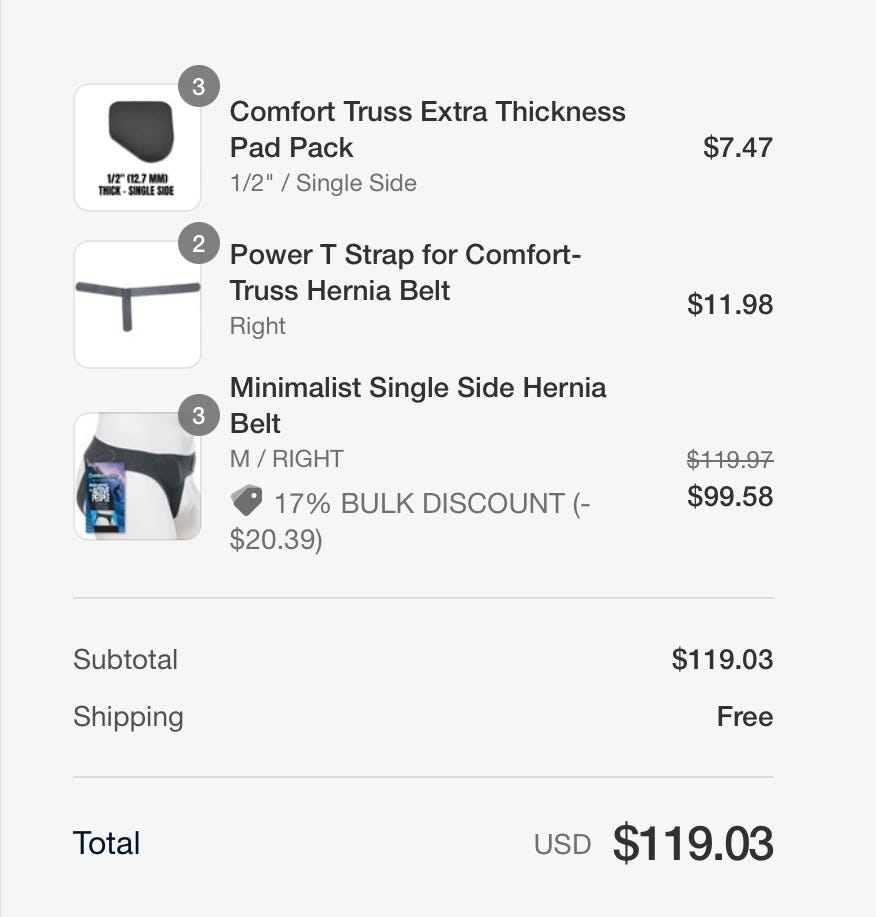
The answer, in the end, was a belt and a dog and a salaried man who told me to carry on with what I was already doing. I wish someone had told me at the beginning that it might be that simple. But then I suppose I would not have the story, and after six years, the story is the thing I get to keep.
“Thumb Out” Book One of my memoir trilogy “The Spaces Between” is available now
e-book ~ kindle ~ paperback ~ hardcover ~ signed paperback