

Over my years as a professional wedding and portrait photographer, I used many different lenses and cameras. I’ll never forget demoing a Canon 300 mm f/2.8 L IS lens. While nothing like some of the super telephotos (600mm, 800mm, 1200mm) this chunky and massive piece of glass was like carrying a small child around. The compression was delicious and the Bokeh was to die for. But you needed radio coms if you were working on a portrait.
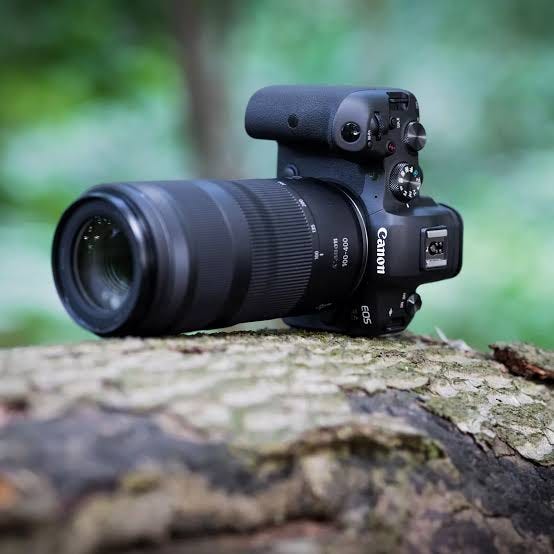
The RF 100-400mm f/5.6-8 costs a mere fraction of those legendary white whales — it’s made largely out of plastic, and that includes the optics. But it is super light, compact and affordable, and somewhat inconspicuous in comparison. It suits me perfectly and the thing that’s really important to me is the tech that’s built into this camera/lens combination. I’m talking about next level auto focus and the ability to shoot intuitively and quickly in full manual to get precisely what I want, shooting raw files which can later be manipulated with maximum creativity and flexibility.


It’s a real pleasure to not be on assignment. No one to please, but myself. All the time in the world and the lightness of being in the moment.


The R6 Mark II is not a super high resolution camera in the way that an R5 Mark II would be, but you can still crop in with no apparent loss and resolution. An example is the shot of Blaze by the fence line below, where I cropped into an effective 600 mm.


This lens can be used indoors as well, due to its generous range.
I’ve always been a “gear head” and I’ve always loved playing with cameras, lenses, tripods, drones, windsurfing equipment — and going back to my childhood, mechanical typewriter, HO scale trains and even tinkertoys. My mother said she would often find me when I was three years old up before dawn constructing massive creations in my room.
All my life I wanted to be a successful professional and now I’m just thrilled to be an amateur, a hobbyist, or what the Brits call a “punter” - but the key is loving what you’re doing, which is the root of all those words.
“Amateur” comes from the French amateur, which comes directly from the Latin amator — “lover, devoted friend,” from amare, “to love.”
So at its root, an amateur isn’t someone unskilled — it’s someone who does a thing for love of it, rather than for money or obligation. The word only picked up its diminished, “unskilled/dabbler” connotation later, in English, as a contrast to “professional.”
In the original sense, calling yourself an amateur photographer or amateur musician was a statement about motive, not competence.
It’s a nice word to reclaim, especially for creative work — the amateur is the one still doing it for love.
“Thumb Out” Book One of my memoir trilogy “The Spaces Between” is available now
e-book ~ kindle ~ paperback ~ hardcover ~ signed paperback