

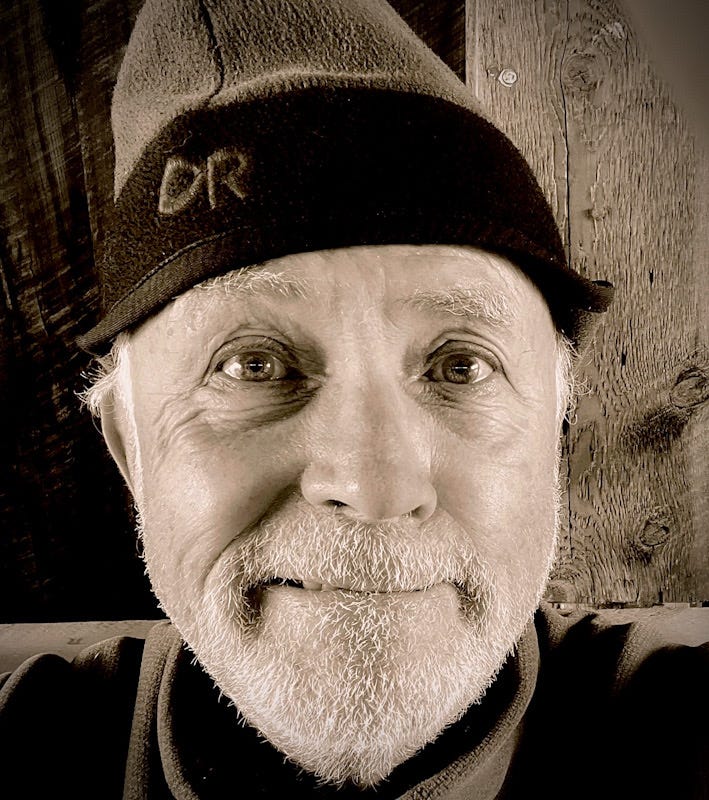
The Witch Hunt
There’s a hysteria in the literary world right now, and it has the feel of a witch hunt. Did you use AI? Are you sure? Can you prove it? Show us your drafts. Show us your process. Swear on the bones of your craft that no machine touched your precious words.
It’s the same energy as every other moral panic. The same breathless accusation. The same guilty-until-proven-innocent theater. Someone points a finger, an algorithm spits out a percentage, and suddenly you’re defending your humanity to strangers on the internet. It’s COVID masks for the literary class. It’s are-you-now-or-have-you-ever-been.
In March, Hachette killed a horror novel called Shy Girl by Mia Ballard. One phone call from the New York Times and the book was dead within twenty-four hours. Almost two thousand copies already in readers’ hands in the UK. The author says a freelance editor introduced AI without her knowledge. Doesn’t matter. Contaminated. Pull it. Next.
Two weeks ago, the Commonwealth Short Story Prize — nearly eight thousand entries, one of the most prestigious short fiction competitions in the English-speaking world — announced its five regional winners. Days later, Pangram, an AI detection platform, flagged three of the five as partially or fully AI-generated. Three out of five. The literary internet descended like villagers with torches. The foundation issued statements about “artistic integrity.” The actual writers — accused, exposed, dragged — mostly went silent.
And here’s the part nobody wants to say out loud: the publishing industry was already broken before AI showed up. The average person has almost zero chance of being traditionally published. The gatekeepers are fewer and more frightened than they’ve ever been. AI didn’t break the system. It just gave a dying industry a new thing to be hysterical about. A new way to pretend it still has standards, when the truth is that Hachette didn’t catch it, the Commonwealth judges didn’t catch it, and the readers and the algorithms were the ones who blew the whistle.
I Use AI. I Have Nothing to Hide.
So let me be clear, since apparently this is something a writer now has to declare, like a customs form.
I have used AI as a tool in my work. Proudly and unabashedly. Not as a substitute for my own creativity — as a tool. The way a carpenter uses a nail gun instead of a hammer. The way a photographer uses Lightroom instead of a darkroom. My story is my story. I lived it. I carry it. No machine gave me the memories of hitchhiking ten thousand miles across America in 1973, or building a windsurfing school in Antigua, or the decades that followed in Vermont. AI didn’t give me any of that. What it gave me was a way to organize, to clarify, to move faster through the mechanical parts so I could spend more time in the places that matter — the remembering, the feeling, the truth of the thing.
I have nothing to hide. And I think anyone who treats the use of a tool as a confession has lost the plot entirely.
The Voice Was Always the First Draft
When I wrote Thumb Out — my first memoir, 330 pages — large parts of it began as dictation. Not dictation in the formal sense, not a man at a desk speaking into a recorder. More like walking through the woods behind my house in Vermont, talking. Just talking. Remembering.
The whole point was to defeat the blank page. I didn’t want to be the tormented writer in the garret with a typewriter and a bottle of whiskey, staring at nothing, waiting for inspiration to strike. That’s a myth and it’s a destructive one. I wanted to enter a state of remembrance — to get a flow going, to let the stories move through me the way they actually live inside me, which is as voice, not as text. The page came second. The page was always second.
What’s happening on YouTube right now is essentially that same thing, turned outward.
There’s a wave of creators — not influencers, not personalities, just people — making extremely casual, straight-to-camera content with almost no production. No sets. No thumbnails designed in Canva. No hype. Just a person talking about something real. And YouTube’s algorithm is rewarding it, especially for small channels. The platform is actively surfacing this kind of work.
Think about that for a second. The publishing industry is tearing itself apart trying to figure out which words were typed by a human and which were generated by a machine. And right next door, there’s a platform that just says: talk. Be a person. That’s enough.
No editor can contaminate it. No algorithm can flag it. It’s your face, your voice, your memory, unmediated. Either you were there or you weren’t. Either you have something to say or you don’t.
So I Started a YouTube Channel
I set it up today. The handle is @andrejdsp — same as this Substack, same as the website. Three videos are already up.
This Substack stays what it is. The writing, the memoir work, the long form — that lives here. The YouTube channel is something else. It’s the voice that comes before the page. Some of what I carry doesn’t want to be written down. It wants to move. It wants cadence and pauses and the particular quality of light in a story told out loud rather than read in silence. It wants a face behind it.
The channel is at youtube.com/@andrejdsp

If you go, I hope something holds you.
— AJ
“Thumb Out” Book One of my memoir trilogy “The Spaces Between” is available now
e-book ~ kindle ~ paperback ~ hardcover ~ signed paperback